

Retirement paperwork can look like a simple stack of forms, but one wrong decision could affect your income for the next 20 or 30 years. A checked box might reduce your spouse’s future benefits, trigger an unexpected tax bill, or leave you without the health coverage you expected.
The problem is that many retirees focus on their last day at work instead of the details they are signing. By the time they notice a mistake, changing their decision may be difficult, expensive, or impossible.
Before you sign anything, take a closer look at these six documents. Each one deserves a second reading because the choices you make today could follow you throughout retirement.
Why Reading Your Retirement Paperwork Twice Matters
Retirement involves more than deciding when to stop working. You may also be choosing how to receive your pension, when to claim Social Security, where to move your retirement savings, and how to protect your family’s financial future.
Some choices can be changed later, while others become difficult to reverse once benefits begin. Knowing the difference can help you avoid signing something you do not fully intend.
| Document | What Could Go Wrong? |
|---|---|
| Retirement or severance agreement | You give up valuable rights or misunderstand your final benefits |
| Pension election form | Your spouse receives less income than expected after your death |
| 401(k) distribution form | You create an avoidable tax bill or lose a valuable withdrawal option |
| Social Security application | You start benefits earlier than planned and permanently reduce your monthly amount |
| Medicare and health coverage forms | You face a coverage gap or late enrollment penalties |
| Beneficiary designation form | Your retirement savings go to someone you did not intend |
Not everyone receives all six documents. Your employer, retirement plan, age, and benefit choices determine which forms apply to you.
1. Your Retirement or Severance Agreement Could Contain Rights You Are Giving Up
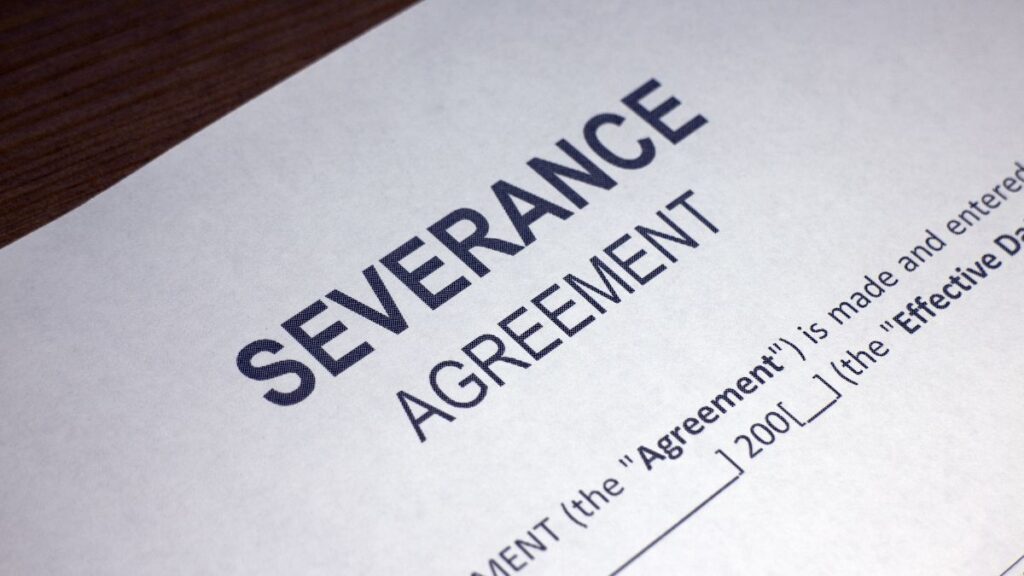
One of the first documents you may receive is a retirement agreement or separation package. It might describe your final paycheck, unused vacation time, bonuses, insurance benefits, and any additional payments offered when you leave.
But the most important details are not always the dollar amounts. Some agreements also ask you to release certain legal claims or accept restrictions that continue after your employment ends.
For example, an employer might offer a severance payment in exchange for signing a release of legal claims. Once that release becomes effective, your ability to bring certain claims against the employer may be limited.
Read these details carefully before signing:
- The amount and payment date of your final compensation.
- Whether unused vacation or bonuses will be paid.
- When your employer health insurance ends.
- Whether retiree medical or life insurance benefits continue.
- Any confidentiality, noncompete, or other restrictions.
- Any release of legal claims and the deadline for accepting the offer.
Watch for Deadlines That May Protect Your Rights
Under federal law, certain agreements asking workers age 40 or older to waive age discrimination claims must provide at least 21 days to consider an individual offer. Qualifying group termination programs generally require 45 days, along with a seven day period to revoke a signed waiver.
These protections apply to specific legal waivers, not every retirement document. If the agreement includes a legal release, having an employment attorney review it before signing can be worth the cost.
The question to ask: Am I receiving everything I have earned, and what rights am I giving up in return?
A retirement package can look generous on the surface while containing conditions you never expected. Make sure you understand both what you receive and what you agree to give up.
2. Your Pension Election Form Determines What Happens to Your Income After You Die

If your employer offers a traditional pension, this may be one of the most important documents you sign. The payment option you select can affect both your monthly retirement income and your spouse’s financial security.
Many pension plans offer a choice between payments for your lifetime only and payments that continue to a surviving spouse. Choosing a larger monthly amount today might mean leaving less financial protection for your family later.
Compare the Payment Options Before Making Your Decision
A single life pension generally pays benefits for as long as you live. The payments usually stop when you die, although some plans offer additional features or death benefits.
A joint and survivor pension generally provides a smaller monthly payment while you are alive. In return, a percentage of your pension continues to your surviving spouse after your death.
Here is how a hypothetical pension might work.
| Pension Option | Monthly Payment While You Live | After Your Death |
|---|---|---|
| Single life pension | $2,500 | Regular pension payments stop |
| Joint and survivor option | $2,200 | A specified portion continues to your spouse |
| Another survivor option | Depends on the plan | A different survivor percentage may apply |
These are illustrative amounts, not actual pension quotes. Your employer’s plan determines the available choices, payment amounts, and survivor benefits.
For certain pension plans, federal rules provide spousal protections through a qualified joint and survivor annuity. Giving up those survivor protections generally requires written consent from your spouse, witnessed by a notary or plan representative.
Before signing, compare the monthly amounts and ask whether your choice can be changed after payments begin. Also check whether your pension includes cost of living increases and what happens if either spouse dies first.
Think Beyond Your Own Retirement Income
A higher monthly pension might seem like the obvious choice when you first see the numbers. However, the decision becomes more serious if your spouse depends on that money to pay basic living expenses.
Consider what would happen to your household budget if one Social Security payment and your pension disappeared. Your surviving spouse might still need to pay rent, property taxes, utilities, insurance, and medical expenses.
The question to ask: If I die ten years before my spouse, what monthly income will they still receive?
This question can change how you view the entire pension decision. The highest monthly payment is not always the best choice for a married couple, especially when one spouse depends heavily on that income.
3. Your 401(k) Distribution Form Could Trigger a Tax Bill You Never Expected

After leaving your job, you may receive paperwork asking what you want to do with your 401(k), 403(b), or another employer retirement account. Your options may include keeping money in the existing plan, transferring it to another retirement account, or taking a distribution.
The problem is that these choices can have different tax consequences. A decision that seems harmless could reduce the amount you keep after taxes.
Understand the Difference Between a Direct Rollover and Receiving the Money Yourself
A direct rollover generally moves eligible retirement money from your employer plan to another eligible retirement plan or IRA. When handled correctly, this usually avoids immediate federal income tax on the amount transferred to a traditional tax deferred account.
If an eligible taxable distribution from your employer retirement plan is paid directly to you instead, the plan generally must withhold 20% for federal income taxes. You normally have 60 days to complete a rollover, and you may need other funds to replace the withheld amount if you want to roll over the full distribution.
For example, suppose you request a $100,000 taxable distribution from your traditional 401(k). If the mandatory 20% withholding applies, you would receive $80,000 while $20,000 goes toward federal tax withholding.
That withholding is not necessarily your final tax bill. If you want to roll over the entire $100,000 within the allowed period, you generally must replace the withheld $20,000 using other money.
Do Not Overlook Special Withdrawal Rules
Another detail matters if you are retiring before age 59½. Under certain circumstances, people who separate from their employer during or after the calendar year they turn 55 may qualify for an exception to the usual 10% additional tax on early distributions from that employer’s qualified retirement plan.
That particular exception does not apply to IRA withdrawals. Moving your entire 401(k) into an IRA without checking your future withdrawal needs could therefore remove an option you might have used.
Before signing your distribution form, check the receiving account, the amount being transferred, any outstanding plan loans, the tax treatment of traditional and Roth balances, and whether your current plan has benefits worth keeping.
Check the Fees Before Moving Your Retirement Savings
Taxes are not the only thing to consider when transferring retirement funds. Your current employer plan may offer low investment fees, while an IRA or another account could have different expenses.
Some plans also provide investment choices or protections that are not available in every IRA. Comparing the costs and benefits before moving the money can help you avoid an expensive decision.
The question to ask: Is this money moving directly between retirement accounts, or am I accidentally requesting a taxable payment?
One completed form can move decades of savings. Ask the plan administrator to explain the tax treatment in writing before you authorize the transaction.
4. Your Social Security Application Sets a Starting Date That Can Affect Your Benefits for Life

Social Security is another area where a small choice can have a lasting effect. When completing your retirement application, whether online or through Social Security, you must decide which month you want benefits to begin.
That starting month matters because claiming before your full retirement age generally reduces your monthly retirement benefit. Waiting beyond full retirement age can increase your payment until age 70.
Do Not Confuse Your Retirement Date With Your Social Security Starting Date
You can stop working at 62 and wait several years before collecting Social Security. You can also claim Social Security while continuing to work, although earnings rules may affect benefits before full retirement age.
The Social Security Administration allows you to apply up to four months before the month you want benefits to begin. Your first monthly payment generally arrives the following month.
Before submitting the application, review your official earnings record and compare benefit estimates at different claiming ages. Check your marital history and possible eligibility for spousal or survivor benefits as well.
The Social Security Administration provides estimates based on your reported earnings. An error in that history could affect your retirement benefit calculation.
Compare What Happens at Different Claiming Ages
For someone whose full retirement age is 67, starting Social Security at 62 generally means a 30% reduction in their own retirement benefit. Waiting until 70 instead can produce a benefit that is 24% higher than the full retirement age amount, before future cost of living adjustments.
Suppose your benefit at 67 would be $2,000 per month. Based on these age adjustments, the amount would be about $1,400 if you claimed at 62 or $2,480 if you waited until 70, assuming the same underlying benefit calculation.
These figures are simplified examples, and your actual payment depends on your earnings record and other factors. They show why selecting a starting month deserves more attention than simply checking the earliest available date.
Be Careful When Selecting Retroactive Benefits
Some applicants who have reached full retirement age may qualify for up to six months of retroactive retirement benefits. However, choosing an earlier benefit start can reduce the monthly amount you receive compared with starting later.
You should therefore compare the value of any retroactive payment against the effect on future monthly benefits. Do not assume that accepting extra money upfront is automatically the better choice.
The question to ask: Have I compared what happens if I start benefits now, at full retirement age, and at age 70?
Social Security is designed to provide income throughout retirement. Take time to choose a starting date that works with your savings, other income, health, and family situation.
5. Your Medicare and Retiree Health Forms Could Determine Whether You Have a Coverage Gap

Many people spend months calculating their retirement income but give far less attention to health insurance. That can become an expensive mistake, particularly when employer coverage is ending.
Retiring before 65 creates one set of insurance questions. Retiring after 65 brings Medicare enrollment rules that need careful attention.
Check Exactly When Your Employer Coverage Ends
Your last day of work and your last day of health insurance are not always the same. Some employers end coverage immediately, while others continue it through the end of the month or provide retiree coverage.
Before leaving, ask your benefits department for written confirmation of your coverage end date. Also ask how your spouse’s or dependents’ coverage will be affected.
If you are not yet eligible for Medicare, compare the actual costs of available options such as COBRA, a spouse’s employer plan, retiree coverage, or a Marketplace plan. Look at premiums, deductibles, prescription coverage, and the date each policy begins.
Medicare Has Deadlines That COBRA Does Not Automatically Extend
For people eligible for Medicare who were covered by qualifying insurance through their own or a spouse’s current employment, the Medicare Part B Special Enrollment Period generally lasts eight months after employment ends or the employment based coverage ends, whichever occurs first.
Choosing COBRA does not extend that eight month period. Missing the appropriate enrollment window can lead to a delay in coverage and a possible late enrollment penalty.
If you need to enroll in Part B through the employment based Special Enrollment Period, you may need forms CMS-40B and CMS-L564. These help establish your enrollment request and employment coverage history.
Prescription coverage also deserves a second look. Going 63 or more consecutive days without Medicare drug coverage or other creditable prescription coverage after becoming eligible may result in a Part D late enrollment penalty.
If you plan to purchase Medigap, pay attention to its initial six month open enrollment period. Under federal rules, that period generally begins when you are at least 65 and first enrolled in Medicare Part B.
Make Sure Your Doctors and Medicines Are Covered
Having health insurance is not the same as having the right health insurance. A plan might have lower monthly premiums but higher costs for prescriptions, specialists, or hospital care.
Before enrolling, check your doctors, nearby hospitals, regular medicines, and expected medical expenses. A plan that looks inexpensive today could cost much more if it does not fit your health needs.
The question to ask: Will I have continuous medical and prescription coverage from my final day at work through my first month of retirement?
Do not rely on a verbal promise that your insurance will continue. Request the coverage dates, enrollment instructions, and applicable deadlines in writing.
6. Your Beneficiary Designation Form Decides Who Receives Your Retirement Savings

The final document is easy to overlook because it may be only one or two pages long. Yet your beneficiary designation can have major consequences for the people you leave behind.
These forms identify who should receive certain retirement accounts or insurance benefits after your death. They may operate separately from instructions in your will, depending on the account and applicable law.
Check Every Name, Not Just the Primary Beneficiary
Suppose you named someone years ago when you first joined your employer’s retirement plan. Since then, you may have married, divorced, lost a spouse, or had grandchildren.
An old beneficiary designation may no longer reflect your wishes. This is why reviewing the names should be part of your retirement paperwork process.
For many employer retirement plans, surviving spouses receive important legal protections. In most 401(k) plans, naming someone other than your spouse may require your spouse’s written consent under the plan’s applicable rules.
Review the following information carefully:
| What to Check | Why It Matters |
|---|---|
| Primary beneficiary | Identifies who receives the account first |
| Contingent beneficiary | Provides a backup if the primary beneficiary cannot receive it |
| Names and personal information | Helps prevent confusion or delays |
| Percentage allocations | Shows how money will be divided |
| Spousal consent requirements | May affect whether your designation is valid |
| Recent family changes | Could make an old designation unsuitable |
Make Sure Your Retirement Accounts Agree With Your Estate Plan
A will, trust, life insurance policy, and retirement account can have different instructions. Those differences may be intentional, but they should not happen simply because you forgot to update a form.
Also consider the special issues involved when naming minor children, grandchildren, or trusts as beneficiaries. Those choices may involve legal and tax rules that deserve professional advice.
Review Beneficiaries After Major Life Changes
Beneficiary forms should not be something you complete once and never check again. Marriage, divorce, death in the family, and other major changes can all affect who you want to receive your assets.
It is also important to confirm that the plan administrator actually accepted your updated designation. Keeping a copy of the completed form and any confirmation can help your family avoid confusion later.
The question to ask: If I died tomorrow, would my retirement accounts go to the people I actually want to receive them?
You spent years building your savings. Taking time to review the beneficiary forms can help protect what happens to that money after you are gone.
The Final Retirement Paperwork Checklist Before You Sign
Before submitting your retirement paperwork, organize everything in one folder. Include your pension estimates, Social Security information, retirement account statements, health insurance notices, and copies of any agreements.
Use this final checklist to catch mistakes while there may still be time to fix them.
- Read every page. Check the fine print, attached documents, and any sections that explain your rights or restrictions.
- Confirm your retirement date. Make sure your final working day, payment dates, and insurance end dates match your plans.
- Compare your pension choices. Review the monthly payments and any income available to your surviving spouse.
- Check your retirement account transfers. Confirm where your money is going and whether the transaction will create taxes.
- Review your Social Security starting date. Compare the effect of claiming at different ages before submitting your application.
- Confirm your health coverage. Make sure you know exactly when one plan ends and another begins.
- Update your beneficiaries. Verify names, percentages, and any required spousal consent.
- Keep copies of everything. Save signed forms, confirmation numbers, and written instructions in a safe place.
If something on your paperwork does not match what a benefits representative told you, ask for clarification before signing. Written confirmation is particularly helpful when a mistake could affect your pension, taxes, or insurance.
You do not have to handle every decision alone. A qualified financial planner, tax professional, employee benefits specialist, or attorney can help you review documents that carry major financial or legal consequences.
What to Do If You Have Already Signed Something Incorrect

Discovering a mistake after submitting retirement paperwork does not always mean it is too late. Some benefit elections can be corrected before a deadline or before payments begin, although the rules vary by plan and document.
Contact the plan administrator, employer benefits department, insurance provider, or appropriate government agency as soon as you notice the problem. Explain the issue clearly and request written instructions for making a correction.
Social Security also has limited options for changing a claiming decision. For example, eligible applicants may be able to withdraw a retirement claim within 12 months of first becoming entitled to benefits, but this requires meeting conditions that include repayment of benefits received.
The important point is to act promptly rather than assume the mistake will correct itself. A short conversation now may prevent a much bigger problem later.