

Most Americans over 60 have probably paid full price for something they could have bought for less. The surprising part is that many senior discounts are never mentioned at checkout, and some businesses only apply them when customers ask.
A small discount on dinner, groceries, clothing, or travel might not seem impressive, but those savings can add up over an entire year.
So what happens when asking for senior discounts becomes a regular habit for 30 days? Which businesses have real offers, which require a membership card, and where is asking unlikely to change the price?
Where Senior Discounts Are Actually Available in 2026
The strongest opportunities are businesses with established senior savings programs. These include national retailers, restaurants, entertainment companies, transportation providers, and hotels.
Here is a quick look at several offers worth checking before making a purchase.
| Business | Age Requirement | Published Benefit |
|---|---|---|
| Ross Dress for Less | 55+ | 10% off on Tuesdays |
| Kohl’s | 60+ | 15% off qualifying purchases on Wednesdays |
| Walgreens | 55+ | 20% off eligible regular-priced merchandise on monthly Seniors Day |
| Michaels | 55+ | 10% off eligible purchases, including sale items |
| IHOP | 55+ | Special 55+ menu |
| Denny’s | AARP membership | 15% off eligible checks, maximum $10 |
| Cinemark | Typically 62+ | Discounted tickets at participating theaters |
| Amtrak | 65+ | 10% off most eligible rail fares |
| Marriott | Generally 62+ | Senior rates at participating properties |
The first lesson is that there is no universal age for senior discounts. Someone who is 57 might qualify at several stores while being too young for other offers.
The second lesson is that a discount is not always automatic. A customer may need to show identification, enter a membership number, shop on a particular day, or select a special rate before paying.
The First Week: Clothing and Retail Stores Had Some of the Clearest Rules
Ross Dress for Less: Tuesday Was the Day to Remember

Ross has one of the simplest senior discount policies among major clothing retailers. Customers 55 and older can receive 10% off purchases on Tuesdays, but they must tell the cashier they qualify.
There is no need to sign up for a paid membership. However, Ross may request proof of age, and the eligible customer must be present when making the purchase.
For someone who regularly buys clothing, shoes, or household items at Ross, moving an ordinary shopping trip to Tuesday could create savings without changing what they purchase.
Kohl’s: Wednesday Shopping Could Reduce the Bill
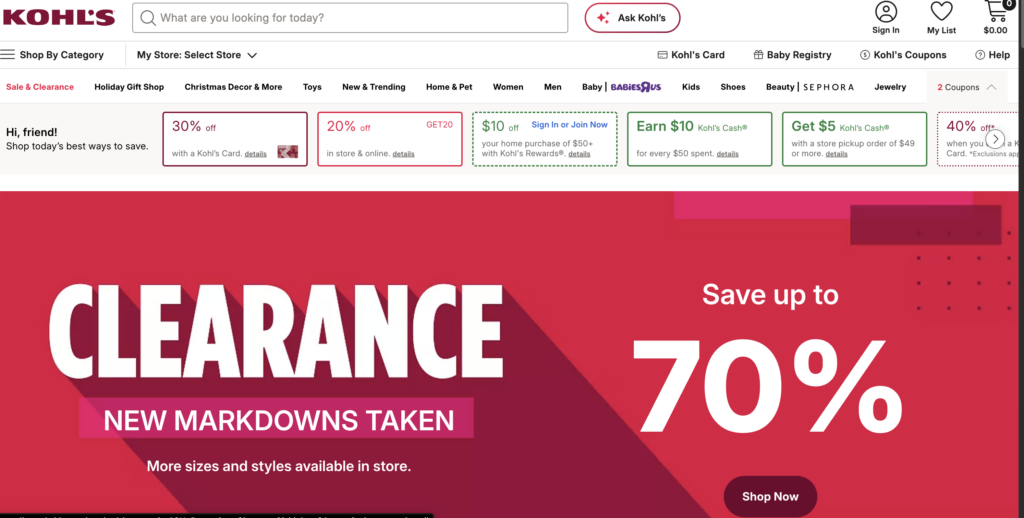
Kohl’s offers customers aged 60 and older 15% off qualifying in-store purchases every Wednesday. Customers should bring identification, and the discount cannot be combined with another percentage-off coupon.
There are also product exclusions, including certain brands and Sephora at Kohl’s merchandise. Kohl’s Cash and other dollar-off coupons are applied before the senior percentage discount.
The practical lesson: Check whether the Wednesday discount beats the coupons already available. A larger advertised percentage does not always produce the lowest final price.
Michaels: A Discount That Can Work Every Day
Michaels is particularly useful because its senior discount is not limited to one weekday. Customers aged 55 and older qualify for 10% off eligible purchases, including qualifying sale merchandise.
Customers can verify their age through Michaels Rewards to have the discount applied to eligible online and in-store purchases. Showing identification at checkout is another option for in-store purchases.
The exclusions matter. Custom framing, clearance items, gift cards, some craft machines, and several other categories are not eligible.
Walgreens: A Monthly Date Worth Marking
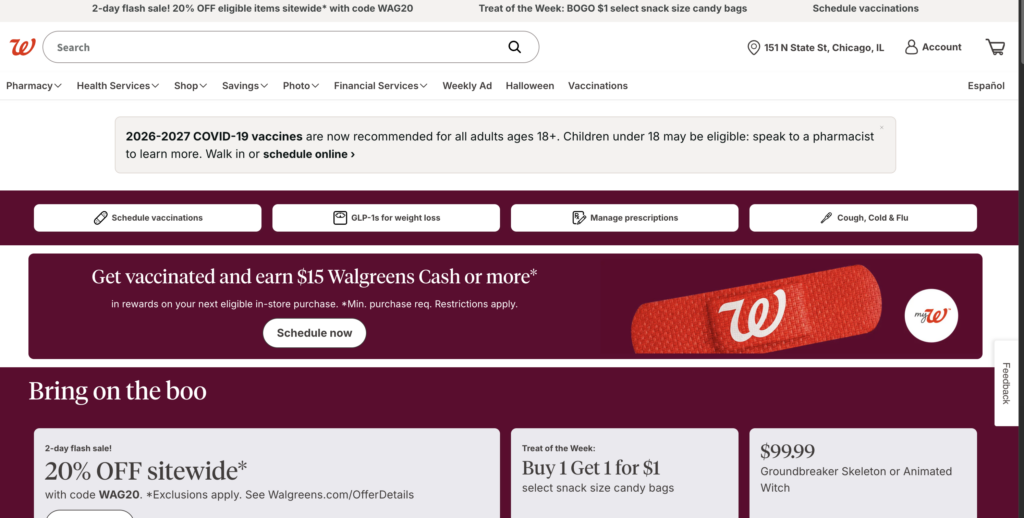
Walgreens offers eligible myWalgreens members aged 55 and older 20% off qualifying regular-priced merchandise on Seniors Day, normally the first Tuesday of each month.
The October 2026 promotion took place on October 6. Walgreens also offered a related online promotion that week, though the dates and terms of online offers can change.
A shopper buying eligible personal-care products or household essentials could benefit. Prescription medications and various other excluded products do not qualify, so checking the final price remains important.
Grocery Stores Were More Complicated Than Expected

Grocery discounts are especially attractive because food is a recurring expense. Saving a few dollars every week can be more useful than receiving a large discount on something purchased once a year.
However, supermarkets do not follow one national set of rules. Some provide monthly discount days, others operate regional programs, and many rely on ordinary loyalty promotions instead.
| Grocery Chain | Age | Discount Opportunity | When |
|---|---|---|---|
| Fred Meyer | 55+ | 10% off select items | First Tuesday of each month |
| Harris Teeter | 60+ | 5% off eligible purchases with VIC card | Thursdays |
| Albertsons | Varies | 10% off at participating locations | First Wednesday at participating stores |
| Hy-Vee | Varies by store | Often 5%–10% at participating locations | Store-specific |
Fred Meyer’s discount covers selected private-label groceries, clothing, home merchandise, and other eligible categories. Harris Teeter and other regional programs may have exclusions or participation rules.
The important distinction is between a discount on the entire grocery bill and a discount on selected products. Those are not the same thing.
Before changing grocery stores, compare the total basket price after discounts. Driving farther for a 5% reduction may make little sense if the store’s usual prices are higher or transportation costs erase the savings.
Restaurants Offered Savings, but the Menu Made a Difference
Restaurants are among the easiest places to ask about senior pricing. Some offer a special menu, while others provide a percentage discount through a membership program.
IHOP: The 55+ Menu Is Worth Checking
IHOP publishes a dedicated 55+ menu featuring selected breakfast and other meals. Prices vary across restaurant locations, and some lower-priced general-menu specials may provide better value.
That last detail is worth remembering. A smaller senior meal is not necessarily the cheapest or best option for every diner.
Denny’s: An AARP Card Can Help
At participating Denny’s locations, AARP members can receive 15% off eligible checks, with a maximum discount of $10. Diners should present their membership card when paying.
The offer is subject to participating-location terms, so it is worth confirming eligibility and any menu exclusions before ordering.
Outback Steakhouse: Another Membership-Based Saving
Outback Steakhouse offers AARP members 10% off qualifying food and nonalcoholic beverages. The benefit applies to dine-in orders, while eligible curbside carryout orders can also qualify at participating locations.
Customers should present their membership card or provide their membership number as directed. Delivery and catering orders are excluded.
Here is how some common restaurant requests compare.
| Restaurant | What to Request | What to Check |
|---|---|---|
| IHOP | The 55+ menu | Compare with regular value meals |
| Denny’s | AARP member discount | Participation, eligible items, $10 cap |
| Outback Steakhouse | AARP member savings | Food eligibility and order method |
| Independent diner | Senior menu or local promotion | Age requirement and available days |
Small independent restaurants are still worth asking. A diner may offer an early-bird special, weekday pricing, or a smaller portion at a lower price, even without a formal senior program.
Those possibilities should be treated as local opportunities rather than guaranteed discounts.
Movie Theaters Were Another Promising Place to Ask

Going to the movies is one area where age-specific pricing remains available, although the amount saved depends heavily on the theater.
AMC allows customers aged 60 and older to purchase senior-discount tickets at participating theaters. Cinemark also offers senior pricing and designated Senior Discount Days, generally starting at age 62, subject to local rules.
For someone who attends the movies regularly, it makes sense to compare senior prices with matinee tickets, loyalty-member promotions, and weekday specials.
A senior ticket may be less expensive than the ordinary adult ticket, but another available promotion might still be cheaper.
National Parks Offered One of the Most Useful Long-Term Deals
For older adults who enjoy outdoor travel, the National Park Service offers a discount that can provide value across multiple years.
Eligible U.S. citizens and residents aged 62 and older can purchase an America the Beautiful Senior Pass for $20 annually or $80 for a lifetime pass. These passes cover standard entrance or day-use fees at participating federal recreation sites, with some additional benefits at certain locations.
Unlike a small retail discount, a lifetime pass can become more valuable with repeated trips. Seniors should still check individual parks for reservations, special activity fees, and other charges the pass does not cover.
This is also a reminder that senior savings extend beyond shops and restaurants. Some of the largest opportunities appear when booking experiences rather than buying products.
Public Transportation Discounts Deserve More Attention

Public transportation can be one of the more valuable senior benefits, particularly for people who no longer drive every day.
For example, Washington, D.C.’s Metro system offers customers aged 65 and older a Senior SmarTrip card providing approximately half-price eligible bus and rail fares. The savings are applied when the appropriate card is used.
Other cities have their own reduced-fare programs, but the qualifying age, registration process, and benefit differ by transit authority.
The best question is not simply whether seniors receive a cheaper ticket. Ask whether you need a special card, whether reduced fares apply during rush hour, and whether local buses and regional trains participate.
Train Tickets Were Easier to Discount Than Some Travelers Realize

Amtrak provides passengers aged 65 and older a 10% discount on most eligible train fares. On qualifying cross-border services operated jointly with VIA Rail Canada, the senior age threshold begins at 60.
Travelers should select the senior passenger type during booking so the discount can be calculated. Not every fare or service is eligible, and sleeping accommodations have separate exclusions.
For retirees with flexible schedules, comparing travel dates is still worthwhile. A discounted fare on a busy day may cost more than a lower regular fare on a quieter day.
Hotels Were Worth Asking About Before Booking
Hotels are another area where a senior rate can make a noticeable difference, especially on stays lasting several nights.
Marriott has published senior-rate offers for eligible guests aged 62 and older at participating properties. These rates may need to be selected during booking, and valid identification can be required at check-in.
The smartest approach is to compare the senior rate against the hotel’s regular flexible rate, advance-purchase offers, and loyalty-member pricing.
Do not assume a senior rate is automatically the lowest one. Taxes, parking, breakfast, cancellation rules, and resort fees can all affect the real cost.
Monthly Phone Bills May Be Worth More Than One-Time Discounts

Retail discounts save money at checkout, but a lower monthly bill can continue saving money after the original request.
AT&T advertises a 55+ wireless plan for eligible older customers, subject to age verification and plan terms. It also describes bundled savings involving eligible home internet services.
Before switching, compare the entire monthly cost rather than focusing on the advertised discount. Include taxes, equipment payments, coverage, data allowances, and any requirements for automatic payments or bundled services.
A permanent reduction on a recurring bill can be especially useful for retirees managing a fixed monthly budget.
The Places Where Asking Was Less Predictable
Not every place offering a product or service has a formal senior discount. This is where a 30-day asking habit needs realistic expectations.
Large retailers may emphasize loyalty programs and seasonal sales instead of permanent age-based pricing. Grocery chains can have different policies across regions, while locally owned businesses may decide for themselves whether to offer special rates.
Three situations deserve particular attention:
- Already discounted items: Some stores exclude clearance merchandise or prevent senior discounts from being combined with other promotions.
- Prescription purchases: Retail senior promotions generally should not be assumed to apply to prescription medicines or insurance-covered pharmacy services.
- Online purchases and services: An age-based rate may require registration, verification, or choosing the correct pricing option before checkout.
It is also reasonable for an employee to say that no senior discount is available. Asking politely does not guarantee a discount, and buying something unnecessary just to use a promotion defeats the purpose.
What a 30-Day Discount Challenge Could Reveal
A month is long enough to examine several ordinary spending categories, but actual savings will depend on where a person lives and shops.
Instead of guessing how much money could be saved, keep a simple record. This separates useful savings from discounts that sound impressive but offer little real value.
| Week | Where to Ask | What to Record |
|---|---|---|
| Week 1 | Clothing and retail stores | Discount day, eligibility, final receipt |
| Week 2 | Grocery stores and restaurants | Eligible items, membership requirements |
| Week 3 | Movies, attractions, transportation | Senior ticket price versus other fares |
| Week 4 | Hotels, phone plans, local services | Recurring savings and total cost |
For every eligible purchase, record the price you would otherwise have paid and the actual price after the senior discount. Do not count savings on purchases you would not normally have made.
Monthly savings = Regular cost of planned purchases − Actual cost after discounts.
A useful total should also account for additional travel costs, membership fees, and any cheaper alternatives that were available.
The Best Way to Ask Without Feeling Awkward
The question does not need to be complicated. A short, polite request before paying is enough to find out whether an offer exists.
“Do you offer a senior discount or a special rate for customers over 60?”
When an employee says yes, ask about the qualifying age, required identification, eligible items, and whether another promotion offers better value.
For hotels, transportation, and other bookings, ask before completing the reservation. For retail stores, mention the discount before the cashier finishes the transaction.
It also helps to keep a small list of regular discount days. Someone who already shops at Ross, Kohl’s, Walgreens, or Fred Meyer may find that remembering the calendar is more useful than searching for new discounts constantly.