

Most travelers spend their flights putting up with small discomforts they never think to question. They sit through hours of cold cabin air, struggle with overhead luggage, or go hungry between meal services because they assume nothing can be done.
What many passengers don’t realize is that airlines may offer extra comfort items, assistance, and services that aren’t always announced. Some are complimentary, while others depend on the airline, aircraft, ticket type, or available supplies.
Knowing what to ask for can make a real difference, especially for older travelers, people with mobility challenges, and anyone facing a long flight. Here are 13 things worth requesting before or during your next trip.
What Airlines May Provide Without an Extra Charge
Not every airline offers the same services. A full-service international carrier may provide items that a budget airline charges for or doesn’t carry at all.
| What You Can Request | Usually Free? | Best Time to Ask |
|---|---|---|
| Extra water | Often | During the flight |
| Additional snacks | Sometimes | After snack service |
| Blankets or pillows | On selected flights | Early in the flight |
| Special dietary meals | On eligible flights | Before departure |
| Seat changes | Sometimes | Check-in or boarding |
| Disability-related boarding assistance | Yes, on covered flights | Before boarding |
| Wheelchair assistance for disability needs | Yes, on covered flights | Before travel |
| Connecting-flight assistance for disability needs | Yes, on covered flights | Before departure |
The most useful distinction is between optional comfort perks and required disability accommodations. On flights covered by U.S. accessibility rules, qualifying passengers have rights to certain assistance regardless of whether complimentary extras are available.
1. Extra Water Without Waiting for the Beverage Cart

Airplane cabins have low humidity, and hours of travel can leave your mouth and throat feeling dry. Yet many passengers assume they must wait until the beverage cart reaches their row before requesting another drink.
On flights with complimentary water service, you can usually ask a flight attendant for an additional cup. You can also request water when taking medication instead of waiting for the next scheduled round.
If you’re awake during a long overnight flight, ask whether water is available between regular services. Some crews also arrange self-service water stations near the galley when operating conditions allow.
Travel tip: Bring an empty reusable bottle through airport security and fill it before boarding. This gives you a backup when turbulence interrupts cabin service or the crew is occupied.
2. More Snacks When the First Serving Isn’t Enough
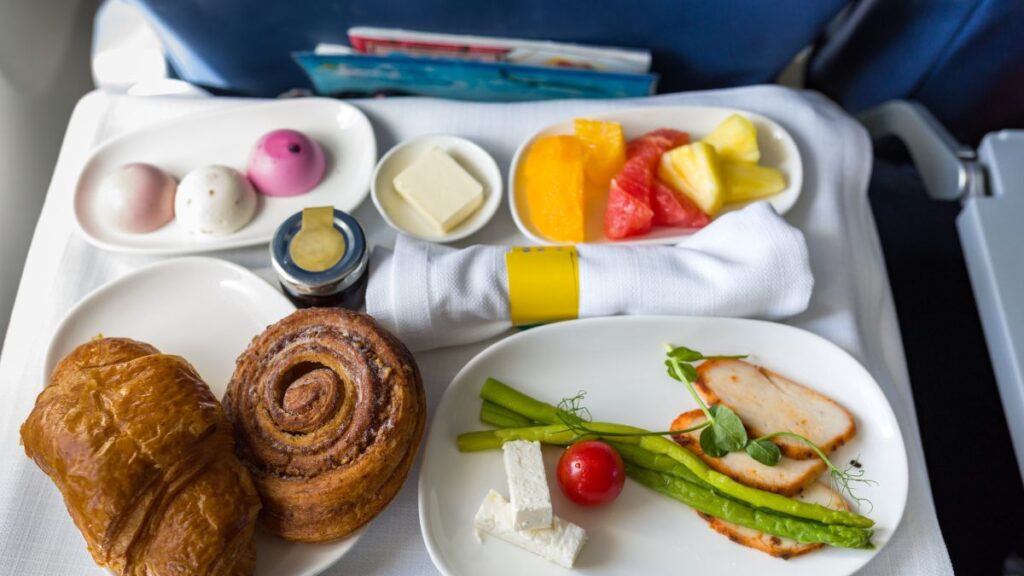
A tiny bag of pretzels may be enough for a short flight, but it can feel disappointing when you’re traveling across the country. Many passengers finish their snack and assume that’s all they’ll receive.
If complimentary snacks are offered, there’s no harm in asking whether an extra serving is available. Flight attendants may have spare crackers, cookies, pretzels, or other packaged snacks after the initial service.
However, additional servings depend on inventory, and some airlines sell their larger snack options. Asking doesn’t guarantee another free item, especially when supplies must last until landing.
Money-saving tip: Pack a few shelf-stable snacks in your carry-on. This is especially helpful when connecting flights, delays, or limited onboard service make meals unpredictable.
3. A Special Meal That Fits Your Dietary Needs
People who need vegetarian, gluten-free, low-sodium, religious, or other special meals sometimes assume airline food offers no flexibility. On many international flights, that’s not necessarily true.
Airlines including American and Delta offer special meals on eligible routes, often without an additional charge when meal service is already included. The available choices vary by airline and destination.
The important detail is timing. American generally asks passengers to order special meals at least 20 hours before departure, while Delta generally requires at least 24 hours’ notice.
Don’t rely on requesting an entirely different meal after boarding. Airlines typically load their catering supplies before departure, leaving crews with limited alternatives.
Travel tip: Confirm your special meal request after any booking change. Carry suitable backup food if you have a strict dietary requirement, since availability and preparation practices differ between airlines.
4. A Blanket or Pillow When the Cabin Gets Too Cold
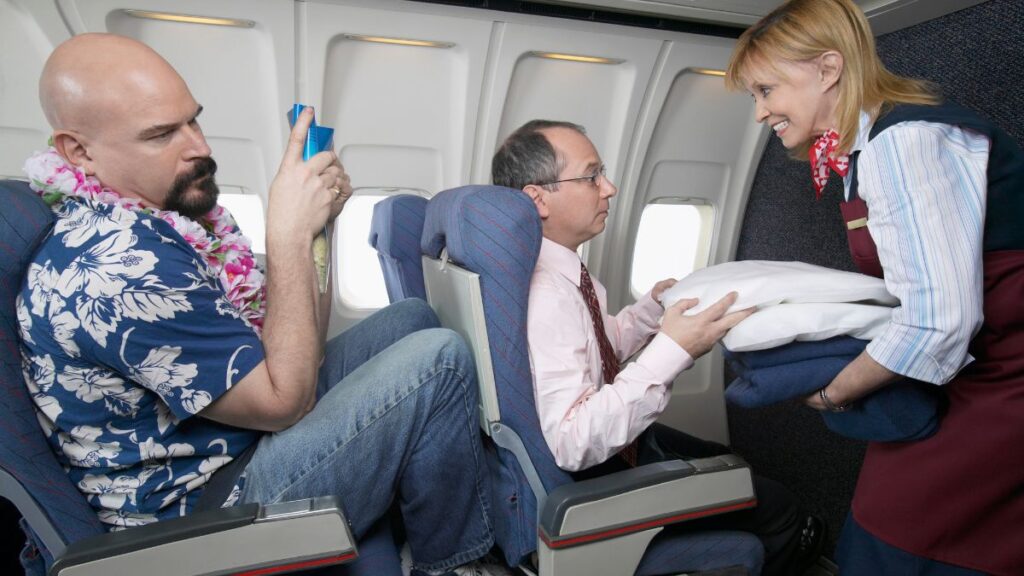
Airplane temperatures can feel surprisingly chilly, especially during overnight flights. Sitting still for several hours may make the cold more noticeable, particularly if you already have stiff joints or find it difficult to get comfortable.
Some airlines provide complimentary blankets and pillows on long-distance routes. Others distribute them only in certain cabins or carry a limited number for economy passengers.
If you don’t see one on your seat, ask the flight attendant whether any are available. A small pillow behind your lower back may improve comfort, while a blanket can help when the cabin feels cold.
Comfort tip: Ask early rather than waiting until the middle of the flight. Bring a lightweight sweater or travel blanket as a backup, especially when flying with a budget airline.
5. A Toothbrush, Toothpaste, or Small Comfort Kit

Long international flights can leave passengers feeling uncomfortable and far from refreshed. After sleeping in an airplane seat, something as simple as brushing your teeth can make the next few hours more pleasant.
Some airlines stock amenity kits with toothbrushes, toothpaste, eye masks, earplugs, or other basic toiletries. These are more common in premium cabins, although selected economy services may offer limited supplies.
If you forgot something important, ask whether a spare toothbrush or basic hygiene item is available. Don’t assume a complete business-class amenity kit will be handed over free of charge.
Packing tip: Keep a small hygiene pouch in your personal bag. Include a toothbrush, travel-sized toothpaste, tissues, lip balm, and any other items you regularly need during long flights.
6. Headphones or Help Using the Entertainment System
You settle into your seat, find a movie you want to watch, and then realize your headphones won’t connect. It’s a small problem that can make a long flight feel much longer.
Depending on the airline and aircraft, basic headphones may be provided free, sold onboard, or unavailable entirely. Some entertainment systems also support subtitles or other accessibility features.
Before giving up, ask a crew member whether compatible headphones are available or how to turn on captions. You can also request help using the entertainment system if the controls are unfamiliar.
For passengers with hearing or vision disabilities, airlines may have additional communication and accessibility responsibilities.
Travel tip: Pack wired headphones when possible. Older entertainment systems may not connect directly to Bluetooth headphones, and adapters aren’t always available.
7. A Different Seat When Your Assigned One Isn’t Comfortable
A seat that looks perfectly reasonable on a booking screen may feel uncomfortable once you’re aboard. Perhaps your knees press against the seat ahead, your window seat makes restroom visits difficult, or the person beside you needs more assistance.
You can ask whether another seat is available, especially before the flight departs. Gate agents generally have more control over assignments than flight attendants do once boarding is complete.
A move to another standard economy seat may sometimes be possible without extra payment. However, an empty premium seat doesn’t automatically mean you can occupy it.
Passengers with qualifying disability-related needs may have stronger seating protections. U.S. Department of Transportation rules require certain accommodations, although airlines generally aren’t required to provide a higher class of service.
Smart request: Explain the problem rather than simply requesting a better seat. Asking for easier aisle access is more useful than demanding a complimentary first-class upgrade.
8. Extra Legroom or an Upgrade That Wasn’t Available Earlier
Many travelers assume their seat options are permanently fixed once they’ve checked in. In reality, seat availability may change as passengers modify reservations, miss connections, or receive upgrades.
If you need more space, ask the gate agent whether any extra-legroom seats remain available. Sometimes a better seat can be purchased at the airport, although prices and eligibility depend on the airline.
A complimentary upgrade is much less predictable. Loyalty status, fare rules, operational needs, and airline policy generally matter more than simply making a polite request.
Don’t assume an exit-row seat is suitable for everyone. Passengers seated there must meet safety requirements and be able to perform the required evacuation duties.
| Seat Request | What to Expect |
|---|---|
| Standard aisle or window | Change may be free if available |
| Seat closer to the front | Depends on fare and airline policy |
| Extra-legroom economy | Often requires payment |
| Emergency exit row | Safety eligibility rules apply |
| Premium economy or business | Usually requires payment or upgrade eligibility |
| Disability-related seating | Specific protections may apply |
Travel tip: Check your airline’s app before boarding. Available seats and prices may change, but a seat showing as unoccupied doesn’t necessarily mean it’s available for free.
9. Help Managing Your Carry-On Luggage
Lifting a suitcase into an overhead compartment can be difficult, especially for travelers with shoulder problems, limited strength, or reduced mobility. Attempting to lift an awkward bag in a crowded aisle can also create a safety problem.
You can ask the crew or gate agent about safe luggage-stowing options before boarding. However, flight attendants aren’t universally required to lift ordinary carry-on bags for every passenger.
Some airlines restrict how much lifting their flight attendants can perform because of injury concerns. Crew members may offer alternatives rather than physically placing every suitcase into an overhead compartment.
For passengers with disabilities, different requirements apply. U.S. rules provide for assistance with carrying, stowing, and retrieving bags and assistive devices when the passenger’s disability requires it.
Practical tip: Pack so you can manage your suitcase without depending on another passenger. If you cannot safely lift it, ask about checking the bag or arranging disability-related assistance rather than risking an injury.
10. Extra Time to Board Before the Main Crowd
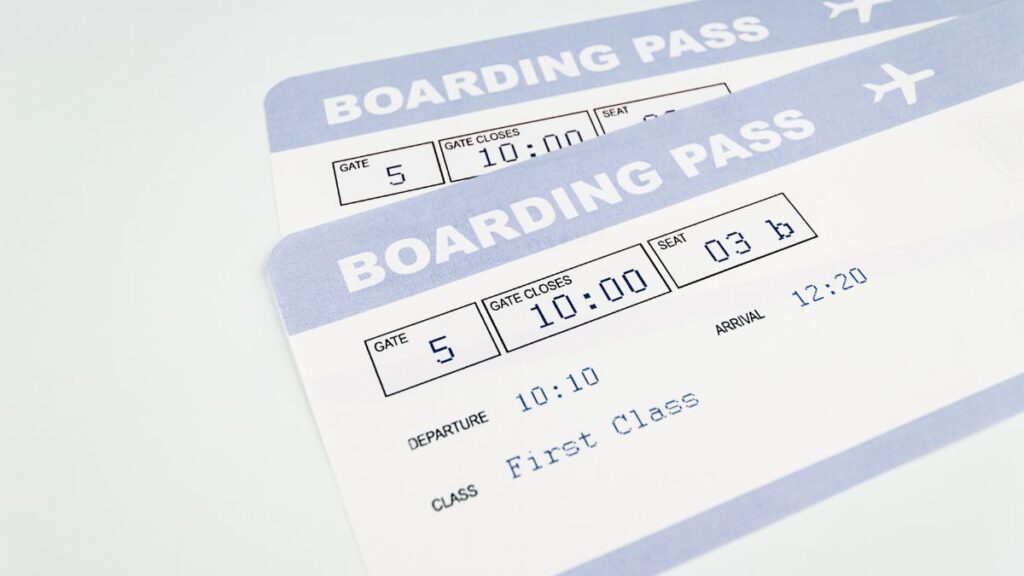
Boarding can become one of the most stressful parts of flying. Passengers line up, bags crowd the aisle, and everyone seems eager to reach their seat as quickly as possible.
If a disability means you need additional time or assistance getting seated or storing accessibility equipment, ask the gate agent about preboarding. On flights covered by U.S. disability rules, eligible passengers must be given an opportunity to board early, subject to limited approved exceptions.
This is different from paid priority boarding, and age alone doesn’t automatically provide the same entitlement. Some airlines may offer extra-time boarding more broadly as a courtesy.
Requesting help before boarding begins gives staff a chance to explain where to wait and how the process works.
Travel tip: Approach the gate agent before the first boarding announcement if you know you’ll need assistance. Explain what you need rather than assuming your age or circumstances will be obvious.
11. Wheelchair Assistance Even If You Don’t Normally Use One
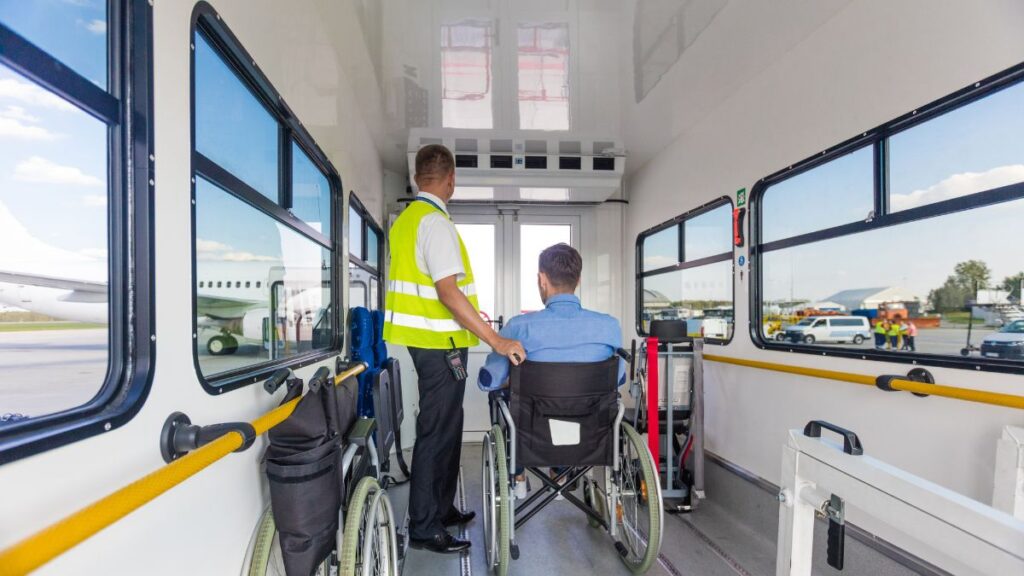
Some travelers can walk comfortably around their homes but struggle with enormous airport terminals. Long corridors, security lines, and distant gates may become exhausting when mobility is limited.
You don’t necessarily need to use a wheelchair in everyday life to qualify for airport wheelchair assistance. If a disability limits your ability to cover airport distances, you can request help for the portions of the trip where it’s needed.
On flights covered by U.S. disability rules, required wheelchair and guided assistance is provided without an additional charge. This can include help reaching the departure gate, boarding, making connections, and getting to baggage claim after landing.
It’s sensible to request assistance while booking and reconfirm before travel. However, advance notice generally isn’t mandatory for ordinary wheelchair assistance on covered flights.
Travel tip: Tell the airline exactly where assistance is needed. Someone may require a wheelchair across the terminal but be able to walk independently onto the aircraft.
12. Assistance Getting to a Connecting Flight
Connections can turn a pleasant trip into a stressful experience. A short delay, distant terminal, or last-minute gate change may leave you facing a long walk with little time to spare.
Passengers with qualifying disabilities can request assistance between flights. Depending on the airport and individual needs, this might involve a wheelchair, guided escort, or suitable accessible transportation.
Under U.S. rules, airlines must provide required assistance to eligible passengers moving between connecting gates. However, this doesn’t mean every traveler with a tight connection is entitled to a free motorized cart or a personal escort.
If you need support, add the request to your reservation for every flight segment. Confirm the arrangements at check-in, especially when your itinerary includes different airlines.
Connection tip: Let your crew know if you have a tight connection and need disability-related assistance. They may be able to communicate your needs, but assistance doesn’t guarantee the next flight will be held.
13. Medical Assistance or Help With Essential Equipment
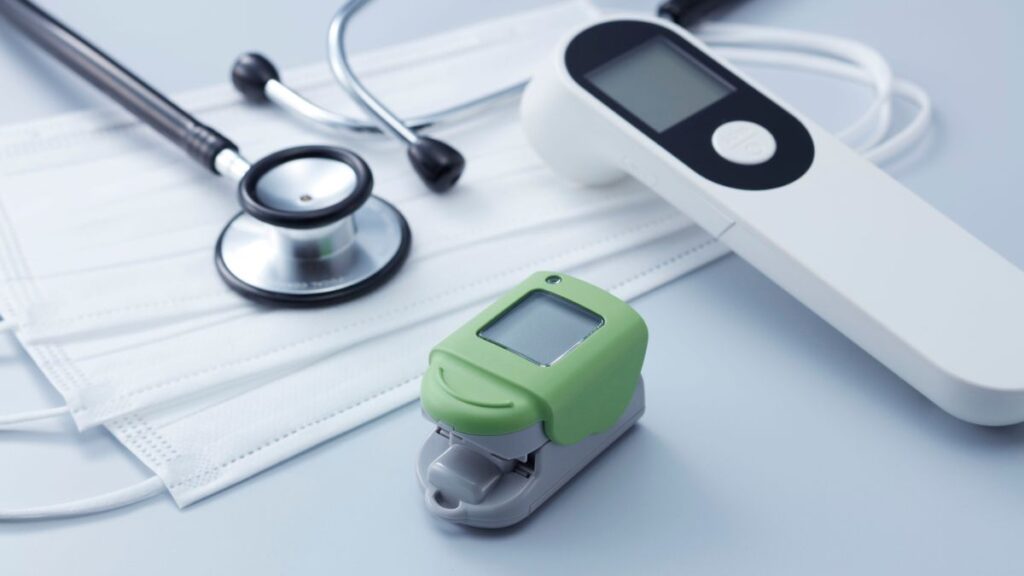
Travelers sometimes keep quiet about medical needs because they don’t want to bother the crew. But if you become unwell during a flight, speaking up promptly is far better than hoping the symptoms will disappear.
Flight attendants receive training for onboard emergencies, and commercial aircraft carry certain emergency medical equipment. If you feel faint, experience breathing difficulties, or develop concerning symptoms, alert a crew member immediately.
For planned medical equipment, arrangements are different. Passengers who use portable oxygen concentrators, for example, should review airline requirements before traveling.
Under applicable U.S. rules, airlines may require advance notice and medical documentation in certain circumstances. Passengers may also need enough charged batteries to operate an approved portable oxygen concentrator for 150% of the expected maximum flight duration.
Routine supplemental oxygen should never be assumed to be available free on demand. Airline emergency oxygen equipment is not a substitute for arranging medically necessary oxygen support in advance.
Safety tip: Keep essential medication in your carry-on rather than checked luggage. If your condition requires medical attention during the flight, notify the crew immediately instead of relying on routine cabin service.
Ask at the Right Time to Improve Your Chances
Even a reasonable request can be difficult to fulfill when made too late. The following guide shows when to speak up.
| When | What to Arrange |
|---|---|
| During booking | Wheelchair assistance, disability-related seating, medical equipment |
| 24–48 hours before flying | Check special meal deadlines and equipment arrangements |
| At check-in | Confirm assistance and ask about seat availability |
| At the boarding gate | Request preboarding and discuss seating problems |
| When entering the aircraft | Ask about blankets, pillows, and luggage concerns |
| During the flight | Request extra water, snacks, headphones, or available comfort items |
| Before landing | Confirm any prearranged arrival assistance |
Airline rules vary, particularly on international journeys. When traveling with more than one carrier, confirm the arrangements separately for each airline.
Three Requests That Usually Won’t Get You a Free Perk
There are also a few popular travel claims worth treating carefully.
Free airport lounge access: Simply being a senior or asking politely usually doesn’t qualify you for a lounge pass. Complimentary entry normally depends on eligible tickets, airline status, memberships, or credit card benefits.
Free first-class upgrades: Empty premium seats aren’t necessarily available for complimentary upgrades. Airline upgrade rules and paid options still apply.
Free extra-legroom seating: These seats are often sold separately. An eligible disability-related seating accommodation is different from a general request for additional personal comfort.
Understanding these limits can prevent disappointing conversations at the gate and help you focus on services that are genuinely available.