
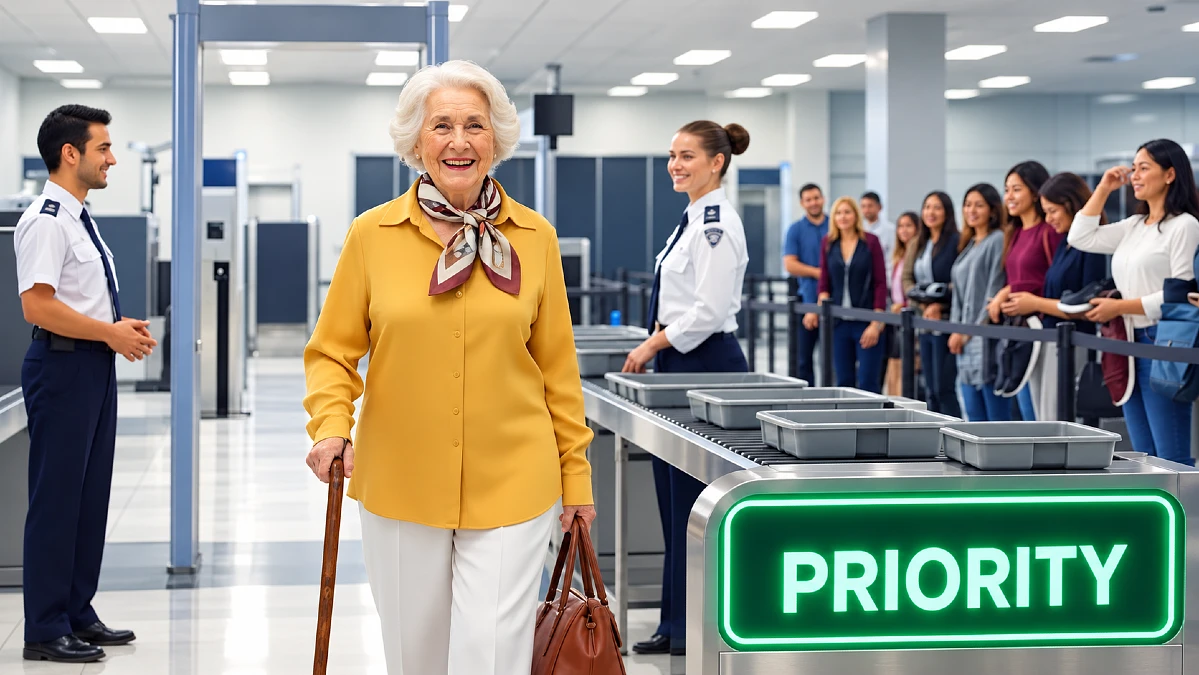
Flying after 60 should not mean paying extra for every bit of assistance or struggling through an airport without help. Yet many older travelers spend money on services that may already be available at no charge. Knowing which protections apply can make a difficult travel day easier, safer, and less stressful.
U.S. airlines must follow federal passenger protection rules, including the Air Carrier Access Act, which protects travelers with disabilities.
Some protections apply to everyone, while others depend on a disability or a specific medical need rather than age alone. Here are 10 important air travel rights and services every passenger over 60 should understand before booking another flight.
1. You May Qualify for Free Wheelchair or Guided Airport Assistance
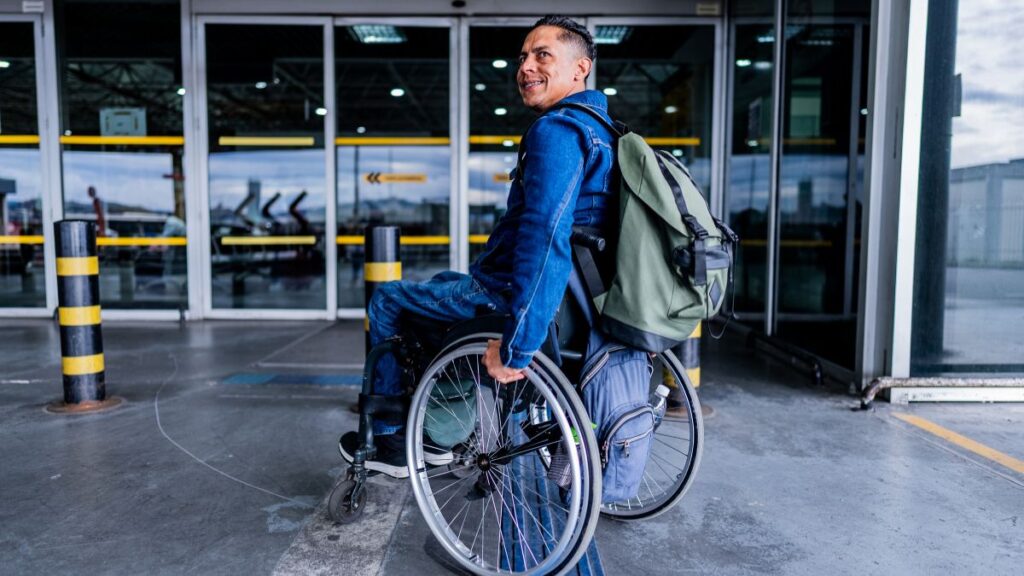
Walking through a large airport can be exhausting, especially when your gate is far away or you have a tight connection. For passengers with disabilities that affect mobility or orientation, airlines must provide appropriate wheelchair or guided assistance without charging extra.
This service can cover important parts of the airport experience, from checking in to reaching the aircraft.
Under the Air Carrier Access Act, eligible passengers can receive help moving from the terminal entrance to their departure gate and onto the airplane.
Assistance can also be provided when changing flights or reaching baggage claim after landing. Travelers who cannot manage long distances because of a disability do not have to struggle through the airport alone.
The easiest approach is to request assistance when making your reservation and confirm it before departure. When you arrive, identify yourself to airline staff and explain what type of assistance you need. You might say, “I have a mobility limitation and need wheelchair assistance to reach my gate and board the aircraft.”
There is one important distinction that every older traveler should understand. Being over 60 does not automatically create a legal right to a personal airport escort or wheelchair service. The protection applies when the assistance is needed because of a qualifying disability, including certain age-related mobility limitations.
2. Passengers With Disabilities Can Request Priority Preboarding

Boarding an airplane can be one of the most uncomfortable parts of flying for older adults. Passengers often crowd around the gate, rush to store luggage, and move quickly through narrow aisles. For someone with balance problems or limited mobility, those few minutes can create unnecessary pressure.
Federal rules require airlines to offer preboarding to passengers with disabilities who identify themselves as needing additional time or assistance.
This allows eligible travelers to get settled before the main boarding process begins. The protection is based on disability-related needs rather than whether a passenger purchased priority boarding.
You should speak with the gate agent before boarding announcements begin and explain what assistance you require. A simple request is, “I have a mobility limitation and need extra time to board and get safely seated.” You generally do not need a doctor’s note simply to request disability-related preboarding.
Preboarding can provide more time to walk down the jet bridge, reach your seat, and arrange accessibility equipment.
However, it does not automatically guarantee additional overhead storage space or allow every traveling companion to board early. Airline procedures may also differ for carriers with approved alternative boarding arrangements.
3. Certain Medical Conditions Qualify You for Seating Accommodations

Airlines frequently charge extra for preferred seats, additional legroom, and certain aisle locations. Many older passengers pay these fees because they believe every better seat is considered an optional upgrade. However, federal rules require airlines to provide certain seating accommodations when they are necessary for a passenger’s disability.
For example, a passenger with a fused or immobilized leg may need a seat that provides additional room. Someone who uses an aisle chair and cannot transfer over a fixed armrest may require a movable aisle armrest. Travelers with certain service animal needs may also qualify for particular seating arrangements.
The important step is to explain the actual disability-related need rather than simply request a more comfortable seat. You could tell the airline, “My leg cannot bend normally, and I need a seat that accommodates this limitation.” Contacting the airline when booking gives staff more time to identify a suitable arrangement.
These protections do not guarantee a free business-class seat, an unlimited choice of premium seating, or additional space for personal preference.
Airlines generally must accommodate eligible needs within the class of service purchased, subject to safety requirements. Still, knowing the difference between an optional upgrade and a required accommodation may prevent unnecessary charges.
4. A Necessary Caregiver May Be Entitled to Sit Beside You

Some older passengers travel with a spouse, adult child, or caregiver who provides assistance during the flight. This person may help with eating, communication, understanding instructions, or other activities that airline employees are not required to perform. In certain situations, federal rules require the airline to provide adjoining seats.
The protection applies to specific disability-related assistance needs, including personal care attendants, readers for passengers with visual disabilities, and interpreters for passengers with hearing disabilities.
It can also apply when an airline requires a passenger to travel with a safety assistant. The purpose is to ensure that necessary assistance remains available throughout the flight.
If you require this arrangement, contact the airline before departure and explain the caregiver’s role. You could say, “I am traveling with a personal care attendant who must assist me during the flight, and we need adjoining seats.” Ask the airline to record the accommodation request in both reservations.
This rule does not mean every passenger over 60 can demand free adjacent seating with a spouse or family member.
The companion must meet the requirements for a disability-related seating accommodation, and each traveler still needs a valid ticket. When the conditions apply, however, the airline must provide an appropriate adjoining-seat arrangement.
5. Assistive Devices Can Travel Without Additional Baggage Fees

Baggage charges can make an already expensive trip considerably more costly. However, passengers with disabilities have protections for equipment they need to travel and function safely. Airlines generally cannot charge baggage fees for qualifying assistive devices simply because those items take up additional space.
Common examples include wheelchairs, walkers, canes, crutches, hearing aids, and certain medically necessary breathing equipment.
Continuous positive airway pressure machines, commonly called CPAP machines, are another familiar example. Qualifying assistive devices carried into the cabin also do not count toward the normal carry-on allowance, subject to safety and storage requirements.
It is usually helpful to pack medical equipment separately from ordinary clothing and vacation supplies. A dedicated bag makes it easier to identify the equipment when checking in or boarding. You can explain, “This bag contains assistive medical equipment that I need during my trip.”
Travelers using battery-powered wheelchairs, portable oxygen concentrators, or other specialized equipment should check transportation requirements before leaving home. Some devices have battery restrictions, advance notice requirements, or specific storage procedures.
Remember that ordinary personal belongings do not become exempt from baggage fees simply because they are packed beside medical equipment.
6. TSA Cares Can Help Make Airport Security Less Stressful

Security screening can feel particularly difficult when you use a walker, have an implanted medical device, or struggle with confusing instructions.
Fortunately, the Transportation Security Administration operates a program called TSA Cares to help travelers with disabilities and medical conditions. The service is free and can provide information and assistance during airport screening.
Travelers can contact TSA Cares before departure to discuss their screening needs and request help from a Passenger Support Specialist. TSA recommends submitting these requests at least 72 hours before traveling.
The TSA Cares telephone number is 855-787-2227, and passengers can explain their concerns when requesting assistance.
For example, someone using an insulin pump may want to understand how the device will be screened. A traveler with limited mobility may need help understanding the screening procedures available to them.
Explaining the specific challenge beforehand can make the experience more predictable.
TSA Cares does not guarantee that every traveler will receive a dedicated escort or bypass the security line. The program is intended to help people complete required screening safely, not avoid the screening process.
If a Passenger Support Specialist is unavailable, travelers can ask to speak with a TSA supervisor about their accessibility needs.
7. Older Travelers Can Request Appropriate Security Screening Accommodations
Many travelers believe turning 75 automatically provides all the benefits of TSA PreCheck. That is not correct, although TSA does offer modified screening procedures for some passengers age 75 and older.
Travelers with mobility limitations or medical equipment may also qualify for screening adjustments based on their individual circumstances.
One familiar senior screening benefit involved keeping shoes on during security checks. However, in July 2025, TSA ended its general shoes-off requirement for passengers of all ages. Most travelers can now keep their shoes on, although an officer may still request removal when additional screening is necessary.
Passengers who have difficulty standing should explain their limitations before screening begins. Travelers can also request private screening and discuss alternatives if a particular screening procedure creates a medical or accessibility concern.
Having a pacemaker, joint replacement, insulin pump, or mobility aid may require additional screening steps, but does not automatically prevent travel.
Medically necessary liquids can also receive special consideration during TSA screening, even when they exceed the usual carry-on liquid limit.
These items must still undergo the appropriate inspection, so keeping them accessible can make the process easier. The best approach is to tell the officer what you need, follow the instructions provided, and request a supervisor if an accommodation is unclear.
8. Flight Cancellations and Major Delays Can Trigger Refund Rights

A canceled flight can be especially stressful when you have medication schedules, mobility limitations, or relatives waiting at your destination.
Fortunately, federal passenger protection rules provide important refund rights to travelers of every age. Understanding these protections can prevent you from accepting a voucher when you are actually entitled to receive your money back.
When an airline cancels your flight, you are generally entitled to a refund if you choose not to travel or accept alternative compensation.
The same protection applies when a flight is significantly delayed or changed and you decline the changed itinerary. Under current DOT rules, arriving three hours or more late on a domestic itinerary or six hours or more late on an international itinerary can qualify as a significant change.
Airlines may offer to rebook affected passengers, but you should understand the options before accepting.
Once you choose to take a replacement flight, the standard refund entitlement for the canceled or significantly changed original itinerary generally no longer applies. If you decide not to travel, ask for the refund to be processed rather than accepting a credit you do not want.
Meals and hotel accommodations are handled differently because they depend on the circumstances and the airline’s customer service commitments.
Many major U.S. airlines promise meal assistance or hotel accommodations for qualifying disruptions within their control, but the promises are not identical. Being over 60 or requesting disability assistance does not automatically guarantee priority rebooking, free lodging, or first choice of replacement flights.
9. Airlines Must Follow Special Rules During Long Tarmac Delays

Being stuck inside an airplane for several hours can be uncomfortable for anyone. For older travelers who need regular bathroom access, medication, or hydration, it can become particularly difficult. U.S. federal rules establish protections for passengers experiencing lengthy tarmac delays at covered airports.
Airlines generally must provide drinking water and a snack no later than two hours after the tarmac delay begins. They must also maintain working toilets, reasonable cabin temperatures, and access to appropriate medical attention when needed. Safety or security circumstances can affect when refreshments may be distributed.
For covered domestic flights at U.S. airports, airlines generally must provide an opportunity to deplane before the delay exceeds three hours. For international flights at U.S. airports, the corresponding period is four hours.
There are specific exceptions involving safety, security, air traffic control, and certain aircraft movements toward a suitable place for passengers to exit.
If you have a medical need, do not assume you must wait until the two-hour mark to request assistance. Tell a flight attendant if you need water for medication, urgent bathroom access, or help with a developing health concern.
Never attempt to leave an aircraft without permission, and remember that voluntarily deplaning may affect whether you can reboard the same flight.
10. You Have the Right to Challenge Disability-Related Denials
Even when a passenger clearly explains an accessibility need, problems can happen at the airport. Assistance might arrive late, a seating request might be overlooked, or an employee might misunderstand the applicable rules.
Federal protections include a process for addressing disability-related problems when ordinary customer service cannot resolve them.
Airlines serving U.S. routes covered by the Air Carrier Access Act must make a Complaint Resolution Official, or CRO, available during operating hours. This official is trained to address disability-related air travel issues and can be contacted in person or by telephone.
Passengers can ask for a CRO when they believe a required accommodation has been improperly denied.
The most effective approach is to remain calm and explain the problem clearly. You might say, “I requested disability-related assistance, but it has not been provided, and I would like to speak with the airline’s Complaint Resolution Official.”
Record the flight number, date, employee names when possible, and the assistance that was requested.
If the matter is not resolved, passengers may submit a formal complaint to the airline or the U.S. Department of Transportation. Airlines generally must respond to written disability-related complaints within 30 days, while ordinary consumer complaints have different response deadlines.
Keeping accurate records gives officials a clearer picture of what happened and what protection may have been violated.
What About Senior Discounts That Airlines Rarely Advertise?
Although senior discounts are not guaranteed by federal law, they may still be available on selected flights. Some airlines offer age-based fares on limited routes or through particular booking channels, and eligibility may begin at 65 rather than 60.
Availability changes, so travelers should never assume a discount exists for every airline or destination.
Before purchasing a ticket, compare the ordinary online fare with any senior fare the airline currently offers. You can contact reservations and ask whether your route has a special fare for older passengers.
Remember that a regular promotion may cost less than a senior fare, especially when baggage charges and ticket restrictions are considered.