

Retiring before 65 sounds wonderful until you start looking at health insurance costs. You may have enough savings to leave your job, but one major medical bill could change your retirement plans.
And without employer coverage, even a healthy couple can face expensive monthly premiums.
The years between retirement and Medicare eligibility are often called the health insurance gap. During this period, choosing the wrong coverage or making a mistake with your retirement withdrawals could cost thousands of dollars.
1. Medicare Usually Doesn’t Start Until Age 65

One of the biggest surprises for early retirees is that leaving work does not make them eligible for Medicare. Most Americans become eligible at 65, regardless of whether they retire at 55, 60, or 62.
There are exceptions for some people with qualifying disabilities, ALS, or end stage renal disease. However, most healthy early retirees need another form of health insurance until their Medicare coverage begins.
Someone retiring at 60 may need five full years of coverage. That can become one of the largest expenses in an early retirement budget.
| Retirement Age | Years Until 65 | Months of Coverage Needed |
|---|---|---|
| 55 | 10 years | 120 |
| 58 | 7 years | 84 |
| 60 | 5 years | 60 |
| 62 | 3 years | 36 |
| 64 | 1 year | 12 |
These periods assume Medicare starts around the person’s 65th birthday. Individual eligibility and coverage dates can differ.
What to do: Calculate how many months you need insurance before Medicare begins. Then include those months in your retirement budget instead of treating health care as a minor expense.
2. Your Employer Health Insurance May End Sooner Than Expected

Many workers assume their health insurance will continue until the end of the month they retire. Some employers provide that benefit, but others end coverage on the employee’s final working day.
That difference can leave you without insurance for several weeks. A hospital visit or unexpected injury during that gap could become financially painful.
Before giving notice, ask your benefits department for the exact date your medical, dental, and prescription coverage will end. You should also ask whether unused vacation time or retirement benefits affect that date.
Get the information in writing whenever possible. This makes it easier to arrange replacement coverage without an unexpected break.
What to do: Arrange your next insurance plan before your existing coverage expires. Do not assume your retirement date and insurance termination date will be the same.
3. The Health Insurance Marketplace Can Cover the Gap
The Affordable Care Act Marketplace is one of the main options for Americans retiring before Medicare eligibility. It allows eligible people to buy private health insurance without depending on an employer.
Marketplace plans generally cover essential health benefits, including hospital care, prescription drugs, emergency services, and preventive care. They also cannot reject you or charge higher premiums simply because you have a preexisting medical condition.
Losing employer health insurance generally qualifies you for a Special Enrollment Period. You can usually apply during the 60 days before or 60 days after losing qualifying coverage.
Coverage commonly begins on the first day of the following month. That makes planning especially important if your employer coverage ends in the middle of a month.
What to do: Compare Marketplace plans before you retire. Check the monthly premium, deductible, doctors, prescriptions, and total possible yearly costs.
4. A Working Spouse Could Provide a Cheaper Option

If your spouse is still working, joining their employer health insurance plan may be worth checking first. Employer contributions can make this option less expensive than buying individual coverage.
Losing your own employer coverage generally creates a special enrollment right under a spouse’s eligible group health plan. Federal rules commonly require requesting enrollment within 30 days of losing coverage.
However, not every employer plan has the same dependent premiums. Some charge substantially more to cover a spouse than to cover the employee alone.
Ask your spouse’s benefits department for the actual monthly cost of adding you. Then compare that amount with Marketplace coverage based on your household income.
What to do: Check your spouse’s coverage before choosing COBRA or an individual plan. The cheapest option is not always the plan with the lowest monthly premium.
5. COBRA Can Keep Your Current Coverage, but the Price May Surprise You

COBRA allows many workers to continue their employer health insurance after leaving a job. This can be helpful when you want to keep the same doctors, treatments, and insurance network.
The biggest drawback is the cost. While employed, your company may have paid a large part of your monthly premium. Under COBRA, you generally pay the full premium yourself, plus an administrative fee of up to 2%.
For example, suppose your employer plan costs $1,000 per month. If your company previously covered $750, your personal cost may rise sharply after retirement.
COBRA usually lasts 18 months after employment ends, although some circumstances allow longer coverage. Someone retiring at 62 should not assume COBRA will last until Medicare begins at 65.
| Coverage Option | Main Advantage | Main Concern |
|---|---|---|
| COBRA | Often keeps your existing coverage | Full premiums can be expensive |
| Marketplace | Possible income based savings | Costs and networks vary |
| Spouse’s employer plan | May include employer contributions | Dependent premiums may be high |
| Retiree health plan | May continue employer benefits | Not every employer offers one |
| Medicaid | Low or no premiums for eligible people | Eligibility varies by state |
What to do: Compare COBRA against other options before accepting it. Also remember that voluntarily ending COBRA early does not always qualify you for a new Marketplace enrollment period.
6. Some Employers Still Offer Retiree Health Benefits

Although less common than they once were, some large companies, government employers, and union plans still provide health benefits to eligible retirees.
These plans may offer coverage until age 65 or continue as supplemental insurance after Medicare begins. Some employers contribute toward premiums, while others require retirees to pay most of the cost.
The important detail is that retiree health benefits are not necessarily the same as the coverage you received while working. Deductibles, provider networks, prescription benefits, and dependent coverage may change.
You should also ask what happens when you turn 65. Some retiree plans expect you to enroll in Medicare before they will pay certain expenses.
What to do: Request a written summary of retiree health benefits before accepting a retirement package. Find out whether your spouse can remain covered and how the plan works with Medicare.
7. Marketplace Subsidies Can Make a Major Difference
Health insurance prices are not always determined by the full premium listed by the insurance company. Eligible Marketplace customers can receive premium tax credits that reduce their monthly insurance payments.
These credits depend partly on household income and family size. That means two retirees of the same age may pay very different amounts for similar coverage.
There is an important change for 2026. The enhanced federal premium tax credits that applied through 2025 expired, and the previous 400% federal poverty level income limit returned.
As a result, some retirees now receive less assistance, while others may no longer qualify for premium tax credits. Rules and available state assistance can also affect what someone pays.
What to do: Estimate your insurance costs using the rules for the year you plan to retire. Do not rely on subsidy amounts from an older retirement calculation.
8. Your Retirement Income Matters More Than Your Savings Balance

Many early retirees assume that having a large investment account will prevent them from qualifying for Marketplace savings. However, the Marketplace generally uses household income rather than total savings to determine premium tax credit eligibility.
Consider two retirees who each have $700,000 saved. One receives a large taxable pension, while the other uses savings and retirement accounts that create less reportable income.
Their insurance assistance could be very different, even though their total savings are identical. This is why the source of your retirement income matters.
Marketplace income calculations generally include taxable retirement distributions, investment income, and both taxable and nontaxable Social Security benefits. Certain other forms of income also count.
What to do: Estimate your household income for the entire calendar year. Include income earned before retirement, not just the money you expect to receive after leaving work.
9. Your IRA Withdrawals Could Increase Your Health Insurance Costs

Retirement withdrawals do more than provide money for everyday expenses. They can also change the amount of Marketplace assistance you qualify to receive.
Withdrawals from traditional IRAs and pretax 401(k) accounts generally count toward Marketplace household income. Large withdrawals can reduce premium tax credits or eliminate eligibility.
Qualified Roth IRA withdrawals generally do not count as income for this purpose. However, Roth conversions can increase reportable income in the year the conversion occurs.
This creates an important planning decision. Taking more taxable retirement income than necessary may raise both your taxes and health insurance costs.
| Retirement Money Source | General Marketplace Income Treatment |
|---|---|
| Traditional IRA withdrawal | Usually counts |
| Pretax 401(k) withdrawal | Usually counts |
| Qualified Roth IRA withdrawal | Generally does not count |
| Roth conversion | Taxable amount generally counts |
| Social Security benefits | Full benefits count |
| Savings account principal | Generally does not count |
| Interest and dividends | Generally count |
These are general rules. Your actual income calculation depends on your accounts and tax situation.
What to do: Coordinate your withdrawal plan with your health insurance plan. A tax professional familiar with early retirement can help compare the combined costs.
10. A Sudden Income Increase Could Create a Tax Bill

Marketplace premium tax credits are often paid in advance to your insurance company. These advance payments are based on the household income you expect to earn during the year.
But retirement income does not always follow the original plan. You might sell investments for a large gain, take an extra IRA withdrawal, begin pension payments, or return to part time work.
These changes can increase your income and reduce the credit you were actually entitled to receive. You may then owe money when filing your federal tax return.
Starting in tax year 2026, federal repayment limits for excess advance premium tax credits no longer apply. If you receive more assistance than you qualify for, you generally must repay the full excess amount.
What to do: Update your Marketplace income estimate whenever your financial situation changes. This can reduce the risk of a large repayment when tax season arrives.
11. Medicaid May Be an Option When Retirement Income Is Low

Some early retirees have considerable savings but relatively little current income. Depending on where they live and their eligibility, Medicaid may provide another coverage option.
In states that expanded Medicaid under the Affordable Care Act, many adults under 65 can qualify based largely on household income. Other states have stricter eligibility rules for certain groups.
Medicaid can offer low cost medical coverage, but provider access and covered services vary by state and program. It is important to check whether your preferred doctors accept the coverage.
A particularly important detail is that income eligibility can change when pensions, Social Security, or retirement withdrawals begin. Qualification in one year does not guarantee qualification later.
What to do: Check Medicaid eligibility if your expected household income will be low. Review the actual provider network before making a coverage decision.
12. The Cheapest Monthly Premium Is Not Always the Best Deal
When retirement begins, reducing monthly expenses can feel like the top priority. That makes the plan with the lowest premium especially attractive.
However, a lower premium often comes with a higher deductible or greater costs when you receive medical care. A plan that looks inexpensive during a healthy year could become costly after surgery or a hospital stay.
You should compare the monthly premium, deductible, copayments, coinsurance, and yearly out of pocket maximum. Check whether your doctors and hospitals are in the plan’s network.
Prescription coverage deserves the same attention. A plan that charges less each month may still cost more overall if it covers your regular medications poorly.
What to do: Compare the best case and worst case costs before choosing a plan. Avoid judging insurance by the premium alone.
13. Health Care Expenses Can Rise Even When You Stay Healthy

Early retirees often focus on major medical events, but smaller expenses can also weaken a retirement budget. Dental care, glasses, hearing services, and medications may create bills that are easy to overlook.
Even with comprehensive health insurance, some services may require additional coverage or direct payment. Coverage details vary considerably between plans.
You should also allow room for changes in premiums and deductibles. A plan that fits your budget this year may become more expensive at renewal.
Be careful with short term health insurance marketed as a cheap alternative. These policies may provide fewer protections and benefits than comprehensive Marketplace plans.
What to do: Build a separate annual health care budget rather than assuming the monthly premium covers everything.
Here is a simple example of how the cost can add up.
| Expense | Hypothetical Annual Cost |
|---|---|
| Monthly premiums of $650 | $7,800 |
| Doctor visits and prescriptions | $1,200 |
| Dental and vision care | $800 |
| Additional medical expenses | $1,000 |
| Total annual health budget | $10,800 |
These figures are examples, not national averages or insurance quotes. Your costs may be much lower or higher.
14. Health Savings Accounts Can Still Be Valuable Before Medicare

If you have an eligible high deductible health plan, a Health Savings Account, or HSA, may help you prepare for medical expenses during early retirement.
Money already in an HSA can generally be used for qualified medical expenses even after you leave your job. Eligible withdrawals are tax free, which can help protect other retirement savings.
You must meet the applicable eligibility rules to continue making new HSA contributions. Once you become enrolled in Medicare, you generally cannot contribute to an HSA.
There is also a timing issue after age 65. In some situations, Medicare Part A enrollment can take effect retroactively for up to six months. Contributions made for months covered by Medicare can create tax problems.
What to do: Review your HSA contribution schedule before enrolling in Medicare or applying for Social Security after 65. If Medicare enrollment will be retroactive, contributions may need to stop earlier.
15. Your Medicare Enrollment Window Should Be on Your Calendar
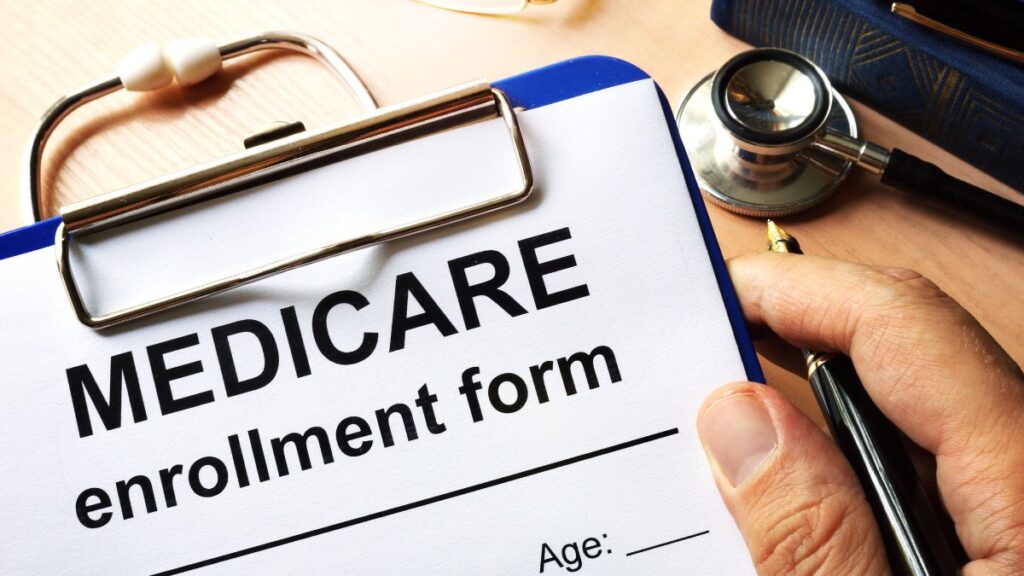
The final part of the health insurance gap is preparing for Medicare itself. Most people first become eligible around their 65th birthday, but enrollment does not always happen automatically.
The standard Initial Enrollment Period lasts seven months. It begins three months before the month you turn 65, includes your birthday month, and continues for three months afterward.
People already receiving Social Security retirement benefits sufficiently before turning 65 are generally enrolled automatically in Medicare Parts A and B. Others usually need to enroll themselves.
You should also know that COBRA, retiree health coverage, and Marketplace insurance generally do not provide the same protection against Medicare Part B late enrollment penalties as qualifying coverage from current employment.
If you have Marketplace insurance, it will not automatically end when Medicare begins. You must update your coverage and coordinate the dates to avoid unwanted premiums or subsidy problems.
What to do: Begin reviewing Medicare options several months before your 65th birthday. Compare Original Medicare, Medicare Advantage, prescription drug coverage, and any supplemental coverage you may need.
How Much Should You Budget for Health Insurance Before 65?

A useful retirement plan should show how much your health coverage may cost from the day you stop working until Medicare begins.
Start with the estimated monthly premium for your preferred plan. Then add expected medical spending, deductibles, and an allowance for unexpected care.
For example, someone retiring at 62 who expects to pay $750 per month in premiums would spend $27,000 over three years on premiums alone. That does not include deductibles, medications, or other medical expenses.
Premiums can also change from year to year. A realistic budget should allow for those increases rather than assuming today’s insurance price will remain fixed.
Here is a simple planning comparison using a hypothetical $750 monthly premium.
| Retirement Age | Months Until 65 | Estimated Premium Total |
|---|---|---|
| 60 | 60 | $45,000 |
| 61 | 48 | $36,000 |
| 62 | 36 | $27,000 |
| 63 | 24 | $18,000 |
| 64 | 12 | $9,000 |
These examples assume an unchanged monthly premium and exclude other medical costs. They are meant to show the size of the expense, not predict what any retiree will pay.
Five Steps to Take Before Leaving Your Job
A good retirement date should work for both your finances and your health insurance. These five steps can help you spot problems early.
| When | What to Do | Why It Matters |
|---|---|---|
| 12 months before retirement | Estimate health insurance costs | Shows whether retirement is affordable |
| 6 months before | Compare coverage options | Helps identify expensive gaps |
| 3 months before | Review expected household income | Helps estimate Marketplace assistance |
| 1 month before | Confirm your new coverage start date | Reduces the risk of being uninsured |
| Before turning 65 | Prepare for Medicare enrollment | Helps prevent penalties and coverage gaps |
Do not make your final decision based only on the amount in your retirement account. Insurance costs, taxes, and your withdrawal plan all affect how much money you will actually have available.
It may also help to compare retiring at several different ages. Working one additional year could provide another year of employer coverage, extra savings, and fewer months of private insurance.