
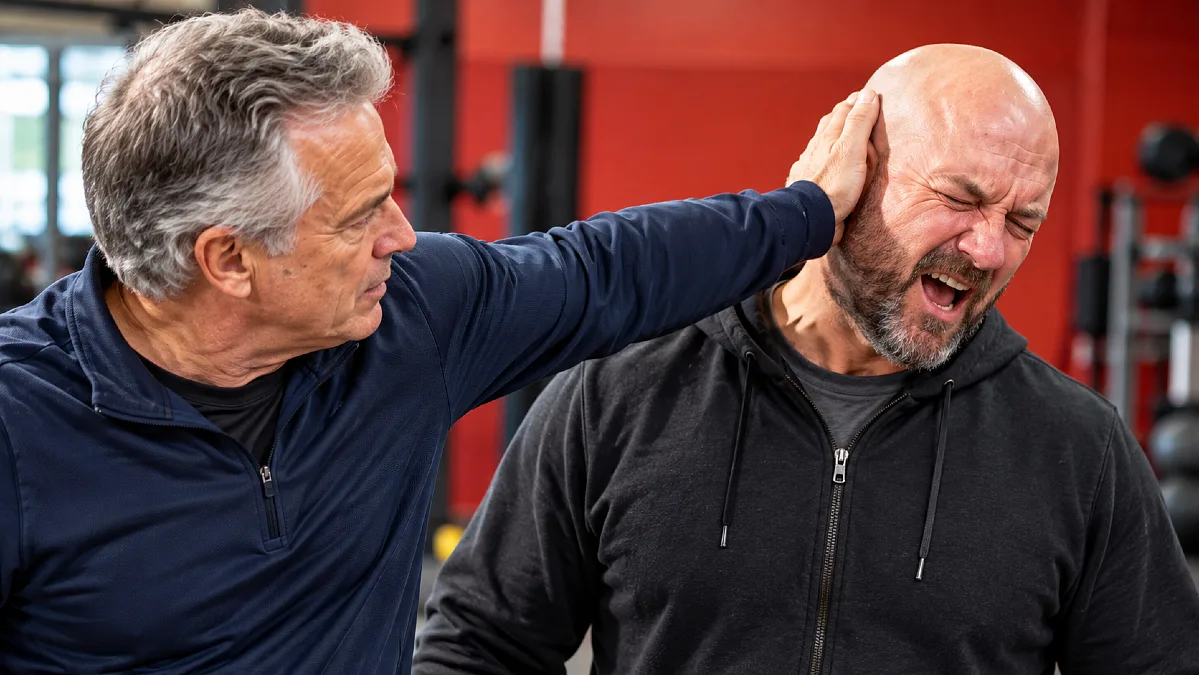
Getting older should not mean feeling afraid to walk through a parking lot, answer your front door, or go shopping alone. Yet many adults over 60 worry about what they would do if someone suddenly grabbed, threatened, or attacked them.
The good news is that self-defense does not always require strength, speed, or years of martial arts training. A few simple movements can help you protect yourself, create distance, and find a chance to escape.
But there is something important to remember. The goal of self-defense is not to win a fight. It is to get away safely. These 5 moves focus on simple actions, including three striking techniques and two ways to protect yourself when someone gets too close.
Why Self-Defense After 60 Is Different
A person in their 60s or 70s may not have the same strength, balance, or reaction speed they had at 30. Arthritis, joint pain, and limited mobility can also make certain movements harder.
That is why practical self-defense should focus on simple actions rather than complicated punches, high kicks, or wrestling moves. You want movements that are easy to remember and do not depend on overpowering someone.
A larger attacker may have more physical strength. But being able to protect your face, create space, and move toward safety can still improve your chances of getting away.
| Self-Defense Priority | Why It Matters After 60 |
|---|---|
| Simple movements | Easier to remember during a stressful situation |
| Staying balanced | Helps reduce the chance of falling |
| Protecting vulnerable areas | May interrupt an attack long enough to escape |
| Creating distance | Gives you room to move away |
| Regular practice | Makes basic responses feel more familiar |
No technique works every time. Your surroundings, physical abilities, and the attacker’s actions all affect what happens.
1. The Eye Jab Can Create a Brief Chance to Escape
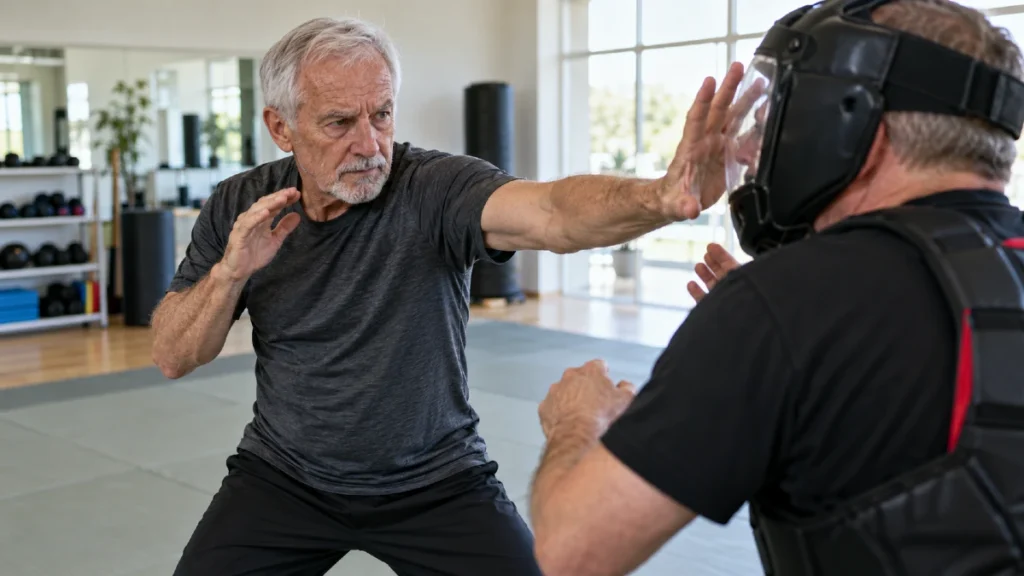
The eyes are among the most sensitive parts of the human body. Even someone much larger and stronger may react quickly when their eyes are threatened.
An eye jab is a close-range defensive strike aimed at the eyes. Its purpose is to interrupt an immediate physical attack long enough for you to move away.
The movement involves extending your arm toward the attacker’s face with your fingers slightly bent and relaxed. It is different from making a closed fist or throwing a traditional punch.
Your arm should move naturally rather than becoming stiff. However, direct contact with the eyes can cause permanent damage, so this is a last-resort response to an immediate threat of serious harm.
Why It May Help an Older Adult
An eye jab does not require the same punching strength as a traditional strike. The attacker may instinctively close their eyes, turn away, or move backward.
That reaction could create a brief opening. But it is not guaranteed, and trying to reach someone’s face may put you within grabbing distance.
Practice safely: Rehearse the arm movement slowly in the air while keeping your feet steady. Never practice eye contact on another person, and do not assume a training drill will work the same way during an assault.
2. The Ear Slap Is a Close-Range Emergency Move
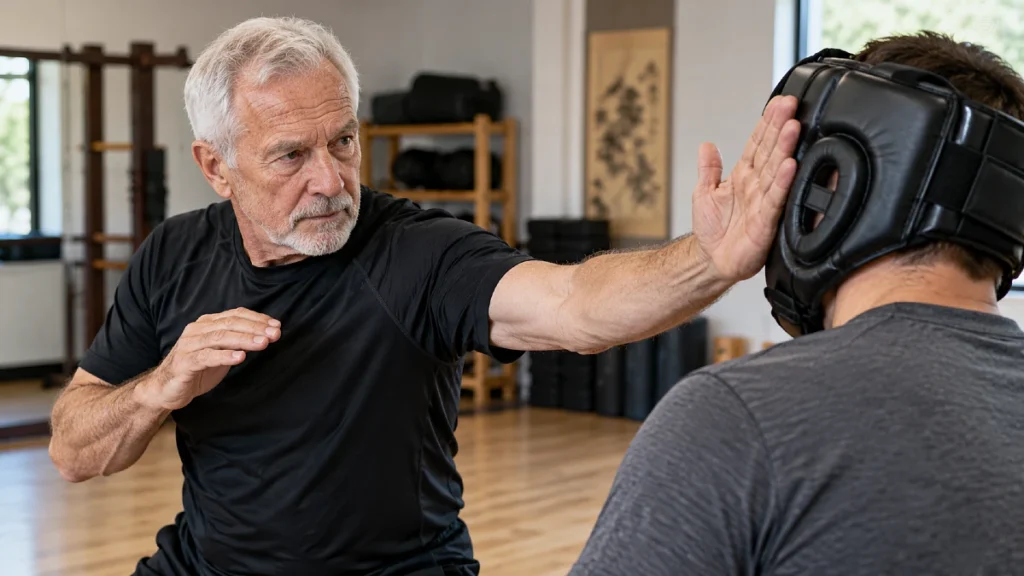
An ear slap is another defensive technique sometimes taught for situations where an attacker is already close. It uses an open hand rather than a closed fist.
The movement is a broad sideways motion of the arm toward the side of the head. The hand is slightly cupped, and the body turns naturally with the movement.
A forceful strike near the ear can cause pain, dizziness, or serious ear damage, including a ruptured eardrum. It should therefore be treated as an emergency action rather than a routine way to handle someone who is simply arguing or standing too close.
Why Body Position Matters More Than Strength
Older adults may find it difficult to throw powerful punches. An open-hand movement can feel more natural, although shoulder pain or reduced balance may still limit it.
The important part is not how hard you can strike. It is whether you can stay on your feet and move away from danger.
If you are grabbed or cornered, keeping your balance and looking for an exit should remain your first priority.
Practice safely: Use slow movements without contact. If you have shoulder problems, avoid large swinging motions and ask a qualified instructor for a suitable alternative.
3. The Foot Stomp May Help When Someone Gets Too Close
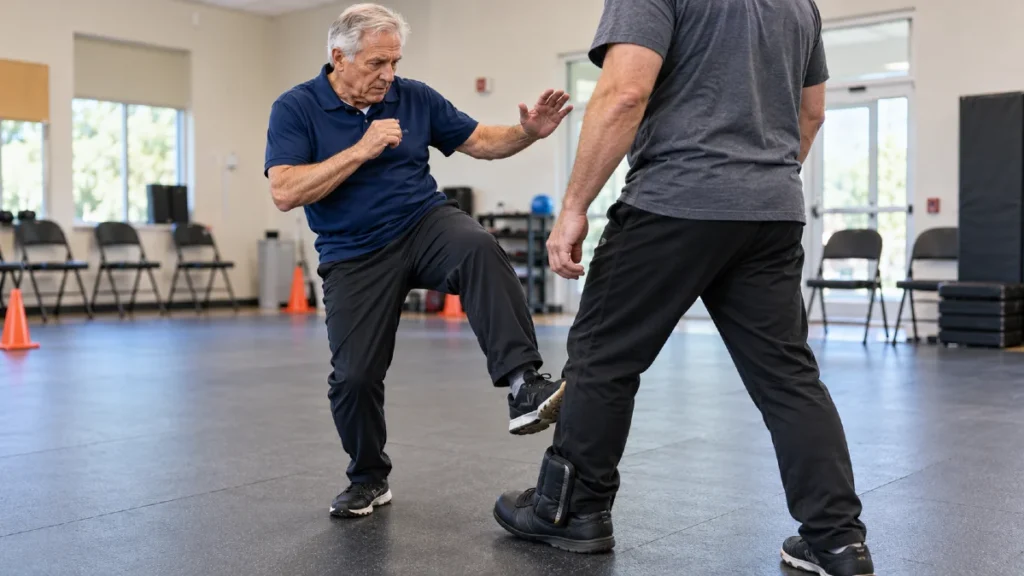
The foot stomp is a defensive technique that targets the attacker’s foot. Unlike the eye jab and ear slap, it focuses on a lower part of the body.
It may be considered when someone is standing extremely close or holding you. The basic idea is to bring your foot down onto the attacker’s foot to interrupt their grip or movement.
The heel is generally firmer than the middle of the foot. However, a hard stomp can injure both people, and lifting one leg can make an older adult lose balance.
Claims that a foot can be broken with a fixed amount of pressure are unreliable. Shoes, body weight, position, and other factors change the result.
Why Balance Comes First
A foot stomp does not require reaching an attacker’s upper body. That may sound helpful for someone shorter or with limited arm strength.
But this movement also creates a problem. When you lift one foot, you temporarily place your weight on the other leg.
For older adults with poor balance, neuropathy, arthritis, or a history of falls, that can be dangerous.
Practice safely: Begin with gentle foot taps while standing near a sturdy support. Do not stomp on another person’s foot, and avoid forceful drills if you have balance problems.
4. The Hands-Up Barrier Helps Stop Someone Getting Too Close
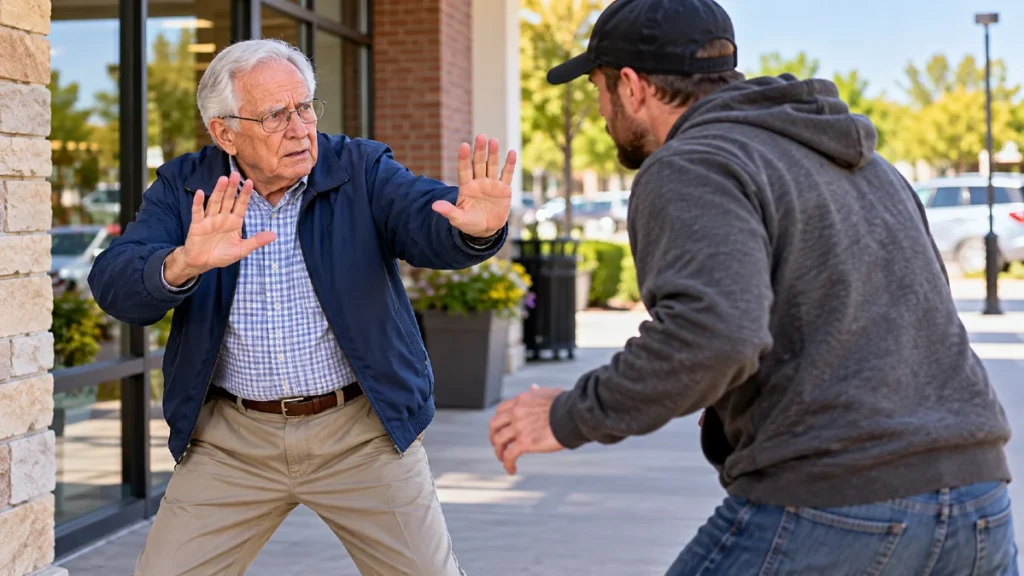
This is one of the simplest defensive movements to learn, and it can be useful before anyone touches you.
If a stranger approaches aggressively, raise both hands in front of your chest with your palms facing outward. Keep your elbows slightly bent and your shoulders relaxed.
Your hands now form a small protective barrier between you and the other person. At the same time, take a careful step backward or sideways if the path is clear.
You can use a firm voice to say, “Stop!” or “Stay back!” The goal is to make your boundary clear while attracting attention from people nearby.
Why This Move Deserves Practice
Unlike a strike, the hands-up barrier can be used before a physical attack begins. It gives you a way to protect some space without immediately starting a fight.
It may also place your hands in a useful position to protect your face if someone suddenly moves forward.
Keep your feet comfortably apart and your knees relaxed. Do not cross your legs while backing away, because that can increase the risk of falling.
Practice safely: Stand in front of a mirror, raise your hands, and say “Stay back” in a strong voice. Then practice taking one careful step toward a clear exit.
5. The Wrist Release Can Help You Get Away From a Grab
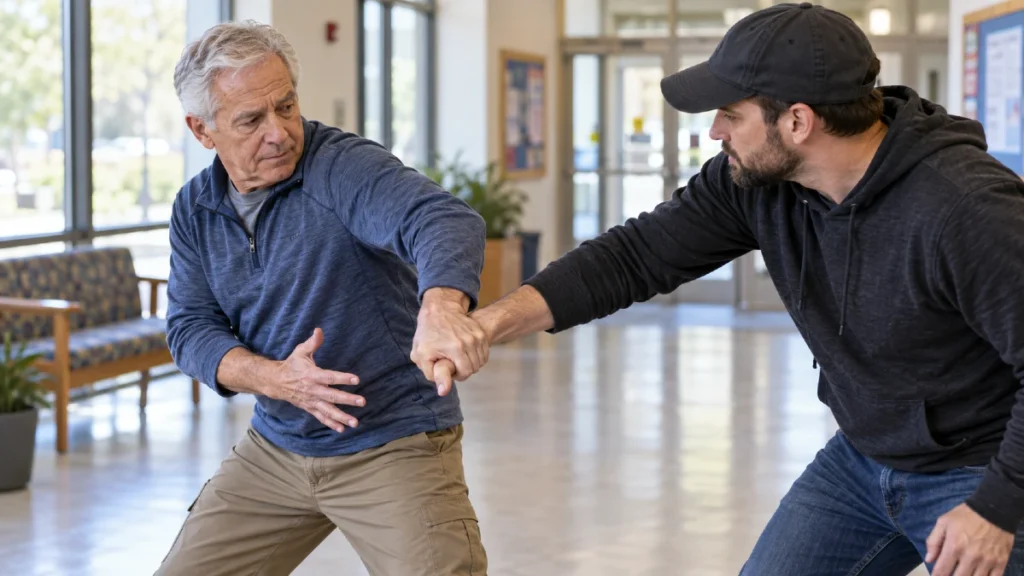
Someone suddenly grabbing your wrist can be frightening. Your first instinct may be to pull straight backward as hard as possible.
But pulling against a stronger person’s full grip may not work. It can also strain your wrist, elbow, or shoulder.
One basic wrist-release method involves turning your wrist toward the opening between the attacker’s thumb and fingers. That area is often the weakest part of a simple hand grip.
As you turn, move your body away if you can do so without losing balance. Keep the motion controlled rather than jerking your arm sharply.
What Makes This Useful After 60
This approach relies more on the direction of movement than on trying to overpower someone.
It may help with a simple one-handed wrist grab. However, it may not work if the attacker uses both hands, holds your clothing, or has you trapped against a wall.
If the person releases you, move toward other people or a safe location. Do not remain nearby to argue or confront them.
Practice safely: Ask a trusted partner to hold your wrist very gently while you practice turning it toward the thumb opening. Stop if you feel pain, and never practice with a tight grip.
Which Self-Defense Move Fits Different Situations?
These five techniques serve different purposes. Some are meant to create distance before an attack, while others are possible emergency responses when physical contact has already happened.
| Situation | Possible Defensive Response | Main Goal |
|---|---|---|
| Someone approaches aggressively | Hands-up barrier | Maintain distance |
| Someone grabs your wrist | Wrist release | Break contact and leave |
| Someone attacks at very close range | Eye jab, as a last resort | Interrupt an immediate serious threat |
| Someone attacks while standing beside you | Ear slap, as a last resort | Create an opening to escape |
| Someone restrains you at close range | Foot stomp, as a last resort | Interrupt the hold and get away |
These are possible responses, not guarantees. In many situations, leaving early, calling for help, or giving up property is safer than physical resistance.
Three Simple Ways to Practice Self-Defense at Home
Knowing the names of these moves is not the same as being able to perform them. Your body needs practice so the movements become more familiar.
The original training method uses three stages: practicing in the air, working with a training target, and responding to a partner holding a pad.
Older adults can use the same general approach while keeping safety and balance at the center of each session.
Practice the Movements Slowly in the Air
Start with a few slow repetitions of movements that feel comfortable. You might practice raising your hands, stepping away, turning your wrist, and using your voice.
You do not have to perform every technique at full speed. Begin with five comfortable repetitions on each side and increase gradually if you remain steady.
The goal is to become familiar with the movement, not to exhaust yourself.
Use a Soft Training Pad
A soft pad can help you practice where to position your hands and how far away a target is.
For older beginners, gentle contact is enough. There is no need to strike a heavy bag with full force or practice movements that could injure the fingers, shoulders, or wrists.
A qualified self-defense instructor can help you find safe alternatives for sensitive techniques such as the eye jab and ear slap.
Practice With a Trusted Partner
A partner can make training feel more realistic by changing their position and asking you to respond.
For example, they can approach slowly while you raise your hands, say “Stay back,” and move toward an open doorway. They can also practice gentle wrist-release drills with you.
Keep every movement controlled. Your partner should never surprise you with a real grab, push, or strike.
Five Mistakes Older Adults Should Avoid During Self-Defense Training
Self-defense practice should build confidence without creating unnecessary injuries. These common mistakes can make training less useful or less safe.
- Practicing too aggressively: Full-force strikes and sudden grabs can cause injuries, especially when joints are already painful.
- Forgetting about balance: A technique is not helpful if performing it causes you to fall.
- Only practicing with one side: Gentle movements on both sides may be useful, as long as each side can move comfortably.
- Assuming a move always works: No strike, release, or defensive position guarantees escape.
- Trying to fight instead of leaving: The safest successful defense is often creating enough distance to get away.
You should also avoid practicing dangerous strikes directly on family members. Even a light accidental blow to the eye or ear can cause lasting harm.
What to Do When Walking Alone or Feeling Unsafe
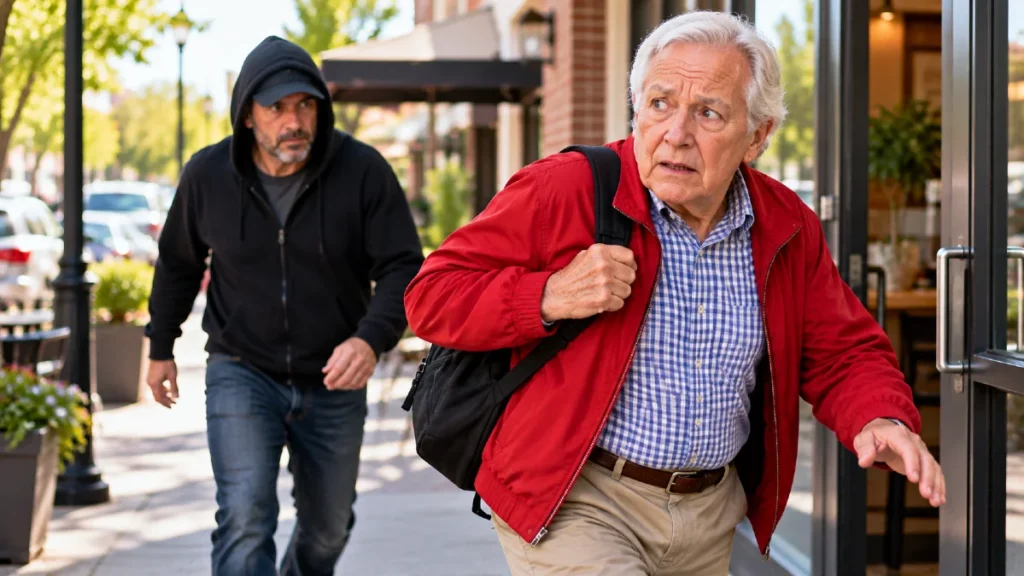
Physical techniques are only one part of staying safe. Small everyday habits may help you avoid situations where you would need them.
When walking in an unfamiliar area, pay attention to your surroundings and choose routes where other people are present. Keep your phone accessible and avoid becoming distracted when someone approaches.
If someone makes you uncomfortable, you do not have to continue the conversation. Move toward a shop, staffed building, or group of people if you can do so safely.
If you are threatened with a weapon or someone demands your wallet, phone, or bag, physical resistance can increase the danger. Your safety is worth more than your belongings.
| Everyday Situation | Safer First Response |
|---|---|
| Someone follows you | Head toward a populated place and ask for help |
| A stranger blocks your path | Keep distance and look for another exit |
| Someone demands your belongings | Avoid escalating the situation and prioritize safety |
| Someone grabs you | Call for help, protect your balance, and look for an escape |
| You reach a safe place | Contact emergency services and report the incident |
If you use a cane, walker, or wheelchair, an instructor experienced in adaptive self-defense can help you find techniques that work with your equipment.
The Most Important Self-Defense Skill Is Knowing When to Leave
The eye jab, ear slap, and foot stomp are examples of emergency striking techniques that may interrupt a physical attack. The hands-up barrier and wrist release offer other ways to create distance or break contact.
But none of these movements makes a person completely safe. Real attacks are unpredictable, and an older adult can be seriously hurt by attempting a technique that requires more balance or strength than they have.
Start with the safest skills: noticing danger early, speaking firmly, protecting your balance, and moving toward help. Practice physical techniques only within your abilities and preferably with a qualified instructor.