
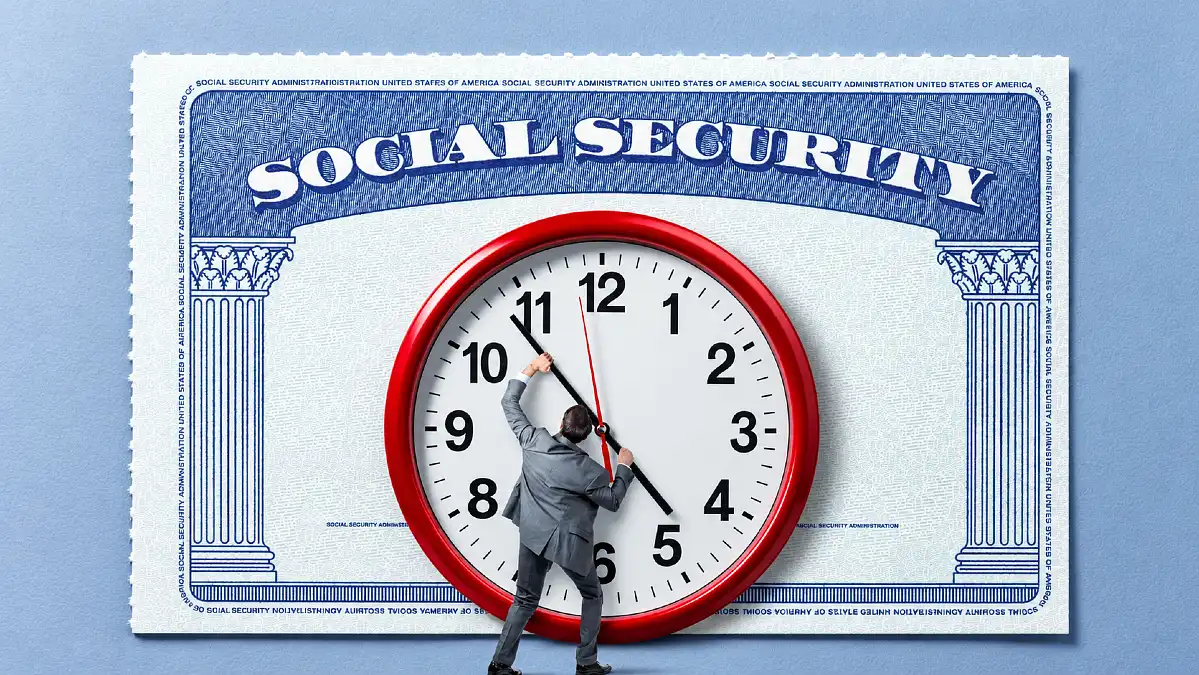
Claiming Social Security at 62 can feel like a relief. The checks begin right away, and retirement suddenly looks easier to afford. But that decision also means accepting a smaller starting benefit, often for the rest of your life.
That trade can become painful when savings run low, expenses rise, or one spouse dies. Research shows that some older Americans genuinely regret claiming Social Security early, although many do not.
The real question is not whether claiming at 62 is always wrong. It is what that early check costs later, when dependable monthly income may matter most.
Why Early Social Security Claiming Regret Is Real

A retirement decision that feels perfectly reasonable at 62 can look very different twenty years later. At 62, people often focus on getting out of work, paying their bills, and enjoying the freedom they have earned.
By 82, the priorities may have changed. Savings might be smaller, medical expenses may take more of the household budget, and the monthly Social Security payment may have become the most dependable source of income.
Research provides evidence that this regret is real.
A 2025 study published in the Journal of Risk and Insurance by researchers Abigail Hurwitz and Olivia S. Mitchell found that 19% of surveyed older Americans regretted claiming Social Security too early.
The study examined financial regrets among Americans ages 62 and older participating in the Health and Retirement Study.
That finding does not mean 19% of early claimers necessarily regret their decision. It means nearly one in five respondents in the study reported that particular regret.
The difference matters because claiming early is not automatically a mistake. Some people need the income immediately, while others have health or family circumstances that make early payments reasonable.
Still, the findings reveal a problem worth understanding. People must make an important decision about future income before they know how long they will live or what retirement will eventually cost.
Important Social Security Numbers to Know
Several Social Security rules help explain why claiming age can make such a large difference. These are the key figures confirmed for 2026 and the announced changes for 2027.
| Key Figure | Amount or Rule | Why It Matters |
|---|---|---|
| Earliest retirement claim | Age 62 | Benefits can start before full retirement age |
| Full retirement age | 67 for people born in 1960 or later | Age for an unreduced retirement benefit |
| Maximum early reduction | 30% at 62 for FRA 67 | Smaller starting monthly payment |
| Age 70 benefit | 124% of FRA benefit for FRA 67 | Maximum delayed claiming increase |
| 2026 COLA | 2.8% | Increase applied to eligible benefits |
| 2027 COLA | 3.6% | Announced October 14, 2026 |
| 2026 earnings limit | $24,480 for workers under FRA all year | Higher earnings can cause benefit withholding |
| 2027 earnings limit | $25,560 for workers under FRA all year | New limit beginning January 2027 |
The most important distinction is that claiming at 62 does not mean losing 30% of every dollar someone might ever receive. Instead, it generally produces a permanently lower monthly benefit than waiting until full retirement age, although later adjustments can change the amount.
The Monthly Income Difference That Becomes Hard to Ignore
Consider a hypothetical worker whose full Social Security retirement benefit is $2,500 per month at age 67. Assume the worker was born in 1960 or later, so full retirement age is 67.
Claiming at 62 would reduce that benefit to approximately $1,750 per month. Waiting until 70 would increase it to about $3,100, based on Social Security’s claiming-age adjustments.
That creates a difference of $1,350 every month between claiming at 62 and claiming at 70. Over a full year, the higher payment would provide an additional $16,200.
Social Security at 62 vs. 67 vs. 70
| Claiming Age | Monthly Benefit | Annual Benefit | Main Tradeoff |
|---|---|---|---|
| 62 | $1,750 | $21,000 | Income begins sooner |
| 67 | $2,500 | $30,000 | Full retirement benefit |
| 70 | $3,100 | $37,200 | Larger monthly check, fewer years collecting |
Illustrative amounts in constant dollars, before taxes and Medicare deductions. Actual benefits depend on individual earnings records, claiming dates, and future adjustments.
The age-70 benefit is approximately 77% larger than the age-62 benefit in this example. That is a substantial difference for someone who eventually depends on Social Security to cover most basic expenses.
It is also important to understand what the comparison leaves out. Someone who claims at 62 receives eight additional years of payments before a person waiting until 70 collects their first check.
That is real money, and it helps explain why claiming early can be attractive. The larger payment later must compensate for all the checks that were passed up along the way.
Why Early Claiming Looks Better at 62 Than at 82

At age 62, many people still expect retirement to be an active period filled with travel, hobbies, family visits, and personal plans. Immediate income can help make those plans possible without drawing as heavily on savings.
However, retirement spending changes with age. Travel may become less important, while housing, insurance, transportation, home maintenance, and help with daily activities may take a larger share of income.
A retiree receiving $1,750 per month might feel comfortable at 62 with a pension, part-time wages, or sizable investments. If those other income sources decline, the smaller Social Security check can become much more noticeable.
The situation can be especially difficult when one member of a couple dies. Household expenses rarely fall by half, even when one Social Security payment stops.
A surviving spouse may still need to pay property taxes, homeowners insurance, utility bills, transportation costs, and home repairs. Having a larger Social Security benefit available for the remaining years can make a meaningful difference.
This is one reason early claiming regret may develop gradually. The original decision did not necessarily create an immediate crisis, but it reduced the household’s future income flexibility.
The Break-Even Age Is Only Part of the Story
People comparing Social Security claiming ages often ask one question: How long would someone need to live for delaying benefits to pay off?
This is called the break-even age. It is the point when the total payments from a later claiming strategy catch up with the payments from an earlier one.
Using the hypothetical benefits above, someone collecting $1,750 from age 62 would receive about $168,000 before turning 70. A person who waits until 70 would have received nothing during those same eight years.
After 70, however, the delayed claimer receives $1,350 more each month. Under these simplified assumptions, the higher payments catch up at approximately age 80 years and four months.
What Total Social Security Payments Could Look Like
| Age Reached | Claim at 62 | Claim at 67 | Claim at 70 |
|---|---|---|---|
| 75 | $273,000 | $240,000 | $186,000 |
| 80 | $378,000 | $390,000 | $372,000 |
| 85 | $483,000 | $540,000 | $558,000 |
| 90 | $588,000 | $690,000 | $744,000 |
Hypothetical cumulative benefits from each claiming age to the stated age, using unchanged monthly benefit amounts. Figures exclude COLAs, taxes, investment returns, interest, survivor benefits, and changes in earnings.
At age 75, the early claimer has collected the most money in this example. By age 85, the person who waited until 70 has received the largest cumulative amount.
But break-even calculations have limitations. They do not fully account for the value of receiving money earlier, possible investment returns, taxes, health, or the income protection provided to a surviving spouse.
The decision should also consider what happens if someone lives well beyond their expected lifespan. A person who plans only until 80 may underestimate the financial needs of living into their late 80s or 90s.
The better question is not simply which claiming age produces the most money. It is which strategy leaves the household better prepared for the range of futures it might face.
Why Claiming Early Can Hurt a Surviving Spouse
For married couples, the Social Security claiming decision involves more than one person’s retirement check. It can also affect the income available after the first spouse dies.
This matters most when one spouse has earned considerably more during their working years. The higher earner’s retirement benefit may eventually help determine the surviving spouse’s benefit.
Social Security generally allows an eligible surviving spouse to receive a survivor benefit based on the deceased spouse’s work record. The amount depends on factors including the deceased worker’s claiming history and when the survivor claims.
A surviving spouse does not simply continue collecting both full retirement checks. Usually, the survivor receives the higher applicable amount through their own retirement benefit or a combination of their own and survivor benefits.
The claiming age of the higher earner can therefore matter for years after that person’s death. Delayed retirement credits can increase the survivor benefit, while early claiming may restrict the amount available, subject to special survivor benefit rules.
Consider a hypothetical married couple in which one spouse has a much larger retirement benefit. If the higher earner waits longer to claim, that decision may provide stronger financial protection for the spouse who survives.
This does not mean both spouses should automatically wait until 70. In some households, having the lower-earning spouse claim earlier while the higher earner delays may be a reasonable strategy.
The key is to compare household income before and after the death of either spouse. A claiming decision based only on one person’s monthly check can miss this important financial risk.
The Cost-of-Living Increase That Doesn’t Fix an Early Claim

Social Security benefits generally receive annual cost-of-living adjustments, known as COLAs. These increases are designed to help benefits keep pace with inflation.
The Social Security Administration announced a 2.8% COLA for 2026 and a 3.6% increase for 2027. Those adjustments raise benefit amounts, but they do not erase the earlier reduction caused by claiming before full retirement age.
Consider the same hypothetical benefits of $1,750 and $3,100 per month. Applying a 3.6% increase to each amount produces very different dollar increases.
The smaller benefit would rise by about $63 per month, while the larger benefit would rise by about $112. The percentage increase is equal, but the person with the higher starting benefit receives a larger dollar increase.
Over time, this difference can become more noticeable as repeated percentage adjustments compound. COLAs help protect purchasing power, but they do not make an early claiming decision equivalent to waiting until 70.
Another concern is that inflation affects people differently. Housing costs, healthcare expenses, insurance premiums, and other household bills do not necessarily rise at the same rate as Social Security’s annual adjustment.
That creates another reason to think carefully about starting benefits early. A larger initial benefit can provide more room in the budget when everyday costs change unexpectedly.
Why Working While Collecting Can Cause Surprises
Some people claim Social Security at 62 because they expect to stop working permanently. However, retirement plans do not always unfold as expected.
A retiree may return to work because of rising expenses, boredom, an unexpected family need, or an attractive part-time opportunity. This can create a surprise for someone collecting Social Security before full retirement age.
In 2026, someone who remains below full retirement age throughout the year can generally earn up to $24,480 without having benefits withheld under the retirement earnings test. Above that limit, Social Security generally withholds $1 in benefits for every $2 of earnings over the threshold.
For example, if someone earns $34,480 in 2026, that is $10,000 above the annual limit. The resulting earnings-test withholding would generally be $5,000, before considering special rules or individual circumstances.
For 2027, the lower earnings-test limit increases to $25,560. In the year someone reaches full retirement age, a higher limit applies only to earnings before the month they reach that age.
Importantly, benefits withheld under the earnings test are not simply lost forever. Social Security recalculates the monthly benefit at full retirement age to account for months when benefits were withheld.
Even so, withholding can disrupt the monthly cash flow someone expected from early claiming. That is especially relevant when a retiree returns to work because they need additional money immediately.
Once full retirement age is reached, Social Security no longer applies an earnings limit to retirement benefits. People can work without having retirement benefits withheld under that test.
The Emotional Reasons People Claim Early

The decision to claim Social Security is not purely mathematical. It also reflects how people feel about money, work, health, and the uncertainty of the future.
A person who spent forty years working may see age 62 as the first real opportunity to collect a benefit they have contributed toward. Taking the money can feel like a reward for decades of payroll taxes.
Others worry they might die before receiving much from the system. That concern can make an immediate payment feel more valuable than a potentially larger future benefit.
Behavioral finance calls this tendency present bias. People often place greater value on money available today than money they might receive years later.
But delaying can involve its own emotional difficulty. Someone who has spent decades saving may dislike withdrawing money from investments while waiting to claim Social Security.
That reluctance can encourage earlier claiming, even when using some savings temporarily might support a stronger long-term income plan.
Research published in Financial Planning Review in September 2026 offers an important counterpoint. Derek T. Tharp’s study found that early claiming can be a reasonable choice when households strongly value retiring sooner, spending more during active retirement, or preserving their savings.
In other words, financial circumstances and personal priorities both matter. The mistake is not necessarily choosing age 62, but making the choice without comparing the alternatives.
Fear about Social Security’s future can also influence decisions. The 2026 Trustees Report projected that the retirement and survivors trust fund could deplete its reserves in 2032 without legislative changes, but continuing income would still cover about 78% of scheduled benefits at that point.
That is a serious funding concern, but it does not mean Social Security is projected to disappear. Future legislation may change the outcome, and claiming early solely out of fear can create a reduction without removing broader policy uncertainty.
When Taking Social Security at 62 Makes Sense

Waiting longer is often worth considering, but there are legitimate reasons to claim early. A person experiencing serious health problems or facing a shorter expected lifespan may benefit more from receiving payments sooner.
Someone who loses a job in their early 60s might also need immediate income. If savings are limited and finding suitable work is difficult, delaying Social Security may create more financial strain than the household can manage.
Early benefits can also reduce the need to sell investments during a market downturn. For retirees with limited cash reserves, that may be an important consideration.
A person may also prefer to retire earlier and spend more during years when travel, hobbies, and physical activities feel easier. That preference has genuine value, even if it does not maximize total lifetime benefits.
The decision requires balancing monthly income, likely lifespan, savings, household needs, and personal goals.
Common Social Security Claiming Beliefs vs. Reality
| Common Belief | Reality | Better Approach |
|---|---|---|
| Claiming at 62 is always a mistake | It may fit some financial and health circumstances | Compare several claiming ages |
| Everyone should wait until 70 | Not all households can afford or benefit from waiting | Consider savings, health, and family needs |
| Social Security automatically becomes full at 67 | Early reductions generally remain | Understand the long-term benefit adjustment |
| The largest lifetime total is all that matters | Cash flow and survivor protection also matter | Compare income needs at different ages |
| Retirement and claiming must happen together | People can retire before claiming benefits | Consider a temporary income bridge |
The most useful approach is to stop thinking of Social Security as a single decision made at one particular age. It is one part of a broader retirement income strategy.
For example, someone retiring at 63 with enough savings to cover several years of basic expenses may decide to delay Social Security. Another person with the same retirement date but far less savings may need to claim immediately.
Neither outcome can be judged correctly from claiming age alone.
A Practical Claiming Decision Before You Apply
Anyone approaching 62 should begin with their personal Social Security benefit estimates. The Social Security Administration provides estimates through a my Social Security account.
Comparing only the age-62 amount with the full retirement age amount is not enough. The age-70 estimate, household cash needs, savings, and survivor benefits also deserve attention.
A clear comparison can reveal whether delaying requires several more years of work or whether retirement and claiming can happen at different times.
Social Security Claiming Action Plan
| Priority | What to Check | Next Step |
|---|---|---|
| 1. Benefit amounts | Estimates at 62, FRA, and 70 | Compare monthly and annual income |
| 2. Retirement budget | Essential spending and other income | Calculate any income gap |
| 3. Savings | Cash reserves and retirement investments | Test whether benefits can be delayed |
| 4. Household protection | Spousal and survivor benefit options | Compare income after either spouse dies |
| 5. Claiming flexibility | Work plans, health, and possible suspension | Review options with SSA before acting |
A useful exercise is to build two retirement budgets. The first should show expected income and expenses during the early years of retirement, while the second should show what happens after age 80.
Then consider what happens if one spouse dies, investment income declines, or housing expenses rise. A strategy that looks attractive in the first budget may provide less protection in the second.
There is no need to assume that every retiree must wait until 70. Instead, the decision should be made with a clear understanding of what the household gains now and what it gives up later.