

Families often think caring for an aging parent means choosing between doing everything themselves and paying for assisted living. That assumption can drain savings before anyone asks what kind of help is actually needed.
Some older adults need daytime supervision, transportation, or help with meals rather than a staffed residence. Others need personal care but want to remain close to familiar neighbors, routines, and family.
Adult day programs, shared housing, respite services, and community care can sometimes fill those gaps. Understanding how they work, what they cost, and who may help pay could change a family’s entire care plan.
The Care Options Between Living Alone and Assisted Living

Most families begin searching for care after something changes. A parent falls, forgets medication, stops driving, or begins struggling with daily household tasks.
The natural reaction is to consider assisted living or a full-time caregiver. Yet those options may provide more services than the person currently needs, often at a substantial cost.
According to the 2025 CareScout Cost of Care Survey, the national median assisted living cost reached $6,200 per month. That equals $74,400 annually before considering possible additional charges.
Adult day health care, by comparison, had a national median cost of $95 per day. Attending three days each week would cost approximately $1,235 per month, assuming 52 weeks of attendance.
The two arrangements provide different levels of care, but the numbers reveal something important. Paying for round-the-clock residential support may not be necessary when someone primarily needs assistance during specific hours.
National Senior Care Costs at a Glance
These figures come from CareScout’s 2025 national survey, the latest survey reviewed for this article. They are national medians rather than quotes for a particular city or provider.
| Care Type | 2025 National Median | Annual or Monthly Comparison |
|---|---|---|
| Adult day health care | $95 per day | $2,058 monthly at five days weekly |
| Non-medical home caregiver | $35 per hour | $1,820 monthly at 12 hours weekly |
| Assisted living | $6,200 monthly | $74,400 annually |
| Nursing home, shared room | $9,581 monthly | $114,975 annually |
| Nursing home, private room | $10,798 monthly | $129,575 annually |
The home caregiver example assumes 12 paid hours weekly, while the adult day estimate assumes five days weekly for 52 weeks. Actual charges may include transportation, supplies, care-level fees, or other expenses.
The important distinction is how much help is needed and when it is needed. Families can sometimes create a more suitable plan by combining several smaller services rather than purchasing one large care package.
Adult Day Programs Offer More Than a Place to Spend the Day
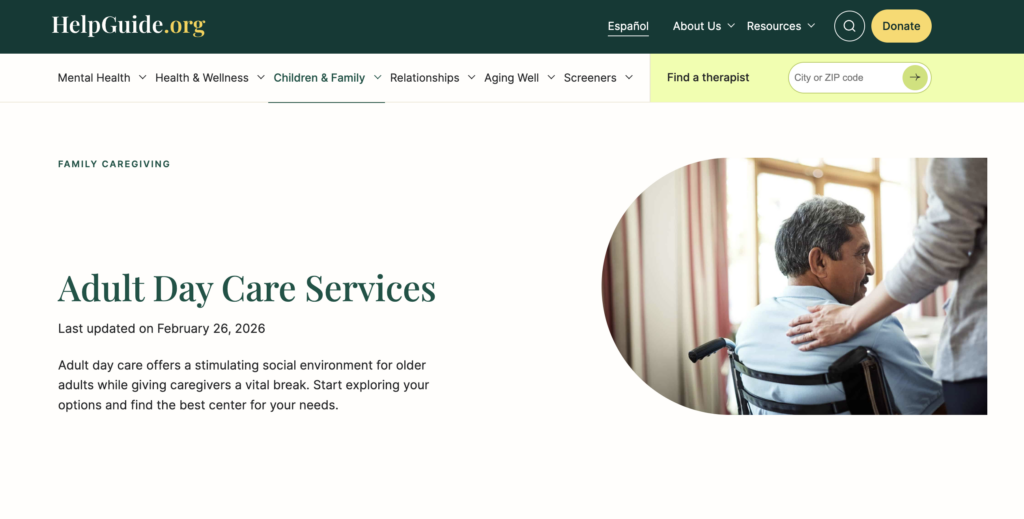
Adult day programs are among the most overlooked options for families trying to balance caregiving and employment. They provide structured daytime support while allowing participants to return home in the evening.
Programs vary widely in their services. Some emphasize social activities and meals, while adult day health programs may also provide nursing oversight, therapy, medication support, and personal assistance.
A participant might arrive in the morning, eat lunch with others, join supervised activities, and receive help with daily tasks. The arrangement can also give a family caregiver several predictable hours to work or attend appointments.
The California Department of Aging explains that adult day programs commonly operate for four to eight hours a day. Some offer extended schedules or transportation assistance, although families must confirm these services locally.
Why Adult Day Care Can Change the Family Budget
Consider a hypothetical 79-year-old woman who lives with her daughter. She needs supervision while her daughter works, but she can safely remain at home with appropriate evening support.
A daytime program three days weekly would cost approximately $1,235 per month at the 2025 national median rate. This may offer a workable alternative to paying for a full-time residential arrangement.
However, the family must still plan for evenings, weekends, transportation, and unexpected closures. Adult day care is not a substitute for overnight supervision or skilled nursing care when those services are necessary.
What Different Daytime Care Plans Might Cost
The following examples use CareScout’s 2025 national median rates of $95 per adult day and $35 per hour for non-medical home care. Monthly figures assume 52 weeks of service divided by 12 months, without additional fees.
| Care Arrangement | Approx. Monthly Cost | What It Provides |
|---|---|---|
| Adult day care, 2 days weekly | $823 | Two scheduled days of supervision |
| Adult day care, 3 days weekly | $1,235 | Three scheduled days of support |
| Home caregiver, 12 hours weekly | $1,820 | Flexible assistance at home |
| 2 adult day visits plus 10 home-care hours weekly | $2,340 | Daytime program and home assistance |
| Adult day care, 5 days weekly | $2,058 | Weekday support during program hours |
These are budgeting examples, not promises of local prices or equivalent levels of service. Transportation costs, medical needs, holidays, and minimum booking requirements can change the total.
Best fit: Older adults who benefit from daytime supervision, structured activities, and social contact. It can be especially useful when family caregivers work during the day but can provide suitable support at other times.
Shared Housing Can Lower Living Costs Without Giving Up Independence

Shared housing offers another alternative that families sometimes overlook. Instead of moving into a senior living community, an older adult shares a home with a friend, relative, or carefully screened housemate.
The arrangement might involve renting a spare bedroom, sharing a larger apartment, or moving into a home with other older adults. Some communities have nonprofit home-sharing organizations that help people find compatible housemates.
The main benefits are lower housing expenses and companionship. Sharing utility bills, rent, and certain household costs may free up money for transportation, home modifications, or professional care.
The Financial Difference Can Be Significant
Consider a hypothetical retiree whose total monthly housing expenses are $2,400. If a carefully screened housemate pays $900 monthly, the retiree’s gross housing cost burden could fall to $1,500 before extra expenses and any taxes.
That represents $10,800 in gross annual rent received. However, added utilities, maintenance, insurance considerations, taxes, and vacancy periods can reduce the actual savings.
Shared housing also creates practical responsibilities. Families need clear written agreements covering payments, privacy, chores, guests, emergency contacts, and procedures for ending the arrangement.
A background check and references are important, but they do not eliminate every risk. Local landlord-tenant laws, rental rules, and the older adult’s ability to manage the arrangement also matter.
Shared housing does not automatically provide caregiving. A roommate is not a trained aide, and companionship should never be confused with reliable medical supervision or hands-on personal care.
Small Residential Care Homes Offer a Different Living Environment
Large assisted living communities receive considerable attention, but smaller residential care homes are another option worth researching. Depending on the state, they may be called board and care homes, adult family homes, or residential care facilities.
The National Institute on Aging describes board and care homes as small residential settings that generally have 20 or fewer residents. They typically provide meals, personal assistance, and staff availability around the clock.
Their smaller size may appeal to older adults who prefer a quieter household atmosphere. Daily routines can feel more like living in an ordinary home than in a large residential building.
However, the amount of care offered varies considerably. Many provide personal assistance but do not deliver the level of medical and nursing care available in skilled nursing facilities.
Questions Families Should Ask Before Choosing One
Families should confirm licensing requirements, staffing, medication procedures, and the home’s ability to manage changing health needs. They should also request a complete written fee schedule rather than relying on an advertised monthly amount.
It is particularly important to understand what happens if a resident develops greater mobility problems or needs more supervision. A smaller home may still require a move if care needs exceed its staffing or licensing limits.
Costs differ widely by location and service level, and there is no single dependable national price for every type of small residential home. Families should compare several local providers and examine state inspection records where available.
Respite Care Gives Family Caregivers a Break
Family caregiving often begins gradually. A few grocery trips become medication reminders, help with bathing, overnight supervision, and managing medical appointments.
Eventually, the caregiver may have little time for employment, rest, or personal responsibilities. The financial cost can include lost wages, reduced retirement contributions, and additional household expenses.
Respite care provides temporary support so a regular caregiver can take a break. Services may take place at home, in an adult day center, or through a short residential stay.
Some families schedule respite for a few hours each week. Others arrange several days when a caregiver needs surgery, has an important family obligation, or is temporarily unavailable.
The Funding Difference Families Often Miss
Traditional Medicare generally does not pay for ordinary respite care. However, Medicare’s hospice benefit can cover qualifying short-term inpatient respite care for up to five consecutive days when program conditions are met.
Medicaid community programs may provide respite to eligible participants, depending on the state. Some veterans may also qualify for respite through Veterans Affairs programs.
The Administration for Community Living’s National Family Caregiver Support Program funds caregiver assistance through state and local organizations. Available services can include counseling, training, respite care, and limited supplemental assistance.
Respite should not be viewed only as an emergency service. Regularly scheduled breaks can help make a family care arrangement more sustainable while protecting the caregiver’s employment and personal responsibilities.
PACE Combines Medical Care and Daily Support in One Program
One lesser-known option is the Program of All-Inclusive Care for the Elderly, commonly called PACE. It coordinates medical treatment and long-term support for eligible older adults who can continue living safely in the community.
PACE can be particularly valuable because it brings several kinds of assistance under one care team. Depending on the individual’s approved care plan, services can include medical visits, adult day health care, medications, transportation, therapy, and home support.
Unlike ordinary adult day care, PACE is a comprehensive program involving Medicare, Medicaid, or private payment. Participants generally receive services through the PACE organization’s designated providers.
Who Can Qualify for PACE?
Medicare identifies four main eligibility requirements. A person must be at least 55 years old, live in a PACE service area, require a nursing home level of care as certified by the state, and be able to live safely in the community with PACE support.
The program is not available everywhere. Even where PACE operates, eligibility depends on the person’s care needs and other program requirements.
For participants with Medicaid, Medicare states that there is no monthly PACE premium. Medicare beneficiaries without Medicaid may owe premiums for long-term care and prescription drug coverage, while people without either program may pay privately.
Families should not assume PACE is automatically the cheapest arrangement. They should compare total premiums, provider access, covered services, and the person’s preferences before enrolling.
Which Care Option Matches the Actual Need?
An older adult who cannot drive may need transportation rather than residential care. Someone who needs help dressing and bathing may require a trained aide, while a person with serious overnight safety risks may need a much more intensive setting.
The following comparison helps separate social support from personal care and medical supervision. It is a starting point for a professional care assessment, not a substitute for one.
| Main Need | Option Worth Exploring | Important Limitation |
|---|---|---|
| Daytime supervision and activities | Adult day program | No routine overnight coverage |
| Lower housing expenses and companionship | Shared housing | No guaranteed personal care |
| Personal assistance in a small residential setting | Board and care home | Limited medical services |
| Temporary caregiver relief | Respite care | Not usually permanent care |
| Coordinated medical and daily support | PACE | Strict eligibility and geographic limits |
| Errands, rides, and social contact | Community Village | Not professional nursing care |
| Extensive daily medical care | Skilled nursing facility | Higher cost and clinical admission considerations |
The biggest mistake is choosing care based on the name of a facility rather than the actual services provided. A family should identify the person’s daily needs first, then determine which combination of services can meet them safely.
A more affordable arrangement is only worthwhile if it provides sufficient support. Saving money should never mean leaving someone without necessary supervision, medication assistance, or personal care.
Medicaid Community Programs May Pay for Help Outside Nursing Homes
Many families associate Medicaid with nursing home care. Yet Medicaid also supports a wide range of home and community-based services, often called HCBS.
Depending on the state and eligibility category, these services may include adult day health care, personal assistance, respite, homemaker help, and case management. Some states offer them through special waiver programs or managed long-term care arrangements.
The important word is eligibility. Medicaid long-term care programs have financial and functional requirements that vary by state, and some waiver programs have enrollment limits or waiting lists.
A person may qualify for one service but not another. State rules also determine how much assistance can be approved and which providers can deliver it.
Medicare and Medicaid Are Not the Same
Medicare primarily provides health coverage and does not generally pay for ongoing custodial long-term care. Medicaid may fund qualifying long-term care services for people who meet the applicable rules.
This distinction matters when families are developing a care budget. Having Medicare does not mean adult day care, room and board, or a personal caregiver will automatically be covered.
Who May Help Pay for Different Care Options?
This table describes general payment pathways in 2026. Individual program rules, veteran eligibility, insurance policies, and state Medicaid coverage must be checked separately.
| Service | Traditional Medicare | Medicaid | Other Possible Funding |
|---|---|---|---|
| Adult day care | Generally not covered | May cover through state programs | VA, LTC insurance, private pay |
| Ongoing personal care | Generally not covered alone | May cover if eligible | VA, LTC insurance, private pay |
| Respite care | Limited qualifying hospice benefit | May cover eligible respite | VA, caregiver programs |
| Assisted living personal care | Generally not covered | Some state programs assist | LTC insurance, private pay |
| Ordinary housing costs | Not covered | HCBS generally excludes room and board | Income, savings, housing assistance |
The key lesson is that care services and housing costs are often treated separately. Medicaid may help pay for eligible personal care in a community setting without paying the full rent and living expenses.
PACE is a separate coordinated-care arrangement and should be evaluated under its own payment rules. Families with long-term care insurance should also review the policy’s covered services, benefit limits, elimination periods, and provider restrictions.
Neighborhood Villages Help People Stay in Their Own Homes

Some older adults do not need a professional caregiver but struggle with the smaller tasks that make independent living difficult. Transportation, grocery shopping, minor household repairs, and staying socially connected can become recurring concerns.
Community organizations using the Village model offer another possibility. These are generally local membership groups that connect older adults with volunteers, activities, referrals, and practical assistance.
A Village might help arrange a ride to a medical appointment or connect a member with someone who can assist with basic household tasks. Some also organize classes, social gatherings, and wellness activities.
The model does not require people to move into a shared residential development. Members ordinarily remain in their own homes while accessing a local support network.
A Village Is Not a Nursing Service
Village programs vary by community, and many charge annual membership dues. Some offer reduced fees or volunteer-supported services, while professional services may carry additional charges.
They generally do not replace trained personal care aides or licensed nursing services. However, they can reduce the number of routine tasks falling on relatives and help older adults maintain community connections.
Families can also ask local Area Agencies on Aging about transportation, meal programs, senior centers, and caregiver services. These public and nonprofit programs are often less visible than commercial senior living providers.