

Living on cruise ships full-time in retirement sounds almost too good to be true. Meals are prepared, rooms are cleaned, and new destinations appear outside the window every few days.
For retirees watching housing and travel costs rise, that promise is appealing. But low advertised cruise fares can hide expenses that make this lifestyle far more costly than expected.
Some experienced cruisers use consecutive bookings, loyalty rewards, and special promotions to spend less than they did on land. The real question is what those savings depend on and what happens when they disappear.
Living on Cruise Ships Full-Time in Retirement Is Not One Long Vacation

Most people board a cruise ship knowing they will return home in a week or two. Full-time cruisers take a different approach by making the ship their primary place to live.
Instead of returning to a house or apartment, they book one cruise after another. Some remain aboard the same vessel for months, while others switch ships and travel through different regions.
The daily routine can be surprisingly simple. Meals, housekeeping, entertainment, and transportation between destinations are available without managing several separate bills.
One experienced American couple has spent more than three years living this way. They have taken over 70 cruises, spent hundreds of nights aboard Princess ships, and arranged extended stays lasting several months.
Their experience shows that cruise ship retirement is possible, even without enormous wealth. However, their unusually low costs depend heavily on special offers that ordinary passengers may never receive.
Understanding what cruise living includes is the first step toward deciding if the arrangement makes financial sense.
| Living Expense | On a Cruise Ship | Traditional Retirement |
|---|---|---|
| Housing | Cabin included in cruise fare | Rent, mortgage, or owned home |
| Meals | Most standard meals included | Groceries and restaurant bills |
| Housekeeping | Usually included | Personal responsibility or paid service |
| Transportation | Travel between ports included | Car, fuel, insurance, or public transit |
| Entertainment | Many activities included | Separate entertainment expenses |
| Utilities | Generally included | Electricity, water, heating, internet |
| Medical care | Shipboard services usually cost extra | Depends on health insurance |
The main attraction is that several everyday expenses become part of one booking. Still, cruise fares do not automatically cover every service, and medical care requires separate planning.
Why Some Retirees Are Trading Houses for Cruise Cabins

For many people, retirement means finally having time to travel. However, traditional travel requires planning flights, booking hotels, arranging transportation, and handling unfamiliar places.
Continuous cruising removes much of that work. A ship carries passengers between destinations while providing a familiar place to sleep, eat, and relax.
People who already live with few possessions may find the transition especially comfortable. Retirees who have spent years traveling, living in hotels, or moving between vacation rentals may already be accustomed to compact spaces.
The financial appeal can be equally strong. A person who no longer maintains a house or car may eliminate several major recurring expenses.
There is also a personal reason that has little to do with money. Serious illness, career stress, or the loss of someone close can change how people value their remaining years.
Some retirees decide that time, mobility, and shared experiences matter more than owning a large home. Cruise ship living becomes one possible way to act on those priorities.
However, removing a home from the budget does not automatically make cruising affordable. The savings only exist when the total cost of living at sea remains below the cost of the lifestyle it replaces.
What an Ordinary Day at Sea Really Looks Like
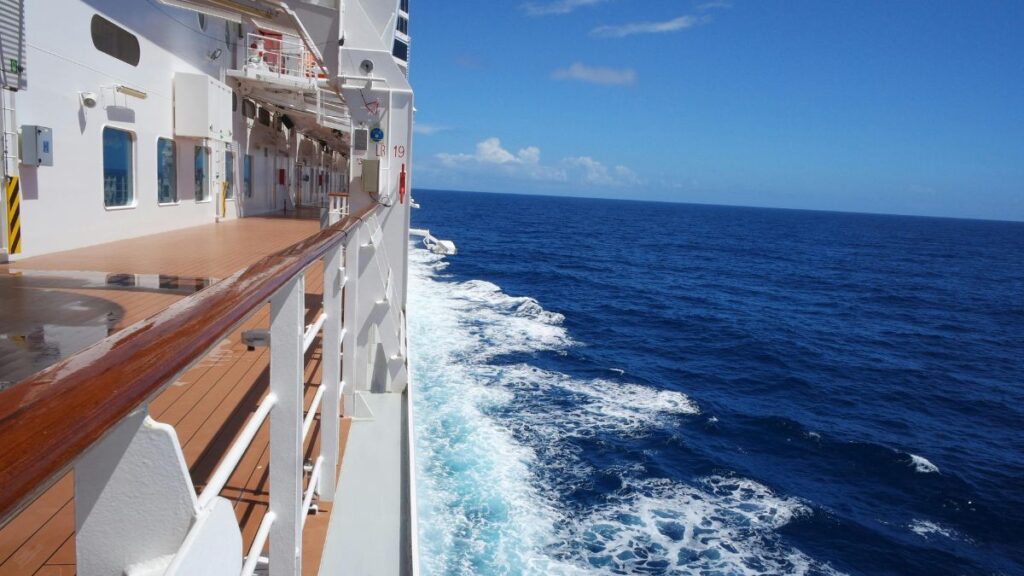
A full-time cruise resident does not need to spend every morning rushing toward an excursion. Unlike vacationers trying to experience everything in a single week, long-term passengers can develop a slower routine.
Mornings might begin with coffee overlooking the ocean, a walk around the deck, or breakfast in the dining room. Some passengers visit the gym, read, work on personal projects, or simply enjoy a quiet lounge.
Lunch can be as simple as visiting the buffet. In the afternoon, there may be trivia, live music, lectures, fitness classes, or time spent watching the coastline.
Evenings often bring theater productions, dancing, musical performances, and restaurant meals. A couple can enjoy dinner and entertainment without arranging transportation home.
This convenience changes the rhythm of retirement. Ordinary activities that require several trips on land may be available within a few minutes’ walk.
One of the biggest benefits is having fewer domestic responsibilities. There is no lawn to maintain, no kitchen to clean after every meal, and no household appliance waiting to be repaired.
However, the same schedule eventually repeats. After months aboard the same ship, residents often learn which restaurants are quietest, which activities are worth attending, and when public spaces are least crowded.
That knowledge helps turn a vacation setting into something closer to an everyday home.
How Much Does It Actually Cost to Live on a Cruise Ship?

The answer depends on the ship, itinerary, season, cabin type, and promotional discounts. A retiree paying standard fares may spend several times as much as someone receiving complimentary casino bookings.
One experienced couple described a particularly unusual arrangement involving nine consecutive cruises over approximately 110 days. Their upfront booking cost was just over $7,000 for both people.
Using $7,000 as a rounded figure, that equals approximately $64 per day, or $1,910 over 30 days. However, the figure does not establish their complete living expenses or what a new customer would pay.
Their offers also included substantial onboard credit, making the arrangement more valuable. Those benefits are not guaranteed and should not be treated as a normal cruise price.
For retirees without casino promotions, the most useful approach is to build a budget from actual cruise quotes. The following examples are hypothetical planning scenarios for two adults sharing one cabin, not advertised 2026 fares.
| Cost Scenario | Cabin Cost for 30 Nights | Other Expenses* | Monthly Total |
|---|---|---|---|
| Lower-cost bookings | $3,300 | $1,880 | $5,180 |
| Moderate-cost bookings | $5,250 | $2,280 | $7,530 |
| Higher-cost bookings | $8,250 | $2,880 | $11,130 |
Each example assumes $18 per person per day in crew appreciation, or $1,080 monthly for two adults, plus an allowance of $800, $1,200, or $1,800 for additional expenses. These are illustrative budgets, not market averages.
The difference between the lowest and highest scenario exceeds $5,900 each month. Over a year, that gap would exceed $71,000 if the same spending patterns continued.
For someone currently spending $6,000 monthly on housing, food, transportation, utilities, and entertainment, the lower scenario could produce savings. The moderate and higher scenarios would require more money.
A retiree with a paid-off house and modest monthly expenses may find cruising considerably more expensive. Someone renting in an expensive city might reach a different conclusion.
The useful comparison is total annual spending against total annual spending, not a cruise fare against a mortgage payment.
The Casino Offers Behind Some Remarkably Cheap Cruises

Some of the most impressive cruise retirement stories involve complimentary cabins earned through cruise ship casinos. These offers can make continuous cruising look far more affordable than ordinary vacation prices suggest.
Cruise casinos often operate loyalty programs that reward eligible gambling activity. Depending on the program and the individual’s history, players may receive discounted fares, complimentary cabins, casino credits, or other benefits.
Princess Cruises operates casino programs through which eligible players may qualify for future cruise offers. The exact terms, sailing dates, cabin types, and availability can differ greatly.
A complimentary cabin does not necessarily mean a completely free cruise. Taxes, required fees, deposits, gratuities, and personal spending may still apply.
Some published Princess casino promotions in 2026 required a $200 deposit per guest. However, that condition applies to particular offers and should not be assumed for every casino booking.
The critical financial issue is that casino rewards come from gambling activity. An offer that saves $2,000 on a cabin is not a genuine $2,000 financial gain if obtaining or maintaining it involves greater gambling losses.
Why Onboard Credit Is Not the Same as Getting Cash Back
The long-term cruising example described earlier involved approximately $6,600 in onboard credit across nine cruises. That was close to 90% of the reported upfront booking amount.
It sounds like nearly all the money was returned. However, onboard credit generally represents spending power for eligible shipboard purchases, not money refunded to a bank account.
Different types of credits also have different restrictions. Standard promotional onboard credit may cover services such as excursions and specialty dining, while casino-specific credits operate under separate conditions.
| Financial Benefit | What It Really Means | Important Limitation |
|---|---|---|
| Complimentary cabin | Eligible cruise fare reduced or waived | Taxes, fees, and deposits may remain |
| Standard onboard credit | Credit toward eligible purchases | Usually cannot be withdrawn as cash |
| Casino free play | Promotional gambling credit | Not equivalent to cash savings |
| Loyalty benefits | Eligible services provided without a separate charge | Benefits depend on program status |
| Casino rewards | Possible future discounted bookings | Future offers are not guaranteed |
For example, $600 in onboard credit may save $600 if it replaces necessary expenses the retiree would otherwise pay. But using that credit for purchases that would never have been made does not create the same savings.
Princess also restricts casino use for certain standard onboard credits. Passengers need to check the precise terms rather than assuming every credit can be used for gambling or withdrawn.
There is another risk that appears only after the initial excitement fades. Cruise lines can change promotional programs, limit eligible sailings, or stop sending offers to particular customers.
A retirement budget should therefore work without casino rewards. Treating promotional cabins as a permanent source of affordable housing can create financial problems when those offers disappear.
Loyalty Benefits Can Make Life Aboard Much Easier

Frequent cruising can provide benefits that ordinary passengers must purchase separately. Over hundreds of nights, these savings and conveniences may become meaningful.
Princess Cruises, for example, offers an Elite loyalty tier after eligible passengers complete 15 cruises or 150 cruise days. Its published 2026 benefits include complimentary laundry, a minibar setup, afternoon tea in the cabin, and other privileges.
For someone living aboard continuously, laundry can be particularly valuable. Clean clothing is a regular need rather than an occasional vacation service.
These benefits also make small cabins easier to manage. Residents can carry fewer clothes when frequent laundry service is available without a separate charge.
However, loyalty benefits are not identical across cruise companies. Some programs focus on discounts, while others provide dining privileges, internet benefits, or priority services.
The best cruise line for a permanent lifestyle may not be the one offering the most luxurious short vacation. Consistent service, comfortable cabins, reasonable prices, and useful loyalty benefits can matter much more.
The Small Cabin Is One of the Biggest Adjustments
Living in a cruise cabin for seven nights is very different from living in one for seven months. Storage becomes a daily concern, and personal space may be limited.
Interior cabins are especially common among budget-focused cruisers. They are often cheaper than balcony cabins but generally lack a private window and natural daylight.
That arrangement may work for people who spend most of their waking hours elsewhere on the ship. It can be uncomfortable for retirees who need sunlight, a separate workspace, or substantial personal privacy.
For couples, sharing a small room also requires patience. Different sleeping habits, daily routines, and preferences for quiet time can become more noticeable.
A balcony cabin offers additional space and access to fresh air, but it may cost significantly more. Over an entire year, even a modest daily upgrade becomes a major expense.
For example, an extra $50 per night equals $18,250 over 365 nights. That is a substantial amount to spend for additional cabin comfort.
The most successful arrangements often depend on simple habits. Keeping belongings organized, choosing a cabin away from noisy public areas, and spending time in different parts of the ship can make compact living more comfortable.
Entertainment Is Everywhere, but It Eventually Becomes Repetitive
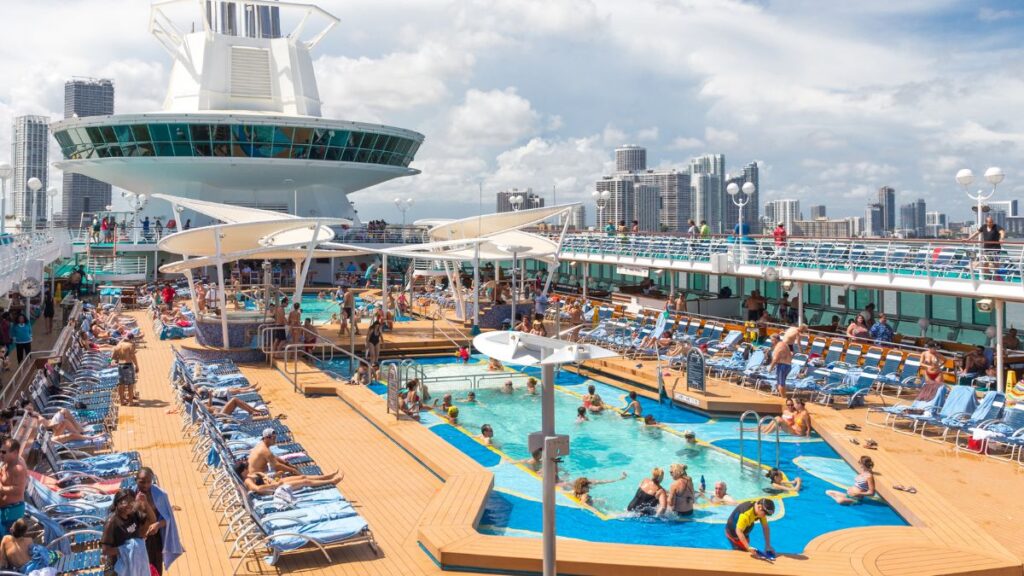
Cruise ships offer a level of built-in entertainment that many retirees would struggle to replicate at home. Live music, dancing, theater performances, games, and social gatherings are often available throughout the week.
For people who enjoy active social lives, this can be a tremendous benefit. There is little need to drive somewhere, buy a separate admission ticket, or arrange a ride afterward.
However, residents staying on the same ship for months may encounter familiar performances and repeating activities. Shows designed for vacationers can lose their novelty after several viewings.
Public spaces can also become crowded during popular events. Passengers staying for a short vacation may compete for the same activities that long-term residents have already experienced many times.
Continuous cruisers often respond by building their own routines. Instead of trying to attend every event, they choose favorite activities and spend the remaining time on personal interests.
Social connections can be complicated as well. New friends may leave after seven days, while crew members rotate through different assignments.
Some long-term cruisers enjoy meeting a constant flow of new people. Others may miss the stable neighborhood relationships and close friendships that develop over years in one community.
Unlimited Food Is Convenient, but It Creates Another Challenge
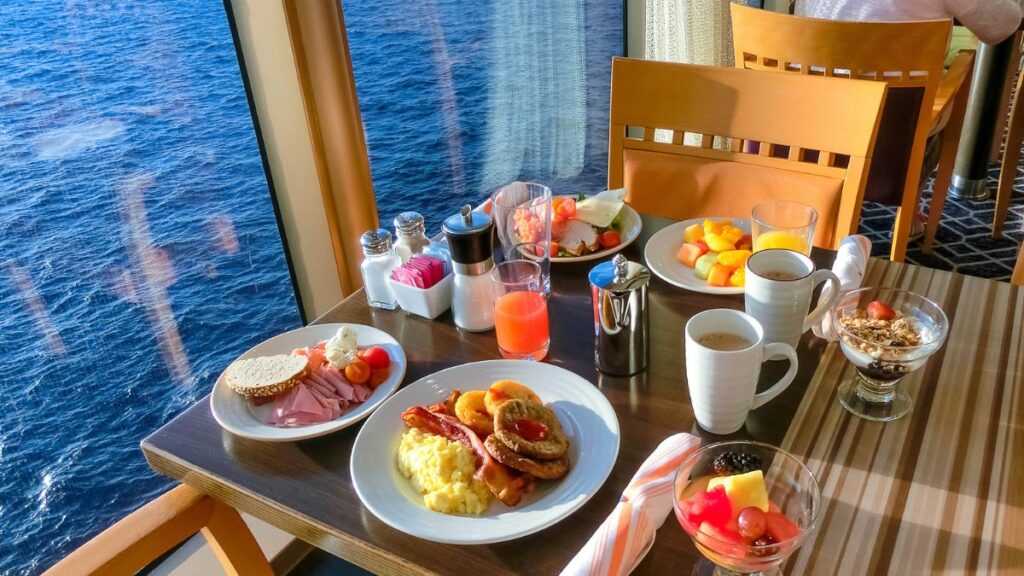
One of the most appealing features of cruise ship living is the absence of regular cooking. Residents can visit dining rooms, choose from buffet selections, or order available room service.
For retirees who dislike grocery shopping and meal preparation, that convenience can be valuable. It also makes daily living more predictable because many standard meals are included in the fare.
However, unlimited food creates a different challenge. Desserts, snacks, rich meals, and alcoholic drinks may be available throughout the day.
Someone trying to maintain specific eating habits must make repeated decisions. A buffet offering vegetables and fresh fruit may also offer pizza, pastries, ice cream, and fried foods.
Eating aboard for several years is not the same as enjoying restaurant meals during a short vacation. Long-term residents need a sustainable eating routine rather than treating every meal as a celebration.
This is especially important for people managing dietary restrictions or chronic conditions. Passengers should discuss their specific needs with the cruise line and medical professionals before committing to extended stays.
There can also be additional charges. Specialty restaurants, certain beverages, and some room service options may increase the monthly budget.
The convenience is genuine, but maintaining healthy habits still requires personal discipline.
Internet Access Can Become a Daily Frustration
Modern cruise ships offer internet service, but connection quality can vary with the vessel, location, weather, and network demand. A service that works well near port may behave differently during an extended ocean crossing.
Some long-term cruisers have reported connection speeds around 1 to 3 megabits per second on particular voyages. Those experiences should not be treated as a universal speed limit because cruise internet technology and service levels vary.
For retirees using email, messaging, and ordinary websites, the connection may be adequate much of the time. Video calls, large downloads, remote work, and streaming can be more demanding.
Internet pricing also deserves attention. Some cruise packages include connectivity, while others require a separate purchase or provide a discount based on loyalty status.
Anyone considering remote work from a ship should test internet performance before depending on it for income. An unreliable connection can create problems for work meetings, financial transactions, and communications with family.
Access to a mobile phone plan in foreign ports is another consideration. International roaming and data charges can become expensive without an appropriate plan.
Healthcare Is the Most Serious Issue for Older Retirees

Cruise ships generally have medical facilities equipped to handle common illnesses and certain emergencies. However, they are not replacements for hospitals, primary care practices, or ongoing specialized medical treatment.
Princess Cruises states that its shipboard medical facilities are intended primarily for acute illnesses and accidents. They are not designed to provide long-term care for chronic medical conditions.
This matters for retirees who need regular appointments, specialist care, prescription refills, or frequent medical monitoring. A continuous cruise itinerary can make those arrangements harder.
For Americans enrolled in Original Medicare, international travel creates another complication. Medicare usually does not cover medical services received outside the United States, although limited exceptions exist.
In certain circumstances, Medicare Part B may cover medically necessary services received on a cruise ship when the vessel is in a U.S. port or within six hours of one. That exception does not mean every visit to a ship’s doctor will be covered.
Some Medigap policies provide limited foreign travel emergency benefits. Medicare Advantage coverage also varies by plan, and extended time outside a plan’s service area can affect eligibility.
Travel medical insurance and emergency evacuation coverage deserve careful review. Policies may have restrictions involving age, preexisting conditions, trip length, or continuous travel.
A retiree should also consider what happens after a serious medical emergency. Being transported to a hospital in another country may require additional accommodation, transportation, and eventually a flight home.
The CDC recommends preparing for cruise travel with appropriate vaccinations, medical supplies, and insurance. Anyone spending months abroad should also maintain access to routine medical care and necessary prescriptions.
Close Contact With Thousands of Passengers Increases Exposure
Cruise ships bring large groups of people together in restaurants, theaters, elevators, and other shared spaces. Respiratory infections and gastrointestinal illnesses can spread in these environments.
The CDC recorded multiple gastrointestinal illness outbreaks involving cruise ships in 2026. Norovirus remains an important concern because it spreads easily through contaminated hands, surfaces, food, and close contact.
Regular handwashing with soap and water is especially important. The CDC warns that hand sanitizer alone does not work well against norovirus.
For many healthy retirees, these risks can be managed with sensible precautions. However, people with weakened immune systems or significant medical needs should assess the risks individually.
The Financial Risks Extend Beyond Cruise Fares

There is a major difference between booking several ordinary cruises and purchasing a long-term residential arrangement aboard a ship. Both may provide years of travel, but their financial risks can be very different.
That distinction became especially clear in October 2026. Reuters reported that the operator of the residential ship Villa Vie Odyssey had suspended operations and required approximately 200 residents to disembark in Cambodia.
One American couple had purchased a cabin for $179,000 and was paying approximately $6,000 per month in fees. After 17 months aboard, they faced an uncertain financial future when operations stopped.
This was a residential cruise operation, not an ordinary Princess cruise booking. Still, the event illustrates why retirees should be cautious about committing a large share of their savings to a single operator.
Even conventional cruise itineraries can change. Bad weather, maintenance problems, scheduling decisions, or other disruptions may lead to altered ports and canceled sailings.
Residents also need arrangements for passports, visas, reliable mail delivery, banking, taxes, and an appropriate legal residence or domicile. Living continuously at sea does not eliminate those responsibilities.
Another concern is maintaining enough accessible savings to return to land. A retiree who sells a home and spends most of the proceeds may struggle if cruising becomes unaffordable or medically unsuitable.
A sustainable cruise retirement needs both a budget for staying aboard and a financial plan for leaving.
Who Is Most Likely to Enjoy Full-Time Cruise Living?
Not every retiree values the same things. Some enjoy changing destinations and constant activity, while others prefer familiar surroundings and a settled community.
Cruising may suit people who already enjoy travel, have relatively few possessions, and feel comfortable living in small spaces. It can also appeal to couples who enjoy spending substantial time together.
Others may find that the disadvantages outweigh the attractions. Frequent medical appointments, pets, strong local relationships, or a need for a larger private home can make continuous cruising difficult.
The following comparison helps identify which preferences matter most.
| Lifestyle Factor | Cruise Ship Living | Traditional Retirement |
|---|---|---|
| Travel opportunities | Frequent international destinations | Requires separate planning |
| Daily chores | Many handled by ship staff | Mostly managed at home |
| Personal space | Limited cabin space | Usually more room |
| Community | Constantly changing passengers | More stable relationships |
| Healthcare access | Limited shipboard facilities | Easier access to local providers |
| Housing stability | Depends on cruise bookings | Greater control with stable housing |
| Flexibility | High travel mobility | Easier to keep a familiar routine |
The strongest candidates are people who genuinely enjoy life aboard, not simply those attracted by low advertised fares. Living on a ship for months requires different habits from taking an occasional vacation.
For some retirees, spending three or four months cruising each year may be a better compromise. They can enjoy extended travel while keeping a stable home base.