
Paying taxes earlier than necessary sounds like a strange retirement strategy. Most people spend their working years trying to reduce taxes, not volunteer to pay them sooner.
But there is a situation where paying more tax today could leave you with more money tomorrow. It involves moving retirement savings into a Roth IRA before future withdrawals push your tax bill higher.
The catch is that a Roth conversion does not automatically save money. The timing, amount converted, and your future tax situation can make the difference between a smart decision and an expensive mistake.
What Is a Roth Conversion, and Why Would You Pay Taxes Early?
A Roth conversion moves money from a traditional IRA or another eligible retirement account into a Roth IRA. You generally pay ordinary income tax on the portion converted that has not already been taxed.
Once the money is inside the Roth IRA, it can continue growing. Qualified withdrawals are tax free, and Roth IRA owners do not have to take required minimum distributions during their lifetime.
Consider someone with $300,000 in a traditional IRA. That money may look like a retirement cushion, but part of it effectively belongs to the government because taxes will generally be due when withdrawals occur.
A Roth conversion allows that person to pay taxes on some of the money now. The converted amount can then grow inside the Roth account without creating another federal income tax bill when qualified withdrawals are made.
The important question is whether the tax paid today will be lower than the taxes avoided later.
When Your Current Tax Rate Is Lower Than Your Future Rate
The clearest reason to consider a Roth conversion is that you expect to pay higher taxes in retirement than you pay today. This can happen even when you stop working and your regular income falls.
For example, a retiree might temporarily fall into the 12% federal tax bracket after leaving work. Years later, Social Security, pension payments, investment income, and required retirement withdrawals could place that person in the 22% bracket.
Converting some money while paying 12% might make more sense than leaving all of it to be withdrawn at 22%. However, the comparison should include Medicare costs, deductions, state taxes, and other effects.
Here are several important federal tax brackets for 2026.
| Federal Tax Rate | Single Filers: Taxable Income | Married Filing Jointly: Taxable Income |
|---|---|---|
| 10% | Up to $12,400 | Up to $24,800 |
| 12% | $12,400 to $50,400 | $24,800 to $100,800 |
| 22% | $50,400 to $105,700 | $100,800 to $211,400 |
| 24% | $105,700 to $201,775 | $211,400 to $403,550 |
These brackets apply to taxable income after applicable deductions, not total household income. Higher brackets also exist, but these ranges show why many retirees examine the amount they can convert without moving into a higher bracket.
The Years Between Retirement and Required Withdrawals Can Be Valuable

One of the most useful times to consider Roth conversions is after retirement but before required minimum distributions begin. During those years, taxable income may be lower than it was during your career.
Suppose someone retires at 62 but plans to delay Social Security until 70. Without employment income or Social Security payments, that person may have several years with unusually low taxable income.
Those years create an opportunity to convert portions of traditional retirement savings at potentially favorable rates. Instead of converting everything at once, the retiree could spread conversions across several years.
Required minimum distributions generally begin at age 73 for people born from 1951 through 1959. For people born in 1960 or later, the starting age is generally 75.
This means retirement timing matters. Someone retiring at 60 may have a longer conversion window than someone retiring at 72.
The goal is to use lower income years before mandatory withdrawals reduce your control over taxable income.
How Roth Conversions Can Reduce Future Required Minimum Distributions
Traditional IRAs generally require withdrawals once you reach the applicable RMD age. These withdrawals can create taxable income even when you do not need the money for living expenses.
Consider a retiree with $800,000 in a traditional IRA. If that account grows significantly before required withdrawals begin, future annual distributions could become substantial.
Those withdrawals may push the retiree into higher tax brackets. They can also affect Medicare premiums and the taxable portion of Social Security benefits.
Converting some traditional IRA money earlier reduces the balance subject to future RMD calculations. That can mean smaller required withdrawals later, assuming other factors remain equal.
This does not mean everyone should empty a traditional IRA. Keeping money in both traditional and Roth accounts can provide more choices when deciding where to withdraw money each year.
A Simple Example of Paying Tax Now to Save Later
Consider a married couple with $80,000 in taxable income before a Roth conversion in 2026. They want to move some traditional IRA savings into a Roth IRA.
The top of the 12% federal bracket for married couples filing jointly is $100,800. That leaves $20,800 of room in the bracket before they reach the 22% rate.
If they convert $20,000, the additional federal income tax would be approximately $2,400 under a simplified calculation.
| Decision | Approximate Federal Tax on $20,000 |
|---|---|
| Convert now at 12% | $2,400 |
| Withdraw later at 22% | $4,400 |
| Difference on the same amount | $2,000 |
The example shows the value of a lower tax rate. It does not include investment growth, deductions affected by income, state taxes, or Medicare costs.
Also, saving $2,000 in this comparison does not guarantee a $2,000 lifetime benefit. A proper analysis must account for the future value of the tax money paid today and the growth of both accounts.
Still, the example explains why timing matters. A smaller conversion during a favorable tax year may produce better results than a much larger conversion during a high income year.
Why Converting a Little Each Year May Work Better

Many people assume a Roth conversion means moving their entire traditional IRA at once. That is not necessary, and doing so could create an enormous tax bill.
There is no general annual dollar limit on Roth conversions. But the amount that makes financial sense may be much smaller than the amount you are allowed to convert.
Someone with a $500,000 traditional IRA might convert $25,000 one year and $35,000 the next. The amount could change depending on income, deductions, and tax brackets.
This approach gives the retiree greater control over the additional taxable income created each year. It also allows adjustments when financial circumstances change.
For example, a year with large capital gains or extra consulting income might be a poor time for a conversion. A year with unusually low income could offer a better opportunity.
The purpose is not to convert as much money as possible. It is to convert amounts that make sense after comparing today’s tax cost with future benefits.
Why Medicare Premiums Can Make a Roth Conversion More Expensive
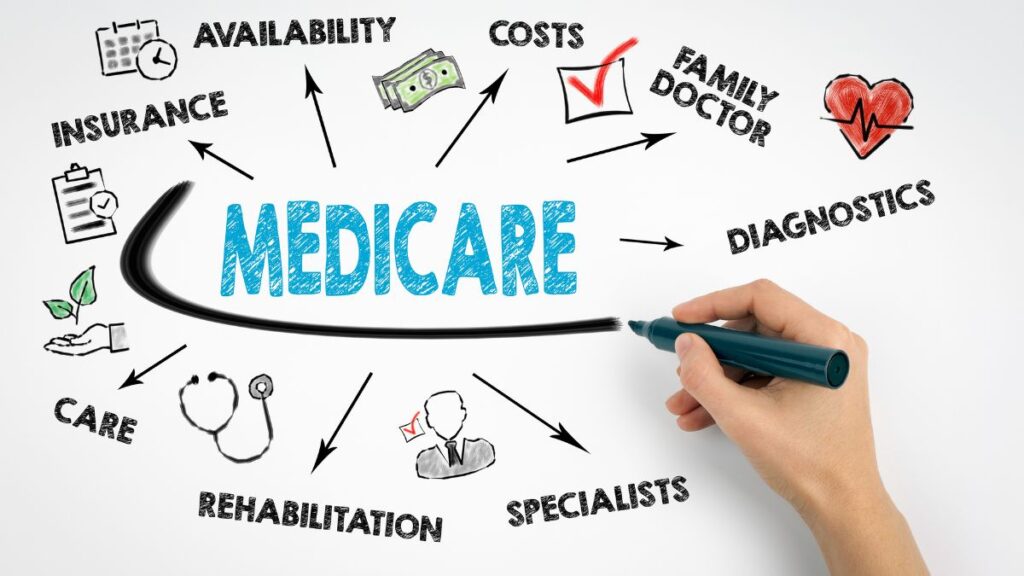
One of the biggest surprises for retirees is that a Roth conversion can affect Medicare premiums. This happens because higher income beneficiaries may pay additional charges for Medicare Part B and Part D.
These charges are called Income Related Monthly Adjustment Amounts, or IRMAA. They depend on modified adjusted gross income rather than taxable income after deductions.
Medicare typically uses tax information from two years earlier. A conversion completed in 2026 could therefore affect Medicare premiums in 2028.
For perspective, the standard Medicare Part B premium in 2026 is $202.90 per month. Higher income beneficiaries may pay substantially more.
The 2026 IRMAA thresholds begin above $109,000 in modified adjusted gross income for single filers and $218,000 for married couples filing jointly. Those figures apply to 2026 premiums, and the 2028 thresholds may be different.
A large Roth conversion can create additional Medicare expenses for an entire year. This cost should be included when calculating whether the conversion is worthwhile.
Sometimes, converting slightly less can prevent an expensive jump in premiums. That makes careful income planning especially important after age 65.
How Roth Conversions Can Affect Social Security Taxes
Social Security benefits are not always free from federal income tax. Depending on your combined income, up to 85% of your benefits may become taxable.
A Roth conversion increases income used in the calculation. That can cause a larger portion of your Social Security benefits to become taxable.
Suppose a retiree already receives Social Security and has modest additional income. Converting $30,000 from a traditional IRA may create more taxable income than the conversion amount alone suggests.
That happens because the conversion can also cause additional Social Security benefits to enter the taxable income calculation.
The result is an effective tax rate that may be higher than the retiree’s regular federal bracket.
This is one reason converting before claiming Social Security can sometimes be attractive. It may provide an opportunity to move money while avoiding this added tax effect.
However, delaying Social Security is not automatically the best decision for everyone. Health, household needs, and expected benefits must also be considered.
Why Retirees Over 65 Should Watch the New Senior Deduction
Federal tax rules for 2026 include an additional deduction for eligible people age 65 and older. The deduction can be worth up to $6,000 per qualifying individual or $12,000 for a married couple when both spouses qualify.
It is available for tax years 2025 through 2028. However, the deduction begins to phase out when modified adjusted gross income exceeds $75,000 for single filers or $150,000 for joint filers.
A Roth conversion can push income above those limits. That may reduce the deduction and increase the real tax cost of converting.
For example, an eligible married couple receiving the full deduction might convert enough money to trigger part of the phaseout. Their added tax cost would then reflect the loss of some deduction as well as tax on the conversion.
This is why focusing only on the published tax brackets can be misleading. A conversion should be evaluated using the household’s complete tax situation.
When Paying the Conversion Tax With Savings Makes Sense
A Roth conversion often looks more attractive when you can pay the tax bill using money outside your retirement accounts. That allows more of the converted money to remain invested inside the Roth IRA.
Suppose you convert $50,000 and owe $11,000 in additional taxes. If you pay the bill from separate savings, the entire $50,000 can remain in the Roth account.
If you take $11,000 from your IRA to cover the taxes, less money remains invested. Depending on your age and how the withdrawal is handled, additional taxes or penalties may also apply.
Of course, using separate cash has a cost. That money could otherwise remain invested, earn interest, or cover emergencies.
A sound comparison should account for that alternative use of the money. Paying taxes from outside savings is not automatically beneficial if doing so leaves you without enough emergency funds.
When a Roth Conversion Could Be a Bad Decision
Roth conversions have real disadvantages, and some retirees may be better off leaving their traditional accounts alone.
Here are several situations that deserve extra caution.
| Situation | Why a Conversion May Hurt |
|---|---|
| Your current tax rate is unusually high | You may pay more now than you would later |
| A large conversion pushes you into a higher bracket | Part of the conversion becomes more expensive |
| You are close to an IRMAA threshold | Medicare premiums may increase |
| You receive income based benefits or subsidies | Added income may reduce eligibility or assistance |
| You need the money soon | There may be little time to benefit from Roth growth |
| You lack cash to pay the tax bill | Taxes may drain retirement savings or emergency reserves |
| You expect substantially lower taxes later | Keeping traditional savings may cost less |
| You plan major charitable giving from your IRA | Other tax strategies may be more useful |
Another concern involves moving to a state with lower income taxes. If you currently live in a high tax state but expect to retire in a state without individual income tax, converting before the move may create unnecessary state taxes.
The reverse can also be true. Converting while living in a lower tax state may be useful if you expect to move somewhere with higher taxes.
Location therefore belongs in the calculation alongside federal tax brackets.
How Roth Conversions Can Help a Surviving Spouse
Married couples sometimes plan retirement taxes as though both spouses will always be alive. Unfortunately, that assumption can produce problems after the first spouse dies.
The surviving spouse may eventually file as a single taxpayer. However, the household may still receive significant income from pensions, retirement accounts, and Social Security.
Single filers reach higher tax brackets at lower taxable income levels than married couples filing jointly. This can create a larger tax burden for the survivor.
For example, the 22% bracket begins above $50,400 of taxable income for single filers in 2026. For married couples filing jointly, it begins above $100,800.
A couple converting some traditional retirement savings while filing jointly may reduce the taxable balances that remain for the surviving spouse.
This does not make conversion the correct choice in every marriage. But survivor taxes are an important consideration, especially for couples with substantial traditional IRA balances.
What Happens When You Leave a Roth IRA to Your Children?
Roth conversions can also affect what children or other heirs receive after your death. Traditional inherited IRAs generally create taxable income as beneficiaries withdraw money.
For many adult children, inherited retirement accounts must be emptied within ten years. Those withdrawals can arrive during the beneficiary’s highest earning years.
A large inherited traditional IRA could therefore increase a child’s income taxes significantly. This is particularly relevant when adult children already earn high salaries.
Inherited Roth IRAs are subject to distribution rules too, including the ten year rule for many beneficiaries. However, qualified distributions are generally free from federal income tax.
A conversion may allow parents to pay income taxes at a lower rate than their children would face later.
The tradeoff is that the parents must give up money today to cover those taxes. Estate planning should account for the parents’ retirement security before focusing on benefits for heirs.
The Five Year Rules You Should Know Before Converting
Roth IRAs have special withdrawal rules that should not be ignored. There are two separate five year rules that matter in different situations.
The first determines when Roth IRA earnings may qualify for tax free withdrawal. Generally, the Roth IRA must meet a five tax year holding requirement, and the withdrawal must satisfy another condition, such as the owner being at least age 59½.
The second rule applies separately to each conversion for purposes of the 10% early withdrawal penalty. It can matter if you withdraw converted taxable amounts before age 59½.
For someone already over 59½, the early withdrawal penalty concern generally does not apply. However, the separate five year requirement for tax free earnings may still matter.
Another important rule is that Roth conversions generally cannot be reversed. Since 2018, taxpayers have not been allowed to undo a completed conversion by recharacterizing it back to a traditional IRA.
That makes the decision worth reviewing before the money moves.
Why You Cannot Convert Your Required Minimum Distribution
Once required minimum distributions begin, Roth conversions become somewhat more complicated. You can still convert eligible traditional IRA money, but the required distribution itself cannot be converted.
If you must take a $20,000 RMD for the year, that required amount must come out before you convert additional IRA funds. You cannot simply transfer the $20,000 RMD into a Roth IRA and call it a conversion.
The RMD usually creates taxable income, which must be considered before deciding how much additional money to convert.
This can make conversions more expensive after required distributions begin. It also explains why earlier planning may offer more flexibility.
Taxpayers who made nondeductible traditional IRA contributions should also check their records. The portion already taxed may affect how much of a conversion is taxable under the IRA allocation rules.
How to Decide Whether a Roth Conversion Is Worth It
Before converting, compare the current tax cost with realistic future outcomes. A decision based only on this year’s tax bracket can miss important expenses.
A useful review should include the following questions.
| Question | What It Helps You Determine |
|---|---|
| What is my taxable income this year? | How much room remains in each tax bracket |
| Will my future tax rate be higher? | Whether paying taxes now may save money |
| When will my RMDs begin? | How much time remains for conversions |
| Am I receiving Social Security? | Whether more benefits could become taxable |
| Could my Medicare premiums increase? | The full cost of added income |
| Can I pay taxes from outside savings? | How much converted money can stay invested |
| Will I need this money soon? | Whether Roth holding rules or timing create problems |
| What might my spouse or heirs owe later? | Possible benefits beyond your own lifetime |
The strongest conversion plans often involve several smaller decisions rather than one enormous transaction. Each year’s income and tax situation should guide the amount.
For a conversion to count in the 2026 tax year, it generally needs to be completed by December 31, 2026. Unlike a regular IRA contribution, a conversion cannot simply be designated for the previous year during the following tax filing season.
It is also important to plan for the tax payment. A conversion may require additional withholding or estimated tax payments to avoid an underpayment penalty.
A qualified tax professional can help compare several conversion amounts before you commit to one.
Is Paying More Tax Now Really Worth It?
A Roth conversion can make sense when your current tax rate is relatively low, you expect higher taxes later, and you have enough time for the Roth account to provide meaningful benefits.
It can also help reduce future required withdrawals, provide more control over retirement income, and ease potential tax burdens for a surviving spouse or heirs.
But none of these benefits guarantees that a conversion will save money. Paying a high tax rate today, losing deductions, or triggering larger Medicare premiums could cancel out the advantages.
The best strategy may be to convert modest amounts during favorable years while keeping other retirement savings in traditional accounts.