

Retiring before your spouse sounds like a wonderful reward after decades of work. But while one person enjoys a slower schedule, the other may still be managing deadlines, workplace stress, and most of the household’s income.
That difference can create problems neither person expected. Money changes, daily routines shift, and even small disagreements about chores or spending can become harder to ignore.
Retiring before your spouse requires more than checking your savings balance. These nine conversations can help couples protect their finances, understand each other’s expectations, and make their different retirement schedules work together.
1. Are We Both Comfortable With One of Us Retiring First?

The first conversation should happen before discussing investment balances or Social Security. Both spouses need to understand why one person wants to retire now while the other plans to continue working.
Perhaps one spouse feels exhausted after 40 years in the workforce. The other may enjoy working, want to strengthen retirement savings, or need several more years to qualify for certain employment benefits.
Neither position is automatically wrong. Problems begin when one person assumes the other is equally comfortable with the arrangement.
Imagine a 64-year-old husband who wants to retire while his 61-year-old wife plans to work another five years. He pictures peaceful mornings, hobbies, and occasional trips, while she worries about becoming the only person responsible for earning a paycheck.
Both have reasonable concerns, but they are picturing very different futures. Without discussing those expectations, excitement for one spouse can feel like added pressure for the other.
Questions to discuss: Are we both comfortable with the proposed retirement date? Does the working spouse feel financially responsible for everything, and would waiting another six or twelve months make a meaningful difference?
Couples should also discuss whether the retirement date is flexible. A gradual retirement involving fewer hours, consulting work, or a temporary break may provide an option worth considering.
The important decision: Agree on a retirement date that considers both people’s financial needs and emotional readiness. Make sure the working spouse genuinely supports the plan rather than simply accepting it to avoid disagreement.
2. Can We Actually Afford to Live on One Paycheck?

This may be the most important financial conversation of all. A couple can have substantial retirement savings and still experience a monthly cash shortage after one spouse stops working.
The mistake is looking at how much money they have accumulated without examining how much income will disappear. Retirement savings are assets, but they do not automatically replace a regular paycheck.
Consider this hypothetical household. Both spouses currently work, but one plans to retire and receive a small pension while the other continues earning wages.
What the Household Budget Could Look Like
| Monthly Figure | Both Working | One Retired |
|---|---|---|
| Working spouse’s take-home pay | $5,200 | $5,200 |
| Other spouse’s take-home pay or pension | $4,300 | $1,200 |
| Total monthly income | $9,500 | $6,400 |
| Monthly household expenses | $7,800 | $7,200 |
| Monthly surplus or shortage | +$1,700 | -$800 |
Hypothetical 2026 example. Income is after taxes, and projected retirement expenses include estimated health coverage costs. No Social Security or investment withdrawals are assumed.
The couple previously had $1,700 left each month. After retirement, they face an $800 monthly shortage, even though their household expenses have fallen.
That creates a $9,600 annual gap. If the arrangement lasts three years, they may need approximately $28,800 from savings before investment returns, inflation, or other changes.
The amount may be manageable, but the couple needs to decide where the money will come from. Otherwise, small withdrawals can become an unplanned habit.
The next question is whether the remaining paycheck can cover essential expenses such as housing, groceries, utilities, insurance, and transportation. If it cannot, the household needs a clear plan for funding the difference.
Try a three-month retirement budget test. While both spouses are still employed, spend only the amount they expect to have available after retirement and set aside the rest. This can reveal unrealistic assumptions before retirement becomes permanent.
The important decision: Calculate the monthly gap, identify the account that will fund it, and determine how long the arrangement can continue without compromising long-term retirement savings.
3. When Should Each of Us Claim Social Security?

Retiring and claiming Social Security are two separate decisions. A person can stop working at 62 and delay collecting benefits until 67 or even 70.
That distinction matters because Social Security claiming decisions can affect household income for decades. For married couples, the decision may also influence the benefit available to a surviving spouse.
For people born in 1960 or later, full retirement age is 67. Claiming at 62 reduces the worker’s retirement benefit to 70% of the full amount, while delaying until 70 increases it to 124%.
Consider someone whose full retirement age benefit would be $2,400 per month. Here is how the payment changes at different claiming ages.
How Claiming Age Changes Monthly Benefits
| Claiming Age | Monthly Benefit | Annual Benefit |
|---|---|---|
| 62 | $1,680 | $20,160 |
| 67 | $2,400 | $28,800 |
| 70 | $2,976 | $35,712 |
Hypothetical example using Social Security Administration claiming percentages for someone born in 1960 or later. Figures exclude future cost-of-living adjustments and changes in earnings.
The difference between claiming at 62 and 70 is $1,296 per month, or $15,552 annually. That is a substantial difference in later-life income, although waiting also means giving up payments during the earlier years.
Delaying benefits is not always the right decision. Health, life expectancy, immediate financial needs, and the amount available from savings all matter.
What Couples Often Overlook
A spouse’s benefit can be worth up to 50% of the other worker’s full retirement age benefit, subject to eligibility rules. However, the worker generally must be receiving retirement or disability benefits before a current spouse can collect benefits on that record.
Survivor benefits follow different rules. A surviving spouse may qualify for a benefit based on the deceased spouse’s record, and delaying the higher earner’s retirement benefit can sometimes increase the survivor’s future payment.
This makes claiming decisions especially important when one person earned considerably more during their career. Choosing the earliest possible benefit might solve a short-term cash problem while reducing protection for the surviving spouse.
Couples should also understand that regular spousal and personal retirement benefits are not simply added together. Social Security coordinates eligible benefits under its rules, and survivor benefits have separate claiming options.
The important decision: Review both Social Security statements and compare several claiming combinations. Evaluate household income while both spouses are alive and what would remain if one spouse died.
4. How Will Health Insurance Work When One Spouse Retires?

Health insurance can become one of the biggest expenses in a staggered retirement. The situation is especially important when the retiring spouse is younger than 65 and currently receives coverage through work.
Medicare generally begins at 65 for people who qualify based on age. Retiring at 62 or 63 does not automatically make someone eligible for Medicare.
If the working spouse has employer-sponsored insurance, adding the retiring spouse may be possible. However, couples should confirm eligibility, enrollment deadlines, premiums, and deductibles directly with the employer.
A family plan can cost more than employee-only coverage. That increase may offset part of the savings from no longer commuting or paying other work-related expenses.
Health Coverage Situations Couples Should Review
| Situation | Possible Coverage | Important Check |
|---|---|---|
| Retiring spouse under 65 | Working spouse’s employer plan, Marketplace, or COBRA | Eligibility, premiums, and enrollment dates |
| Retiring spouse 65 or older | Medicare and possibly active employer coverage | Which plan pays first and Part B enrollment |
| Losing employer insurance | Marketplace or COBRA | Enrollment windows and total costs |
| Moving from active work coverage to retiree coverage | Medicare and applicable retiree benefits | Medicare enrollment obligations and plan coordination |
A retiring spouse who loses qualifying job-based coverage may generally qualify for a Marketplace Special Enrollment Period. This commonly allows enrollment within 60 days before or after the coverage loss.
Medicare enrollment requires particular attention. Someone 65 or older who had coverage through their own or their spouse’s current employment may qualify for an eight-month Special Enrollment Period for Part B after that employment or coverage ends, whichever occurs first.
COBRA and retiree insurance generally do not extend this employment-based Medicare enrollment protection. Missing the correct enrollment period may cause coverage gaps and lifetime late enrollment penalties.
Employer size can also matter. For someone age 65 or older covered through current employment, Medicare generally pays first when the employer has fewer than 20 employees, subject to coordination rules.
The Cost Couples Should Calculate
Suppose health insurance increases household spending by $450 per month after retirement. That represents another $5,400 annually, before considering deductibles, prescription costs, or other out-of-pocket expenses.
A couple planning to live on one paycheck needs to include those costs in the retirement budget. A low monthly premium alone does not necessarily mean a plan is affordable.
Marketplace financial assistance also depends on household income, including the working spouse’s income and certain retirement withdrawals. Couples should compare actual plan estimates rather than assuming they will qualify for large subsidies.
The important decision: Know exactly where both spouses will receive health coverage, what it will cost, and which enrollment deadlines apply before anyone leaves their job.
5. Which Accounts Will Pay Our Bills, and What About Taxes?
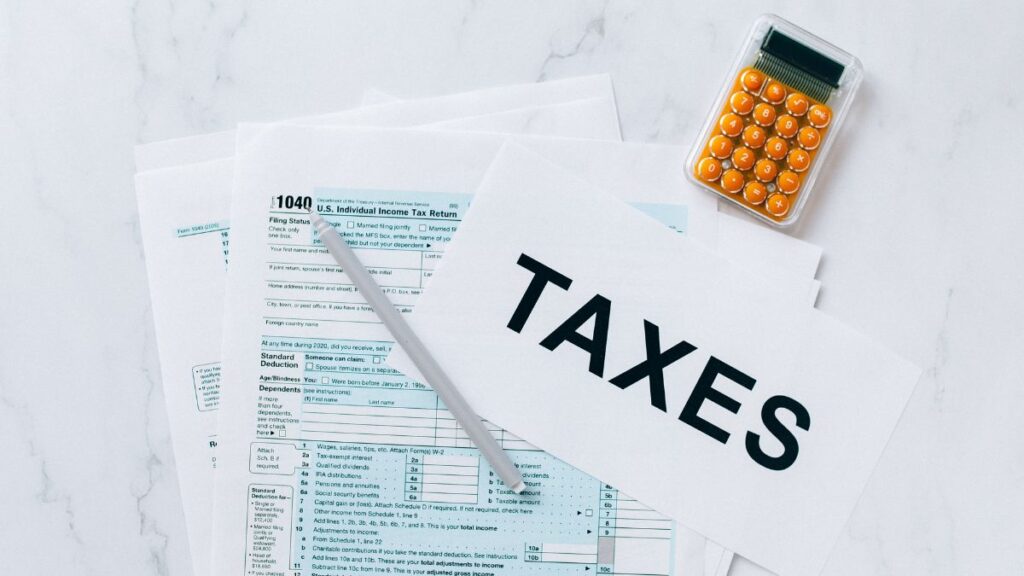
Many couples assume they can use retirement savings to replace the missing paycheck. That may be reasonable, but deciding which account to withdraw from can affect taxes, future investment growth, and health insurance costs.
Money withdrawn from a traditional IRA or 401(k) generally counts as taxable income. Qualified Roth IRA withdrawals, by contrast, are generally tax free.
The age of the retiring spouse matters, too. Withdrawals before age 59½ may face an additional 10% federal tax unless an exception applies.
One important exception may apply to certain employer retirement plans when a worker separates from service during or after the year they turn 55. That exception does not generally apply to IRA withdrawals, which is why moving money between accounts requires careful planning.
Retirement Can Change the Household Tax Picture
Suppose the working spouse earns $85,000 annually and the retired spouse begins taking $24,000 from a traditional IRA. The household may have $109,000 in gross income from those two sources before deductions and other income.
That withdrawal is not automatically taxed at one fixed rate. Its actual tax impact depends on the couple’s filing status, deductions, other income, and applicable tax rules.
If one spouse is already receiving Social Security, the working spouse’s wages may also cause part of those benefits to become taxable. For married couples filing jointly, the IRS generally uses combined household income in determining Social Security benefit taxation.
Higher income may also affect Medicare premiums. Income-related monthly adjustment amounts, known as IRMAA, can raise Part B and Part D costs for some beneficiaries.
There is an important protection if work stops and income falls. Social Security allows qualifying beneficiaries to request a lower IRMAA after certain life-changing events, including retirement or reduced work hours.
The Withdrawal Order Matters
Couples should decide how to use cash reserves, taxable investments, traditional retirement accounts, and Roth accounts. There is no single withdrawal order that works best for every household.
A household relying on savings for only two or three years may approach withdrawals differently from one that needs investments to support retirement for another 30 years. Taxes, market performance, and available cash all affect the decision.
Couples should also review any pension payout options. Some pensions provide a larger monthly payment for one person’s lifetime, while joint and survivor options may continue payments to a surviving spouse, usually at a reduced initial amount.
The important decision: Create a written plan showing which accounts will fund the monthly income gap, how withdrawals affect taxes, and what protections remain for the other spouse.
6. Who Will Handle the Household Responsibilities?

Retirement changes more than income. It can also change how couples divide cooking, cleaning, shopping, home maintenance, caregiving, and other responsibilities.
One spouse may believe retirement means freedom from regular obligations. The working spouse may assume that the person with more free time will naturally take on more household duties.
Neither assumption should go unspoken. Differences in expectations can create resentment even when the couple has enough money to support retirement.
Imagine a couple who previously shared grocery shopping, cooking, and cleaning. After one retires, the working spouse starts expecting dinner to be ready most evenings and weekend chores to be completed during the week.
The retired spouse may feel that decades of work have earned a break. Meanwhile, the employed spouse may feel unfairly burdened by work and household tasks.
A better approach is to discuss what a fair arrangement looks like before retirement begins. Fair does not always mean an equal number of chores, but both people should feel their time and efforts are valued.
Look Beyond Ordinary Chores
Couples should discuss who manages bills, insurance paperwork, medical appointments, repairs, and family responsibilities. These less visible tasks can require considerable time and mental effort.
If the retired spouse takes on more household work, that should be a shared decision rather than an automatic expectation. The arrangement may also need to change when illness, travel, or other circumstances arise.
The important decision: Agree on household responsibilities for the first three months. Revisit the arrangement after both spouses understand how the new routine actually feels.
7. How Much Time Should We Spend Together?

Retirement creates a new relationship with time. One spouse may suddenly have 40 or more hours each week available while the other remains tied to a work schedule.
That difference can create unexpected tension. The retired spouse may want companionship throughout the day, while the working spouse may need quiet evenings to recover from work.
Some couples respond by spending nearly all their free time together. Others discover that maintaining separate interests helps them enjoy their shared time more.
The important question is not how much time a couple should spend together. It is whether both people feel comfortable with the balance between independence and companionship.
The Risk of Expecting Too Much
A newly retired person may expect their spouse to provide most of their social interaction. That can put pressure on someone who is still working full time.
Maintaining friendships, hobbies, volunteer activities, and personal interests can help create a satisfying retirement routine. It also prevents every free hour from becoming a negotiation between spouses.
The working spouse should have room to protect personal interests, too. Retirement should not give one person control over the other’s time simply because their schedule is more flexible.
A weekly planning conversation may help. Couples can identify shared activities, work commitments, household needs, and time they each want for themselves.
The important decision: Agree on time together, individual activities, and reasonable expectations about availability. Make room for both people’s routines without treating independence as rejection.
8. What Experiences and Goals Matter Most to Each of Us?

One of the biggest differences in staggered retirement involves how each person imagines spending money and time. The retiring spouse may see an opportunity to travel, explore hobbies, or visit family more often.
The working spouse may prefer to save aggressively for their own retirement. They might also feel frustrated if one person is enjoying expensive activities while the other continues working.
These differences are not necessarily signs of a financial problem. They reflect competing priorities that should be discussed before spending patterns change.
Retirement Spending Is Not Just About Necessities
Consider a hypothetical couple with $12,000 available annually for travel and leisure. The retired spouse wants to use most of that amount immediately, while the working spouse prefers to save half for vacations they can take together.
The disagreement is about more than money. It involves fairness, shared experiences, and how each person views the purpose of retirement savings.
A reasonable compromise might involve separate personal spending budgets and a shared fund for future experiences. The amounts should depend on the couple’s financial plan rather than an arbitrary rule.
Ask What Cannot Wait
Some experiences are easier to enjoy earlier in retirement. Long trips, physically demanding hobbies, and certain family visits may become more difficult later.
However, spending heavily during the first years can reduce financial flexibility for the future. Couples need to balance current enjoyment with their ability to pay for housing, healthcare, and unexpected expenses later.
This is also a chance to revisit major goals. Downsizing, relocating, helping adult children, buying a vacation property, or making home improvements may carry very different financial consequences.
The important decision: Identify a few shared retirement priorities and give each spouse room for personal goals. Set spending limits that respect both current enjoyment and future financial security.
9. What Happens if Our Retirement Plans Change?

The final conversation may be the easiest to postpone, but it can provide some of the greatest protection. Staggered retirement depends partly on an assumption that the working spouse will continue earning income as planned.
A job loss, health problem, family caregiving need, or unexpected expense could change that arrangement. Couples should discuss what they would do rather than assume the original plan will remain possible.
What if the Working Spouse Retires Earlier?
Suppose the couple expects one spouse to work until age 67. At 63, that person unexpectedly stops working because of a company restructuring.
The household loses several years of expected wages and retirement contributions. It may also need to replace employer health insurance sooner than planned.
A financial plan should account for this possibility. Couples can model what happens if the remaining paycheck ends two or three years early.
They should also consider how quickly they could reduce discretionary spending or whether part-time work might be available. A reliable emergency reserve can help avoid selling investments during a market decline.
What if One Spouse Dies First?
Survivor planning matters because household income and expenses rarely decline by the same amount after a death. One Social Security benefit may stop, pension payments may change, and housing costs may remain substantial.
Couples should review beneficiary designations, wills, financial powers of attorney, healthcare directives, and insurance coverage. Both spouses should know where essential records are kept and how to access necessary accounts.
This is especially important when one person has handled nearly all financial decisions during the marriage. The surviving spouse should not have to reconstruct the entire household’s financial picture during an already difficult time.
A Simple Retirement Agreement
The nine conversations become more valuable when couples record their decisions. A short written agreement can serve as a shared reference rather than a rigid contract.
| Area | Decision to Record | When to Review |
|---|---|---|
| Retirement date | Planned date and backup option | Before leaving work |
| Household budget | Monthly spending limit and income gap | Every 3 months |
| Social Security | Expected claiming ages | Annually or after major changes |
| Healthcare | Coverage and enrollment deadlines | Before coverage changes |
| Household duties | Agreed responsibilities | After 90 days |
| Personal and shared goals | Priorities and spending limits | Every 6 months |
| Emergency plan | Cash reserves and backup income | Annually |
The agreement should remain flexible. Retirement plans can change, and updating a decision is not a failure if both spouses understand the reasons.
The important decision: Identify at least two financial backup plans and ensure both spouses understand the household’s accounts, insurance, benefits, and important documents.