

Retiring in 2027 may feel close enough to celebrate, but losing a steady paycheck can expose expenses that seemed manageable while you were working. Healthcare costs, taxes, and Social Security decisions can affect your retirement income more than you expect.
The months before retirement offer a valuable chance to fix financial gaps while money is still coming in.
These 14 steps explain how to strengthen your savings, protect workplace benefits, reduce unnecessary expenses, and prepare for your first year without a salary.
1. Find Out What Retirement Will Actually Cost You

Your current spending is the best starting point for a retirement budget, but it will not tell the whole story. Some expenses, such as commuting and work clothing, may disappear, while healthcare, travel, and home maintenance could become more important.
Review your last six months of bank and credit card statements. Separate essential expenses from optional spending, and remember to include bills that arrive only once or twice a year.
Consider this hypothetical monthly retirement budget for a household planning to retire in 2027.
| Expense Category | Monthly Budget | Annual Cost |
|---|---|---|
| Housing | $1,450 | $17,400 |
| Food and groceries | $650 | $7,800 |
| Healthcare | $850 | $10,200 |
| Transportation | $450 | $5,400 |
| Utilities and personal expenses | $600 | $7,200 |
| Entertainment and travel | $500 | $6,000 |
| Total | $4,500 | $54,000 |
This household would need approximately $54,000 annually to maintain its planned lifestyle, before adding a separate reserve for major unexpected expenses. If its reliable retirement income is only $35,000, the difference must come from savings or other income.
Before retiring: Create a budget based on actual spending rather than estimates. Add room for inflation, taxes, emergencies, and occasional large purchases.
2. Calculate the Income Gap Your Savings Must Cover

One of the most useful retirement numbers is not your total savings balance. It is the difference between what you expect to spend and the reliable income you will receive after your paychecks stop.
Suppose a hypothetical couple needs $4,500 monthly and expects $2,900 from Social Security and pension payments once those benefits begin. That leaves a $1,600 monthly gap, or $19,200 annually, to cover from other resources.
If the couple has $500,000 in investable retirement savings, a $19,200 annual withdrawal represents about 3.84% of that starting balance. That calculation does not establish that the money will last, but it offers a useful starting point for testing the plan.
Timing matters just as much as the amount. If Social Security will not start until two years after retirement, the household needs a separate strategy for covering expenses during that period.
Before retiring: Write down each income source, its expected monthly amount, and the date payments will begin. Compare those figures against your budget for every year until all planned income sources are active.
3. Review Your Social Security Claiming Decision Before Leaving Work
Social Security may provide a substantial portion of your retirement income, so the age you claim deserves careful attention. For people born in 1960 or later, full retirement age is 67, but benefits can begin as early as 62.
The Social Security Administration has confirmed a 3.6% cost-of-living adjustment for 2027. It estimates the average retired-worker benefit will rise to approximately $2,170 per month in January 2027, although individual benefits depend on earnings history and claiming decisions.
To understand the difference, consider a hypothetical worker with a full retirement age benefit of $2,000 monthly at age 67.
| Claiming Age | Monthly Benefit | Annual Benefit |
|---|---|---|
| 62 | $1,400 | $16,800 |
| 67 | $2,000 | $24,000 |
| 70 | $2,480 | $29,760 |
These figures illustrate the current claiming percentages for someone with a full retirement age of 67. They exclude future cost-of-living increases, additional earnings adjustments, and taxes.
Claiming at 62 provides payments sooner but permanently reduces the starting monthly benefit compared with claiming at full retirement age. Waiting until 70 increases the monthly amount, which may be especially valuable for a married couple considering potential survivor benefits.
There is another detail for anyone who might continue working. In 2027, the Social Security earnings test generally applies to people under full retirement age who earn more than $25,560 annually, although a higher limit and special rules can apply in the year full retirement age is reached or when benefits first begin.
Before retiring: Review your personal Social Security statement and compare several claiming ages. Include your spouse’s benefits, expected longevity, other income, and the amount of savings needed if you delay claiming.
4. Make the Most of Your Final 401(k) Contributions

While you still receive a salary, you may have opportunities to increase tax-advantaged retirement savings. Once employment ends, you generally cannot keep making salary deferrals into that employer’s 401(k), although other retirement saving options may remain available if you qualify.
For 2026, the regular employee contribution limit for most 401(k), 403(b), and governmental 457 plans is $24,500. Eligible workers aged 50 or older can generally contribute an additional $8,000, while those aged 60 through 63 may qualify for a larger $11,250 catch-up contribution.
A worker aged 61 who qualifies for the enhanced catch-up could therefore contribute up to $35,750 in 2026, assuming the employer plan permits it. Actual contributions remain subject to wages, plan provisions, and applicable tax rules.
Here are several verified figures worth keeping in your retirement planning file.
| Retirement Figure | Verified Amount | Applies To |
|---|---|---|
| Regular 401(k) employee limit | $24,500 | 2026 |
| Standard 401(k) catch-up, age 50+ | $8,000 | 2026 |
| Enhanced catch-up, ages 60–63 | $11,250 | 2026 |
| IRA contribution limit | $7,500 | 2026 |
| Additional IRA catch-up, age 50+ | $1,100 | 2026 |
| Social Security COLA | 3.6% | 2027 |
The IRS had not yet published the 2027 retirement contribution limits in the official materials reviewed as of November 6, 2026. Anyone working during 2027 should check the finalized limits and adjust payroll contributions accordingly.
Be careful about contributing too much early in the year if your employer calculates matching contributions with each paycheck. Some plans have a year-end true-up, while others may not fully restore matching opportunities lost after contributions stop.
Before retiring: Ask payroll how much you can contribute before your final paycheck and how the employer match works. Check whether catch-up contributions must be Roth contributions under the rules applying to higher-paid employees.
5. Check Every Employer Benefit Before Choosing Your Last Day
A retirement date that looks convenient on the calendar may not be the most financially favorable. Leaving work just before a bonus payment, pension milestone, or employer contribution becomes vested could have an unexpected cost.
Ask your human resources department for a written explanation of benefits that change when employment ends. Review pension payout choices, unused paid time off, stock compensation, deferred compensation, retiree medical coverage, and employer retirement contributions.
Vesting deserves special attention because it determines which employer-funded benefits you have earned the right to keep. Your own 401(k) contributions are yours, but employer contributions may follow a vesting schedule.
For example, delaying retirement by several weeks might be worthwhile if doing so allows an additional employer contribution to vest. The actual value depends on the plan, so obtain the written figures rather than assuming that another month of work makes no difference.
Before retiring: Request a retirement benefits estimate for at least two potential departure dates. Compare the after-tax value of any bonuses, pension differences, insurance coverage, and vested benefits.
6. Pay Down Debt That Could Eat Into Your Retirement Income
Debt feels different when a paycheck is arriving every two weeks. Once retirement begins, the same monthly payment must compete with healthcare, groceries, housing, and other expenses.
High-interest credit card balances deserve particular attention because interest can consume money without reducing the principal very much. At a hypothetical 20% annual interest rate, maintaining a $10,000 balance for a year would create roughly $2,000 in interest before considering fees or changes in the balance.
Paying off that debt could remove a major expense from your retirement budget. However, it would generally be unwise to empty your entire emergency fund simply to eliminate a balance before leaving work.
Not every loan requires the same approach. A relatively low-rate fixed mortgage may be more manageable than expensive credit card debt, especially if paying it off would leave you short of liquid savings.
Before retiring: Rank your debts by interest rate, payment amount, and remaining balance. Prioritize costly borrowing while preserving enough cash for emergencies and the transition away from employment.
7. Build a Cash Reserve for Your First Year Without Work

A paycheck provides more than income. It gives households a reliable way to replenish cash after an unexpected expense or a difficult month.
Retirees need a plan for the same situations, particularly if investments decline just as withdrawals begin. Selling investments after a market drop to pay everyday bills can make portfolio recovery harder.
Return to the household with a $1,600 monthly income gap. Setting aside 12 months of that gap would require $19,200, while covering 24 months would require $38,400, before adding a separate emergency reserve.
Those figures illustrate possible cash targets, not universal recommendations. The right amount depends on your pension and Social Security income, investments, risk tolerance, and other available reserves.
Cash can provide stability, but holding too much can create another problem as inflation reduces purchasing power. A balanced approach may combine accessible bank savings or short-term cash instruments with investments intended to support longer-term needs.
Before retiring: Decide how several months of expenses will be paid if investments fall in value. Keep emergency money separate from funds earmarked for regular retirement withdrawals.
8. Arrange Health Insurance If You Are Retiring Before 65

Leaving a job before Medicare eligibility can create one of the largest new expenses in a retirement budget. A household that has paid relatively little for employer coverage may face substantially higher premiums after employment ends.
People who lose qualifying job-based insurance can generally use a special enrollment period to obtain coverage through the Health Insurance Marketplace. The enrollment window usually extends 60 days before and after the loss of qualifying coverage.
COBRA may allow you to temporarily continue your employer’s health insurance, often for up to 18 months under federal rules, although exceptions apply. However, the premiums can be substantially higher because you may need to pay the portion previously covered by your employer.
Marketplace coverage deserves a separate calculation. Eligibility for premium tax credits depends on factors including household income, and taxable retirement account withdrawals can affect that calculation.
A retirement plan should account for more than monthly premiums. Include deductibles, out-of-pocket limits, prescription costs, and the potential effect of changing doctors or networks.
Before retiring: Obtain actual insurance quotes using your ZIP code, household size, and expected retirement income. Compare full-year costs instead of selecting coverage based only on the monthly premium.
9. Get Your Medicare Timing Right Before Your Employer Coverage Ends
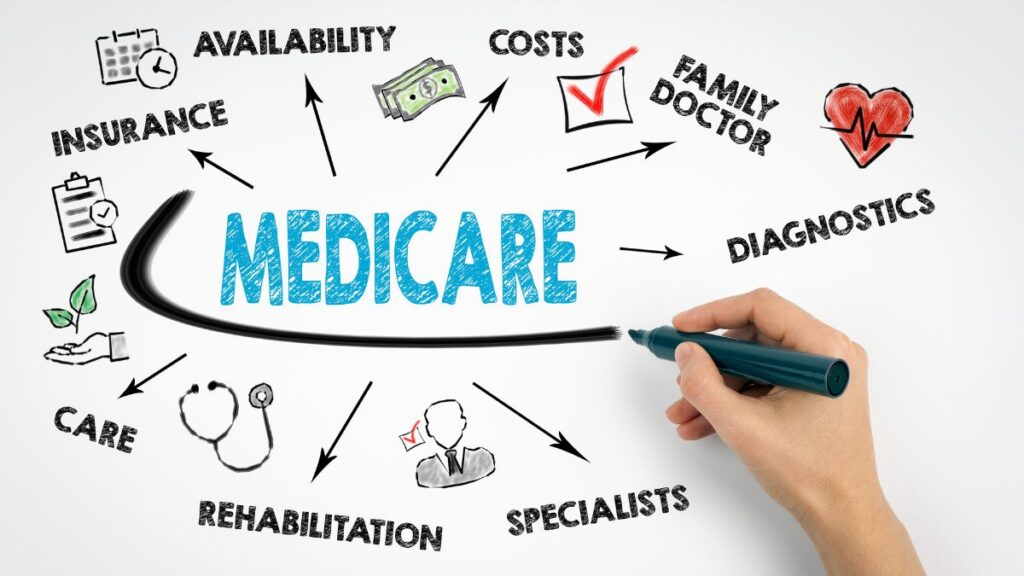
For many Americans retiring at 65 or older, Medicare enrollment is among the most time-sensitive decisions. Missing the correct enrollment period can cause coverage gaps and potentially long-lasting premium penalties.
People generally have a seven-month Initial Enrollment Period around their 65th birthday. Those who delay Part B because they have qualifying coverage through current employment may instead qualify for an eight-month Special Enrollment Period after employment or that coverage ends, whichever happens first.
COBRA and retiree coverage generally do not extend that Part B enrollment window. Workers covered by small employers also need to verify how Medicare coordinates with their employer’s insurance before turning 65.
The following comparison helps identify the planning questions for different retirement situations.
| Coverage Situation | Main Option | Key Issue to Check |
|---|---|---|
| Retiring before 65 | Marketplace or COBRA | Premiums, deductibles, and enrollment dates |
| Retiring at 65 or older | Medicare | Parts A and B enrollment |
| Working past 65 | Employer coverage and Medicare coordination | Employer size and special enrollment rules |
| Already enrolled in Medicare | Original Medicare or Medicare Advantage arrangements | Drug coverage, networks, and total costs |
Original Medicare includes Part A for hospital insurance and Part B for medical insurance. Eligible beneficiaries can consider Part D prescription coverage, Medicare Advantage, or supplemental Medigap coverage, depending on the coverage arrangement and enrollment rules.
For reference, the standard Part B premium is $202.90 monthly in 2026, with higher premiums possible for people with higher incomes. The 2027 standard premium was not yet available in the official Medicare pricing information reviewed for this article.
There is another deadline for workers contributing to a health savings account. Medicare advises people who may receive retroactive Part A coverage to stop HSA contributions sufficiently early, often six months before retirement or applying for Social Security, to avoid possible tax problems.
Before retiring: Confirm the exact date employer coverage ends and the date Medicare coverage should begin. If you have an HSA or unusual employer coverage, review your situation before making enrollment decisions.
10. Create a Tax Strategy Before Your Salary Disappears

Many people expect lower taxes after retirement because their wages will end. That may happen, but withdrawals from traditional retirement accounts, pension payments, investment income, and taxable Social Security benefits can produce a very different result.
The IRS has announced the standard deduction for tax year 2027 at $16,600 for single filers and $33,200 for married couples filing jointly. Eligible older taxpayers may qualify for additional deductions, depending on age, income, filing status, and the law applying to the tax year.
An additional temporary deduction of up to $6,000 per eligible person aged 65 or older is also available under current federal law through 2028, subject to income-based reductions. It does not make all Social Security benefits tax-free.
Social Security taxation is another reason to plan carefully. For many taxpayers, combined income above $25,000 for single filers or $32,000 for married couples filing jointly can cause some benefits to become taxable, with higher income potentially making up to 85% of benefits subject to federal income tax.
A Roth conversion, which moves money from a traditional retirement account into a Roth account, may help some retirees manage future taxes. However, the converted amount is generally taxable in the year of conversion and could affect Medicare premiums or Marketplace subsidies.
Medicare has its own income-related premium adjustment, called IRMAA, which generally uses tax information from two years earlier. People whose income falls because they stop working may be able to request a reduction in the surcharge using Social Security’s SSA-44 process.
Before retiring: Prepare separate tax estimates for your final working year and first full retirement year. Include taxable withdrawals, Social Security, pensions, possible Roth conversions, and the effect of state income taxes.
11. Decide How Your Retirement Accounts Will Pay You

Saving money for retirement and withdrawing it are two different financial tasks. The transition becomes easier when you establish a clear plan for transferring money from savings into your checking account.
Start by identifying which accounts contain taxable investments, traditional tax-deferred savings, and Roth savings. Each account type may have different tax consequences when money is withdrawn.
Traditional IRA and 401(k) withdrawals are generally taxable to the extent the money has not previously been taxed. Qualified Roth withdrawals can be tax-free, while withdrawals from taxable brokerage accounts may involve capital gains.
Required minimum distributions, or RMDs, also belong in the plan. Under current rules, they generally begin at age 73 for certain older birth cohorts and age 75 for people born in 1960 or later, with exceptions for some workplace plans and account types.
Leaving employment does not necessarily mean moving your 401(k) immediately. You may be able to leave it with your former employer, roll it into an IRA, or move it into another eligible retirement plan, depending on the plan’s rules.
A direct rollover can help avoid unnecessary withholding and complications associated with receiving the money personally. Compare fees, investment choices, creditor protections, and withdrawal features before transferring accounts.
Before retiring: Create a withdrawal schedule covering the first three to five years. Identify which account will fund each payment, how taxes will be handled, and when future RMDs may begin.
12. Protect Your Investments From an Early Retirement Market Drop

A market decline shortly before retirement can change your finances, but a decline immediately after retirement can be particularly difficult. This happens because you may need to withdraw money while investment values are already lower.
Consider a hypothetical retiree with a $500,000 investment portfolio and an annual withdrawal need of $19,200. That starting withdrawal equals 3.84% of the original balance.
If the portfolio falls 20% to $400,000 before withdrawals, the same $19,200 represents 4.8% of the reduced balance. Continuing to withdraw the same amount during a prolonged decline could put additional pressure on the portfolio.
This is one reason retirement portfolios often combine investments intended for growth with more stable assets and a cash reserve. The appropriate investment mix depends on spending needs, other income, the length of retirement, and personal tolerance for market losses.
Fees also deserve attention. In a published SEC Investor.gov example, a hypothetical $100,000 portfolio earning 4% annually before fees grows to approximately $208,000 over 20 years with a 0.25% annual fee, compared with about $179,000 with a 1% fee.
Those figures are illustrations rather than investment forecasts, but they show how recurring costs can affect long-term results. Reviewing expenses before retiring may identify savings without requiring additional market risk.
Before retiring: Test your plan against a major market decline and several years of weak investment returns. Review diversification, ongoing fees, withdrawal flexibility, and the amount of cash available for near-term spending.
13. Update Beneficiaries and Important Financial Documents

Retirement often involves changes to accounts, insurance, and employer benefits. Those changes make it a sensible time to review who would handle your finances or receive your assets if something unexpected happened.
Beneficiary designations on retirement accounts and insurance policies deserve special attention. In many cases, these instructions determine who receives the money, even if your will names someone else.
Review your will, financial power of attorney, healthcare directive, and any trust documents that apply to your situation. State laws and individual circumstances can affect which documents are needed and how they should be prepared.
If you are married, discuss pension survivor options and how the household would manage financially after the death of either spouse. A higher monthly pension payment without survivor protection may create a difficult tradeoff, depending on other income and insurance.
Make sure a trusted person knows where important records are stored and how to contact the relevant institutions. This does not require handing over account passwords or giving anyone unrestricted access to your finances.
Before retiring: Review account beneficiaries and legal documents with the appropriate institutions and qualified professionals. Update contact information so former employers and retirement plan administrators can reach you after you leave.
14. Practice Living on Your Retirement Budget Before Your Last Paycheck

One of the simplest ways to test a retirement plan is to live on its proposed budget while you are still working. This provides a chance to discover spending problems without immediately relying on retirement savings.
For example, if you expect to spend $4,500 monthly in retirement, try limiting household spending to that amount for two or three months. Move any remaining take-home pay into savings rather than treating it as money available for extra purchases.
The experiment may reveal overlooked expenses, such as prescription costs, home repairs, subscriptions, and family support. It may also show which spending choices genuinely improve your life and which expenses can be reduced without much sacrifice.
A realistic test should also account for costs that will change after employment ends. Work-related expenses may fall, but new healthcare costs and additional leisure spending might offset those savings.
The final months before retirement are also the right time to organize deadlines. Use the following calendar to identify the actions that should be completed before the paycheck ends.
| When to Act | Main Priority | Action |
|---|---|---|
| Now | Retirement readiness | Estimate expenses, income, debt, and savings |
| About 6 months before | Benefits and insurance | Review employer benefits and enrollment timing |
| About 3 months before | Income and taxes | Confirm claiming plans, withdrawals, and withholding |
| Final pay period | Employer departure | Verify matching contributions, final pay, and coverage dates |
| First 90 days retired | Financial adjustments | Compare actual spending with the planned budget |
The most useful deadline is not necessarily your planned retirement date. It is the earliest date when you must make a decision that cannot easily be reversed.
Some people may discover that working another three or six months would help them build a stronger cash reserve or qualify for an additional employer benefit. Others may find that their finances are already sufficient and that postponing retirement offers little practical advantage.
Before retiring: Complete a retirement budget rehearsal and review the results with your spouse or another trusted decision-maker. Choose your departure date based on the numbers, benefit deadlines, and the lifestyle you want rather than the calendar alone.