

Many couples spend years arguing about the same small things. Socks on the floor, paint on the good trousers and the bills nobody wants to open can slowly wear down even a strong partnership.
Then retirement arrives, and couples suddenly share far more hours together. Habits that were easy to ignore during busy working years can start to feel much larger.
A long-married couple recently shared what keeps their bond alive after decades together. Their three secrets match what researchers have found about lasting marriages, and each one also applies to how couples handle money in later life.
A Couple Still Finding It Exciting

The couple in the video, Antony and Margie, tease each other like old friends. He says the secret is simple: he makes her coffee in the morning, and she makes his tea at night.
Behind the jokes is a deeper message. Both say marriage has kept changing them, and they find it more exciting the older they get, even as they become a little more frail.
Margie describes herself as quiet and serious before she met Antony. His humor helped her feel lighter, and from their first meeting she felt she could be completely herself.
Their story is not a picture-perfect romance. They describe choppy waters, mistakes and moments of frustration, which is exactly why their lessons feel useful.
| Secret | What It Means | Money Habit That Supports It |
|---|---|---|
| 1. Accept each other fully | Let your partner be who they are | Respect different money styles |
| 2. See the world through their eyes | Notice joys and struggles together | Share financial worries openly |
| 3. Repair quickly and let go | Apologize and move on before resentment grows | Hold calm, regular money talks |
The table sums up the three secrets. The sections below explain each one and show how it can strengthen a marriage in retirement.
1. Accept Each Other Completely

Margie says the biggest gift of her marriage is being accepted completely for who she is. She felt at home with Antony from the start, as if she had found herself in him.
She also offers a gentle twist on common advice. Instead of needing to fully know yourself before marriage, she suggests being willing to discover yourself inside the marriage.
That idea is forgiving. It allows both partners to change naturally over time, rather than holding each other to who they were on their wedding day.
Acceptance does not mean ignoring real problems. It means treating your partner’s personality, quirks and history as part of the person you chose, not as flaws to be fixed.
Research by psychologist John Gottman suggests that about 69% of conflicts in couples are perpetual problems. These are differences in personality or values that never fully go away, so happy couples learn to live with them gracefully.
2. See the World Through Each Other’s Eyes

Antony says one of the best parts of having a companion is seeing the world through their eyes. It broadens your vision, because you share each other’s excitement and discoveries.
Seeing through a partner’s eyes also means noticing when they are struggling. Antony describes it as putting a ladder down into a hole so the other person can climb out.
He adds a playful alternative. Sometimes you climb into the hole and dance with them, showing that even dark moments can be faced together.
Gottman’s research highlights similar behavior. In one study of newlyweds, couples who were still married six years later had turned toward each other’s small bids for attention about 86% of the time, compared with about 33% among couples who later divorced.
A bid can be as small as pointing out a bird outside the window or sighing after a hard phone call. Responding with interest, rather than ignoring it, builds trust over thousands of tiny moments.
3. Repair Quickly and Let Things Go

The couple’s third secret is that they do not hold onto grudges. When one of them messes up, they say sorry, offer a cup of coffee or suggest a walk.
Margie explains that she has seen what happens when she lets resentment fester. She has also seen what happens when she lashes out without thinking first.
Her answer is reflection. Taking time to pause and think about what feels wrong, then making an effort to change it, is something the couple says they work on every day.
Antony adds that tolerance matters more with age. As patience naturally wears thinner, the small irritations of daily life need to be released quickly.
Gottman’s research found that stable couples have about five positive interactions for every negative one during conflict. Humor, affection and a quick apology all add to the positive side of that ratio.
Letting a Marriage Change You
Antony and Margie describe their marriage as continually evolving. Antony once heard a warning that marriage would change his life, and he replied that he hoped it would.
Many people resist that kind of change. They want a partner to fit neatly into their existing life, rather than allowing the relationship to shape them over time.
Retirement is a natural moment to welcome change together. Couples can try new hobbies, move to a new area, take up volunteering or plan trips that neither would choose alone.
Change also applies to roles. A spouse who never cooked may learn, and a partner who never handled the finances may take a bigger part, which builds both confidence and teamwork.
Why These Secrets Matter More in Retirement
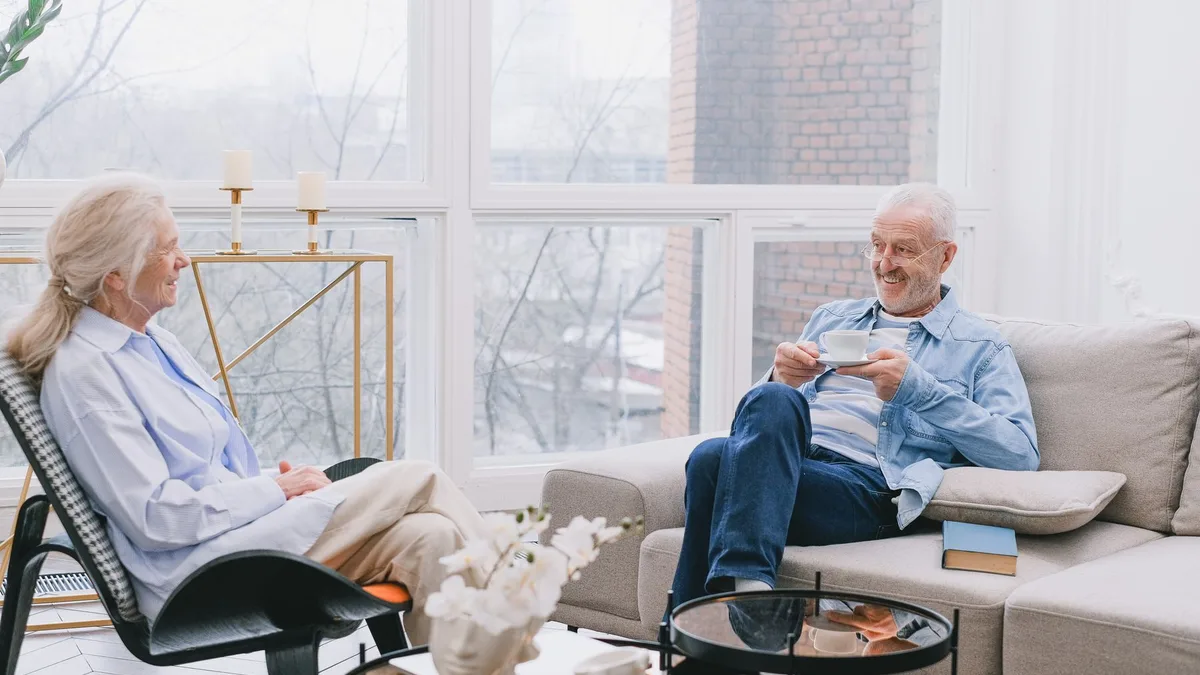
Retirement changes the rhythm of a marriage. Couples who once spent eight or more hours apart each weekday may suddenly be home together most of the day.
That extra time can be a gift or a strain. Small habits, such as how the dishes are done or how often the TV is on, can become new sources of friction.
Divorce later in life has also become more common. Sociologists Susan Brown and I-Fen Lin found that the divorce rate among adults aged 50 and older roughly doubled between 1990 and 2010.
Gray divorce can be financially painful. Splitting one set of retirement savings into two households often leaves both partners with a lower standard of living.
Money: The Quiet Test of a Marriage

Money is one of the most common sources of tension for couples at every age. In retirement, the stakes feel higher because there may be no paycheck to fix mistakes.
Partners often have different money personalities. One may feel safe only with a large cushion, while the other wants to enjoy savings while health allows.
Acceptance helps here, too. Instead of labeling one partner as reckless or stingy, couples can treat their differences as two valid views that need a shared plan.
| Common Money Conflict | What Often Sits Beneath It | A Calmer Approach |
|---|---|---|
| Spending on travel vs. saving | Fear of running out vs. fear of missing out | Set a yearly travel budget together |
| Helping adult children | Love, guilt or worry | Agree on limits in advance |
| One partner handles all the money | Habit or trust | Review accounts together quarterly |
| Big purchases without discussion | Different ideas of “big” | Agree on a dollar amount to discuss |
| When to claim Social Security | Different health and risk views | Compare options side by side |
Most money arguments are less about dollars than about security, freedom and respect. Naming those feelings can turn a fight into a conversation.
Seeing Money Through Your Partner’s Eyes
Antony’s idea of seeing through your partner’s eyes works well with money. A spouse who worries about bills may have grown up in a home where money was always short.
Asking about each other’s money history can be revealing. Questions like “What did money mean in your family growing up?” often explain habits that seem puzzling.
Sharing money worries openly also helps. A partner who quietly carries financial fear may become irritable or withdrawn, and the other partner may not understand why.
When one spouse is struggling, the ladder can be practical. Offering to sit down together with the bills, call the bank or meet a planner can ease a heavy load.
Plan for the Spouse Left Behind

In the video, Margie is asked how she would cope if something happened to Antony. She says she would miss him terribly but feels sustained by the love they have shared.
Emotional strength matters, but financial preparation does too. Many surviving spouses face money decisions they have never handled before, often while grieving.
Social Security rules play a big role. When one spouse dies, the household generally keeps only the larger of the two benefits, so total income usually drops.
| Social Security Rule | How It Works | Why Couples Should Plan |
|---|---|---|
| Spousal benefit | Up to 50% of the worker’s full benefit at the spouse’s full retirement age | Can boost a lower earner’s income |
| Survivor benefit | Up to 100% of the deceased’s benefit at the survivor’s full retirement age | The higher earner’s claiming age affects the survivor |
| Early survivor claim | Available from age 60 at a reduced amount | Useful but permanently lower |
| Divorced spouse benefit | Possible after 10+ years of marriage if currently unmarried and 62+ | Matters in gray divorce |
| Household after a death | Keeps the larger of the two benefits, not both | Plan for lower income |
Because of the survivor benefit, the higher earner’s decision about when to claim affects both spouses. Delaying can raise the survivor’s income for the rest of their life.
Taxes can change as well. A surviving spouse can generally file jointly for the year of death, but usually files as single afterward unless they have a dependent child, which can mean higher tax brackets.
This section is general information, not tax or legal advice. A financial planner or tax professional can review your situation.
A Simple Survivor Checklist
Couples can prepare together while both are healthy. The goal is to make sure either partner could manage alone if needed.
| Task | Why It Matters |
|---|---|
| List all accounts and passwords in a secure place | Prevents a frantic search later |
| Check beneficiary designations | They override a will for many accounts |
| Review life insurance and pensions | Some pensions end or shrink at death |
| Make sure both partners know the bills | Avoids missed payments and late fees |
| Update wills and powers of attorney | Keeps decisions in trusted hands |
| Meet advisors together | Builds trust before a crisis |
Pension choices deserve special attention. A single-life pension may pay more each month but stop at the retiree’s death, while a joint-and-survivor option continues payments to the spouse.
Small Rituals That Keep Love Alive

Antony’s coffee-and-tea routine sounds simple, yet it shows care every single day. Small rituals give a marriage rhythm and remind both partners they are valued.
Rituals do not need to cost money. A morning walk, a shared crossword, a weekly date at a favorite cafe or dancing in the kitchen can all become anchors.
These moments also make repair easier. When couples share regular positive time, a disagreement feels like a small dip rather than a crisis.
Couples can build a few low-cost rituals into their retirement budget. A modest monthly amount for dates and outings protects time together, much like an emergency fund protects savings.
Reflection: The Habit Most Couples Skip
Margie believes reflection is vital for every person. She notes that modern life bombards people with so much noise that they rarely stop to think about what needs to change.
For couples, reflection can be as simple as a weekly check-in. Each partner shares one thing that went well and one thing they would like to change.
Reflection also helps before money talks. Taking a day to think about what you really want, and why, makes it easier to speak calmly.
The Weekly 15-Minute Couple Check-In
Name one thing your partner did that you valued.
Mention one worry, including money worries.
Clear up any small hurt from the week.
Pick one shared outing or ritual for next week.
Give Each Other Space, Too
Spending more time together does not mean doing everything together. Healthy couples in retirement often keep separate friendships, hobbies and quiet time.
Space gives each partner fresh stories and energy to bring home. It also eases the pressure on one person to meet every social need of the other.
A simple plan helps. Each partner can claim a few hours a week for their own activities, protected just as firmly as shared date time.
A Hypothetical Example
The following is a hypothetical example, not a real couple. Ray, 68, and Linda, 66, retired within a year of each other and soon found themselves arguing about money and daily routines.
Ray wanted to keep a large cash cushion, while Linda wanted to visit their grandchildren across the country more often. Each felt the other was being unreasonable.
They began a weekly check-in and talked about how money was handled in their childhood homes. Ray realized his caution came from watching his parents lose their savings, and Linda felt heard for the first time.
They agreed on a yearly travel budget and a dollar limit for purchases that needed discussion. They also reviewed Social Security together, and Ray chose to delay his claim to raise Linda’s possible survivor benefit.
Humor Keeps a Marriage Light
Margie credits Antony’s sense of humor with helping her become lighter. Their playful teasing in the video shows how laughter can soften the hard edges of daily life.
Humor works best when it brings partners closer rather than poking at sore spots. Shared jokes, gentle teasing and laughing at your own mistakes all signal that the relationship feels safe.
Laughter can also defuse tense moments. A light comment during an argument, if both partners welcome it, can act as a repair attempt that stops the conflict from escalating.
Couples who have lost their sense of fun can rebuild it on purpose. Watching a favorite comedy, recalling funny memories or trying a silly new activity together can bring laughter back.
When Retirement Dates Do Not Match
Many couples do not retire at the same time. One partner may stop working years earlier, while the other keeps a job for income, health insurance or a sense of purpose.
That gap can create friction. The retired partner may feel lonely or expect more help at home, while the working partner may feel the household burden has shifted unfairly.
Talking through expectations before the first partner retires helps. Couples can discuss chores, daily routines, budgets and how each will spend free time.
Health coverage often shapes the timing. If one spouse depends on the other’s employer plan, the couple needs a clear plan for coverage before the working spouse retires, especially if one partner is younger than 65.
The Research on Happy Marriages and Health
A happy marriage does more than make daily life pleasant. Research suggests it may also support health in later life.
The Harvard Study of Adult Development, which has followed participants since 1938, found that people who were most satisfied in their relationships at age 50 tended to be the healthiest at age 80. Close relationships seemed to buffer people from some of the effects of aging.
Not every marriage needs to look like Antony and Margie’s. What matters is a steady sense of being seen, supported and accepted by the person beside you.
Gratitude for a Companion
Near the end of the video, Margie says she feels grateful to have a companion in life. She knows that many people do not have one.
Gratitude changes how partners see each other. Focusing on what your spouse does well, rather than on what annoys you, makes acceptance and repair much easier.
Couples can practice gratitude out loud. A simple thank-you for making the coffee, paying the bills or listening after a hard day adds to the positive side of the relationship.
Learning These Secrets Before It Is Too Late
Many couples only learn these lessons after a crisis, a near-divorce or a health scare. The good news is that any couple can start practicing them today.
Begin with one secret at a time. This week, focus on accepting one habit you usually criticize, and notice how it changes the mood at home.
Next, practice turning toward your partner’s small bids for attention. Then work on quick repairs, such as an apology or a cup of tea after a disagreement.
Money habits can follow the same path. Accept different money styles, share worries openly and hold calm, regular talks rather than waiting for a crisis.