

At 67, Walter finally understood a financial lesson that could have changed the previous four decades of his life. He had earned good money, owned beautiful cars, and enjoyed expensive purchases.
Yet behind those comforts were unpaid bills, growing debt, and years of financial stress that affected his entire family.
His greatest regret wasn’t the money he wasted. It was the freedom, opportunities, and happiness he lost while trying to afford a lifestyle that kept getting more expensive.
At 67, Walter Finally Understood What Went Wrong

Walter was never someone who struggled to earn a living. In his twenties, during the late 1970s and early 1980s, he was making what he considered a good income for the time.
He was married, raising two children, and building what appeared to be a comfortable middle-class life. From the outside, his family had many of the things people associate with financial success.
There were nice cars, regular restaurant meals, new clothes, and enough possessions to make the household look prosperous. Unfortunately, the money coming in was rarely enough to support everything going out.
Walter had confused earning a good income with being financially secure. He believed that having enough money to make the next payment meant he could afford the purchase.
That belief followed him through much of his adult life. By the time he understood the consequences, years of financial opportunities had already passed.
His parents had lived very differently. They understood something Walter had observed growing up but failed to practice himself.
They spent less than they earned and kept money available for whatever life might bring. Walter would eventually discover that this ordinary habit was far more valuable than another expensive car.
The Financial Lesson He Wishes He Had Learned at 25

The lesson Walter wishes he had learned sooner is remarkably simple: live below your means.
Living below your means means spending less than your take-home income and leaving room for savings, emergencies, and future goals. It does not require living without comfort or giving up everything enjoyable.
For Walter, the problem was never a single purchase. It was the constant habit of increasing his expenses whenever he had money available.
A better paycheck became permission to spend more. A new car became an opportunity to trade for something newer, and an enjoyable dinner became another regular expense.
Eventually, the family’s lifestyle required nearly every dollar they earned. Even ordinary financial setbacks became difficult because there was little room left in the household budget.
The lesson becomes clearer when looking at the difference between income and spending.
| Monthly Take-Home Income | Monthly Spending | Money Left Over |
|---|---|---|
| $3,000 | $2,700 | $300 |
| $4,500 | $4,500 | $0 |
| $6,000 | $6,500 | -$500 |
| $8,000 | $7,000 | $1,000 |
These are hypothetical households, but they show why income alone cannot measure financial stability. Someone earning $3,000 who consistently saves $300 may have more short-term financial flexibility than someone earning $6,000 while spending $6,500.
Walter eventually realized that the goal was not simply to earn more money. It was to keep enough of that money to create a more stable life.
He Had Three Cars, a Boat, and Almost No Financial Security

One of Walter’s biggest financial weaknesses was his love of automobiles. At one point, his family owned three vehicles and a bass boat, even though only two people in the household could drive.
One vehicle was an older Jeep that was nearly paid off. The other two were newer cars with monthly payments, insurance costs, and ongoing maintenance expenses.
Walter often traded vehicles before he had finished paying for them. Sometimes, he replaced a brand-new car after owning it for only eight months.
Every trade brought the excitement of driving something new. However, it also meant losing money on depreciation and taking on another financial obligation.
The pattern extended beyond automobiles. His family frequently ate at restaurants, bought new clothes, and spent money on things that made everyday life feel more comfortable.
None of these purchases seemed especially damaging on its own. Together, they created a lifestyle that was difficult to maintain.
Looking back, Walter could see that the problem wasn’t owning nice things. The problem was sacrificing essential expenses and future financial security to keep buying them.
Financial lesson: A monthly payment tells someone how much they must pay. It does not tell them whether the purchase fits their long-term financial situation.
The Day His Financial Choices Started Hurting His Family
Walter’s spending eventually created problems that could no longer be hidden behind nice cars and new possessions. There were times when his family couldn’t afford to keep up with ordinary household bills.
On some occasions, the electricity was disconnected because the bill hadn’t been paid. At other times, the telephone service was shut off for the same reason.
These were not situations caused simply by having no income. Walter was earning money, but too much of it was already committed to expenses and purchases.
The most difficult part was asking his mother for financial help. After his father died, she became the person Walter sometimes turned to when his family couldn’t cover its obligations.
His mother helped him more than once. Although she was willing to support her son, Walter later recognized that his financial decisions had probably caused her considerable worry.
That realization became one of his deepest regrets. His debt had affected more than his bank account, and the people closest to him had shared the consequences.
Money problems can put pressure on relationships, especially when family members repeatedly become responsible for expenses they never agreed to carry.
Walter eventually understood that financial stability wasn’t just about protecting his possessions. It was also about reducing the uncertainty his decisions created for his family.
Why Buying More Never Made Walter Feel Happier

Walter eventually began questioning why he had always wanted something newer or more expensive. He wondered whether he had been trying to impress former classmates or create happiness through material possessions.
He couldn’t identify one definite reason. What he knew was that the excitement of buying something new rarely lasted very long.
A new car felt wonderful for a while, but eventually it became ordinary transportation. A new outfit created a brief sense of satisfaction before another purchase started looking attractive.
This pattern resembles what behavioral finance calls lifestyle inflation. As income increases, spending rises alongside it, sometimes leaving little improvement in savings or financial security.
Lifestyle inflation is not automatically harmful. A raise can reasonably pay for better housing, medical care, family needs, or experiences that matter.
Problems arise when nearly every increase in income becomes another permanent expense. The household then needs a larger paycheck just to maintain its existing lifestyle.
Walter spent decades repeating that pattern. He was continually working toward the next purchase without recognizing that the next purchase wasn’t solving the problem.
Eventually, he realized that satisfaction came less from owning more and more from having enough.
The Small Spending Habits That Cost More Than He Realized
Walter’s expensive vehicles were a major part of his financial problems. However, he later recognized that smaller purchases had quietly contributed to his situation.
During some periods of his life, he stopped for coffee almost every morning. The habit seemed harmless because each purchase cost only a few dollars.
He also enjoyed frequent restaurant meals and buying clothes. These expenses became routine rather than occasional treats.
The following table shows how ordinary purchases can accumulate over a year.
| Spending Habit | Example Cost | Annual Total |
|---|---|---|
| Coffee five days weekly | $6 per coffee | $1,560 |
| Restaurant spending | $70 weekly | $3,640 |
| Extra clothing purchases | $80 monthly | $960 |
| Unused subscriptions | $25 monthly | $300 |
| Total | $6,460 |
These are illustrative 2026-dollar spending amounts, not Walter’s documented expenses. They assume 52 weeks of spending and 12 monthly payments.
The total comes to approximately $538 per month. For someone carrying expensive credit card debt or struggling to build emergency savings, even redirecting part of that amount could make a meaningful difference.
However, Walter’s experience does not mean everyone must stop buying coffee or eating at restaurants. The lesson is to choose those expenses deliberately rather than allowing them to crowd out more important needs.
Someone who genuinely enjoys a weekly restaurant meal may reasonably keep it in their budget. The goal is to identify spending that adds little lasting value while creating ongoing financial pressure.
Debt Took Away Something More Valuable Than Money
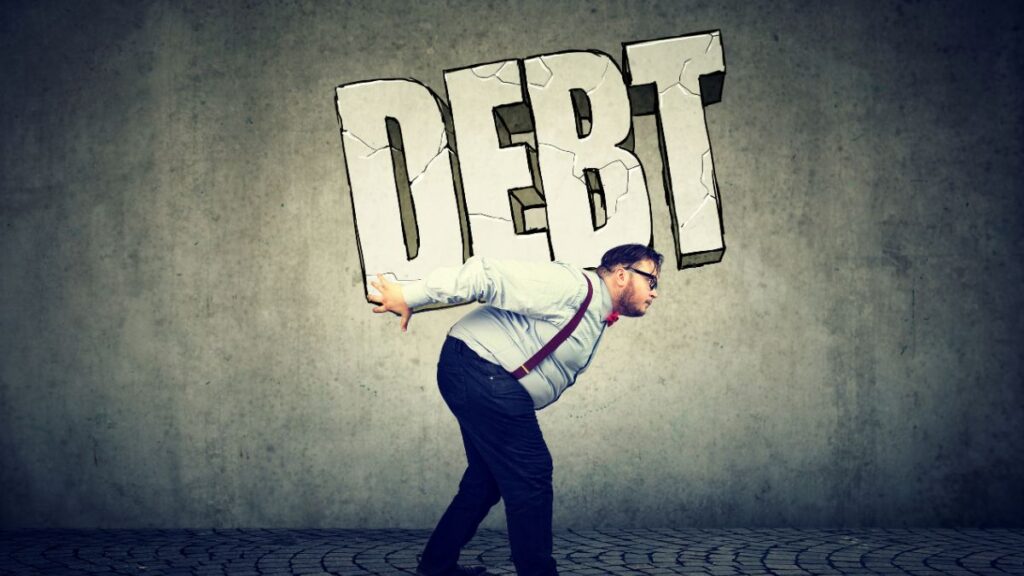
As Walter grew older, he began seeing debt differently. The biggest cost wasn’t always the interest charged by lenders.
It was the loss of flexibility that came from having so much income committed to monthly payments. Every new obligation reduced the number of choices he could make.
If he wanted to leave an unpleasant job, he couldn’t easily afford a period without income. If the car needed repairs, the money might already be committed to another payment.
Even receiving an electric bill could become stressful. Sometimes, money needed for the coming week had already been spent during the previous one.
Walter was trapped in a constant struggle to keep up with expenses. His income was supporting his purchases rather than giving him control over his decisions.
Credit card debt can make that problem worse because interest increases the amount needed to become debt free.
Consider a hypothetical $5,000 credit card balance with a fixed 24% annual percentage rate. The table below compares how different fixed monthly payments affect the payoff period.
| Monthly Payment | Payoff Time | Approx. Total Interest |
|---|---|---|
| $150 | 56 months | $3,322 |
| $200 | 36 months | $2,001 |
| $250 | 26 months | $1,449 |
| $350 | 17 months | $947 |
These calculations assume a constant interest rate, monthly interest at 2%, no new purchases, no additional fees, and payments made at the end of each month. Actual credit cards often calculate interest daily, so real results can differ.
Increasing the payment from $150 to $250 reduces the payoff period by about 30 months under these assumptions. It also saves approximately $1,873 in interest.
The Consumer Financial Protection Bureau explains that paying more than the required minimum generally reduces interest costs and helps borrowers clear balances sooner.
Walter eventually made paying credit card balances in full a central part of his financial routine. That change allowed him to use credit without routinely carrying expensive balances.
His Parents Understood Something He Ignored for Decades

Walter’s parents provided an example of financial discipline throughout his childhood. They didn’t live extravagantly, but they managed to provide the things their family needed.
The children enjoyed birthdays, Christmas celebrations, and occasional vacations. Many family activities were simple, including visiting relatives and spending time fishing.
Walter remembered an especially important decision his parents made while he was in high school. His father left his job in South Carolina, and the family moved back to Arkansas with plans to start a business.
That decision involved uncertainty, but his parents had prepared financially. They had saved enough money to support themselves for about a year while pursuing their plans and building a home.
Walter later compared their financial position with his own situation as a younger adult. His parents had enough savings to support a major life change, while he sometimes struggled to cover the following week’s expenses.
The difference wasn’t simply how much money each generation earned. It was how they managed their obligations and prepared for future needs.
His parents had created room for opportunity by controlling their spending. Walter had reduced his options by committing too much of his income to purchases.
This became one of the most painful lessons of his life because he had witnessed a better approach long before he understood its value.
Why Building a Budget Changed Everything
One habit Walter eventually adopted was keeping a household budget. He began tracking the money coming in and comparing it with the money going out.
He could see how much was available for everyday expenses, what bills were approaching, and how much remained for discretionary purchases.
The process wasn’t especially complicated. What had been missing was the willingness to look carefully at his financial situation.
Walter later wondered why he hadn’t started doing this in his twenties or thirties. Instead, he had allowed the same habits to continue into his forties and fifties.
A budget helps identify the difference between an expense someone can afford once and a payment they can comfortably maintain over time.
Consider a hypothetical household earning $4,500 in monthly take-home pay. Its income stays the same in both examples, but changing how it spends creates room to save and reduce debt.
| Monthly Category | Before Changes | After Changes |
|---|---|---|
| Essential expenses | $2,900 | $2,900 |
| Required debt payments | $500 | $500 |
| Discretionary spending | $1,100 | $500 |
| Emergency savings | $0 | $200 |
| Extra debt repayment | $0 | $400 |
| Total | $4,500 | $4,500 |
The household hasn’t received a raise or taken a second job. It has redirected $600 each month from discretionary spending toward savings and debt reduction.
Over 12 months, that would provide $2,400 in savings contributions and $4,800 in additional debt payments. The exact debt reduction would depend on interest charges and the existing balance.
Not every household can reduce spending this much. Families already spending most of their income on housing, food, transportation, and medical care may need different solutions, including income support or lower fixed costs.
For Walter, however, identifying the difference between needs and wants was a critical change. It allowed him to keep spending money on enjoyable things without sacrificing essential obligations.
The Emergency Fund He Wishes He Had Built Earlier

Another major regret involved Walter’s lack of emergency savings. When the car broke down or income unexpectedly stopped, he didn’t always have money available to manage the situation.
He experienced job loss during his working years. Without an adequate financial cushion, an interruption in earnings could quickly become a household crisis.
Walter later came to believe that keeping three or four months of living expenses in savings would have changed many of those experiences.
He wasn’t suggesting that emergency savings could prevent every difficult situation. The benefit was having money available when an unexpected expense or income interruption occurred.
The Federal Reserve’s 2025 Survey of Household Economics and Decisionmaking, published in May 2026, found that 55% of U.S. adults said they had emergency savings sufficient to cover three months of expenses.
The same survey found that 63% of adults said they would cover a hypothetical $400 emergency expense entirely using cash or its equivalent, including a credit card paid in full at the next statement.
These findings show that building a financial cushion remains challenging for many households. Walter’s situation was personal, but the need for emergency savings is widespread.
The FDIC generally recommends keeping approximately three to six months of living expenses available for emergencies, although an appropriate target depends on individual circumstances.
For a household with essential monthly expenses of $2,500, three months would equal $7,500. Six months would equal $15,000, which could provide additional protection during a longer income interruption.
Someone starting without savings doesn’t need to reach those amounts immediately. Building an initial reserve of $500 or $1,000 can help cover smaller emergencies without relying entirely on credit.
The Difference Between What Someone Wants and What They Need
As Walter began simplifying his lifestyle, he started asking himself a different question before making purchases. Instead of focusing on whether he wanted something, he considered whether it was necessary and whether the purchase fit his budget.
That distinction became central to his financial improvement. He learned that enjoying money and controlling spending were not opposing goals.
A reliable vehicle might be necessary for getting to work or medical appointments. Replacing that vehicle simply because a newer model is available is a different decision.
Clothing, groceries, and housing are essential expenses. However, how much someone spends within those categories can include both necessary costs and personal preferences.
Walter became more comfortable separating those choices. He could appreciate something attractive without automatically feeling that he needed to own it.
This way of thinking eventually led him toward minimalism. For Walter, minimalism wasn’t about owning almost nothing or refusing every enjoyable purchase.
It was about keeping possessions and expenses that genuinely improved his life. Anything that created more financial pressure than value became less appealing.
He discovered that having enough could be satisfying. That was an idea he had struggled to accept when he was younger.
The Financial Regret That Became Clearer as Retirement Approached

Walter’s regrets became more meaningful as he grew older because the years available to rebuild financial security were no longer unlimited.
Money spent decades earlier could not simply be recovered. The lost opportunities to save, reduce debt, or make different career choices were part of his past.
However, the relationship between spending and retirement security wasn’t just about how much wealth he might have accumulated. It also concerned how manageable his everyday expenses would be after leaving full-time work.
Every financial obligation carried into retirement can place additional pressure on savings and retirement income. High-interest credit card balances are especially troublesome because the interest continues even when employment income stops.
Someone with fewer required monthly payments may have more flexibility to handle rising expenses. They may also find it easier to adjust discretionary spending during financially difficult years.
Walter learned that reducing unnecessary obligations could improve his life even without a dramatic increase in income. His later financial habits allowed him to enjoy activities that mattered without depending on additional debt.
Retirement planning is not simply a competition to accumulate the largest possible account balance. It also involves creating a sustainable relationship between income, expenses, savings, and personal priorities.
That was the relationship Walter wishes he had understood much earlier.
Why Living Below Your Means Doesn’t Mean Living Without Happiness
Walter eventually reached a point where he felt satisfied with his financial life. He had learned to manage spending, control debt, and make purchases within his available resources.
He could still travel and purchase camera equipment for activities he enjoyed. The difference was that those expenses now fit within his budget.
That distinction mattered because living below your means is sometimes confused with avoiding pleasure or refusing to spend money on anything unnecessary.
Walter’s later life demonstrated a different approach. He could enjoy meaningful purchases because he had stopped allowing every desire to become a financial obligation.
The goal wasn’t to save every possible dollar. It was to prevent spending decisions from taking away his ability to enjoy life without constant money worries.
He also learned to measure success differently. A household didn’t need the most expensive car or largest home to have a comfortable and satisfying life.
Having enough money to cover essential expenses, manage emergencies, and occasionally enjoy something special became more valuable than appearing wealthy to other people.
For Walter, this change was about gaining control rather than giving things up.