

Most families learn about life in a nursing home from brochures and Sunday visits. One 86-year-old who lives alone wanted to see it from the inside.
She spent three days as a resident. What she found was constant television noise, a fixed daily schedule, and a slow loss of small choices.
This article pairs those observations with 2026 costs, Medicare limits, and Medicaid rules.
What Life in a Nursing Home Looked Like Over 72 Hours
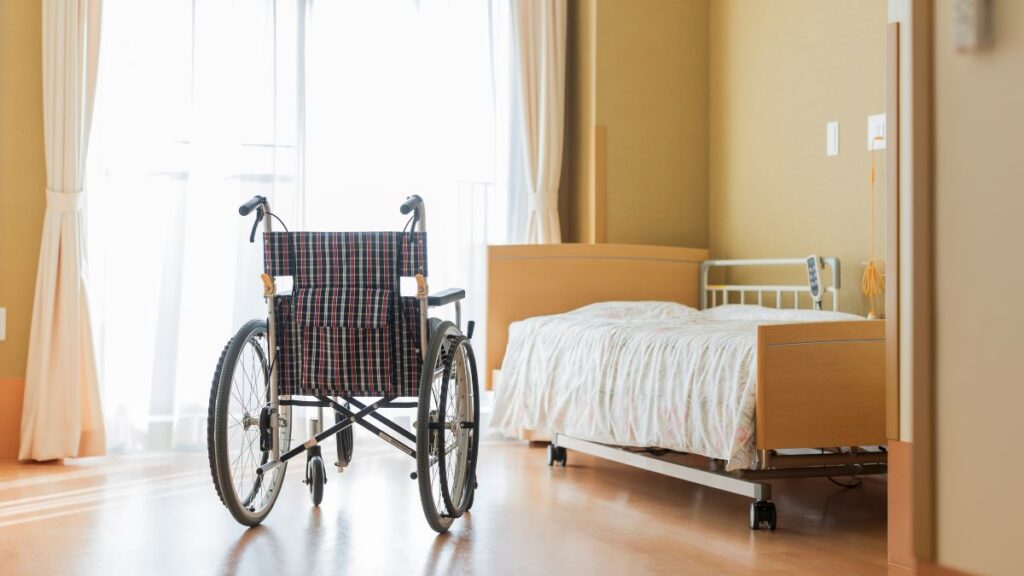
For years, this 86-year-old had warned friends and neighbors away from nursing homes. She admitted she had never seen one from the inside.
So she checked in for three days. She took a second-floor room overlooking a parking lot and brought her own pillow. She ate the meals served and followed the same wake-up and lights-out times as everyone else. Her adult children thought the plan was crazy, according to her account.
A stay like that has a price tag. At the 2025 national median of $315 a day for a semi-private room, three days comes to about $945. At the $355 private-room rate, it is about $1,065, based on the CareScout Cost of Care Survey.
Medicare generally would not pay for a trial stay like this. Its skilled nursing benefit requires a qualifying three-day hospital stay and a medical need for skilled care. Stretched across a full year, that semi-private rate reaches $114,975.
Keep the scale in mind. This is one person’s three days at one facility, and nursing homes differ widely in staffing, culture, and quality. For people with major medical needs or advanced dementia, a nursing home can be the safest choice, and nothing here judges families who choose one.
The Sound and the Schedule Brochures Rarely Mention
The first surprise was the noise. She expected hospital-style quiet, but a television was running in every room, loudly, all day and into the evening. Residents had not chosen it, and she lay in bed hearing three programs through three walls.
The second surprise was the schedule. Breakfast was at 7:30, lunch at noon, dinner at 5, and lights dimmed by 8. Staff arranged it carefully, believing a predictable routine is a kindness, and for some residents it may be.
At dinner, she noticed a woman named Gloria, 79 and sharp, pushing food around her plate. Gloria had the look of someone who had just realized nobody would ask what she wanted to eat again.
Routines are efficient when one shift covers many residents, which helps explain how preferences get squeezed even when staff care. That image kept her awake the first night.
Finding One: Communal Loneliness Is Not the Same as Living Alone

Her first conclusion was that loneliness in a nursing home is a different kind from living alone. At home, the silence belongs to you. You can end it by calling someone, going outside, or playing music you like.
In the building, about 40 people ate at the same tables and watched the same television, yet stayed quietly separate. She was clear that staff did care. There are only so many hours in a shift and so many residents in a corridor.
For families, the lesson is practical. Moving a parent from a quiet house to a busy building does not automatically fix isolation. Ask how a facility creates real conversation, not just shared rooms.
Finding Two: Small Decisions Are the Architecture of a Self

Her second finding was that losing small decisions can change a person faster than any illness. These include when to wake up, whether to open a window, what to eat for breakfast, and whether to talk or be left alone. She called them “the architecture of a self.”
One morning, a man named Bernard spent about 20 minutes trying to tell a kind, busy aide he did not want sugar in his coffee. She had moved on before he finished, and he looked at the cup for a long time afterward. This is one observer’s strong claim, but it is a useful one for families to test.
Federal nursing home rules recognize resident rights to make choices about daily life, including schedules. That makes it a concrete topic to raise on any tour. Ask how a resident’s preferences for waking time, meals, and bathing are recorded and honored.
Finding Three: The Residents Doing Best Had Something That Needed Them

The finding she thought about most was the third. The residents who seemed to be doing best all had something that still needed them. One woman taught herself to knit at 84 and made scarves for her grandchildren. One man wrote handwritten letters to people he had known his whole life.
A 91-year-old woman ran what she called the book table, a small cart of paperbacks she organized and recommended to anyone passing by. These residents moved and talked differently, and had not disappeared into the schedule.
On her last morning, she asked Gloria what she missed most. The answer was not her house, her garden, or her friends, but her kitchen, with its own pots, its own coffee, and its own morning light.
This is an observation, not a study. It still points to useful questions. Does the community give residents real roles, and can they bring familiar objects and routines into their space?
What Nursing Home Care Costs in 2026
Feelings about a facility are half the decision. The bill is the other half. The CareScout Cost of Care Survey for 2025, released in March 2026, is the most widely cited source for median long-term care prices in the United States. The table below pulls the key figures, plus the Medicare amounts for 2026.
| Key Figure | Current Amount (Year) | Why It Matters |
|---|---|---|
| Nursing home, semi-private room (median) | $315/day, $9,581/month, $114,975/year (2025 survey) | The baseline for a shared room |
| Nursing home, private room (median) | $355/day, $10,798/month, $129,575/year (2025 survey) | Privacy adds roughly $15,000 a year at the median |
| Assisted living community (median) | $6,200/month, $74,400/year (2025 survey) | Costs less, with a different level of care |
| Non-medical in-home caregiver (median) | $35/hour, $80,080/year at 44 hours a week (2025 survey) | Home care cost depends heavily on hours |
| Medicare skilled nursing coinsurance, days 21 to 100 | $217/day (2026) | Up to $17,360 across 80 days |
| Medicare Part A deductible | $1,736 per benefit period (2026) | The hospital stay before a skilled nursing stay has its own cost |
The national median hides a wide range. Reporting on the survey named Alaska, Oregon, New York, Hawaii, and Connecticut among the most expensive states for a semi-private room. Texas, Missouri, Oklahoma, Arkansas, and Louisiana were among the least expensive.
New Jersey’s median semi-private room was $153,300 a year, while Ohio’s was $110,230. Cost growth also slowed in 2025, after 2024 increases of 7% for semi-private rooms and 9% for private rooms. Medians describe the middle of the market, so ask any facility for its own written fee schedule and what the daily rate includes.
Nursing Home, Assisted Living, or Staying Home?

The right setting depends mostly on how much care a person needs. A nursing home provides round-the-clock nursing and medical care. Assisted living helps with daily tasks like bathing, medications, and meals in a more residential setting.
In-home care brings help to the person’s own house. Adult day health care offers supervised daytime programs. The table compares them using the same 2025 survey.
| Type of Care | Typical Cost (CareScout, 2025) | Who Usually Pays | Best Fit For |
|---|---|---|---|
| In-home non-medical caregiver | $35/hour; $80,080/year at 44 hours a week | Savings, income, some insurance policies | Help with daily tasks while staying home |
| Adult day health care | $95/day; $24,700/year at 5 days a week | Mostly families; some state programs | Daytime supervision and social contact |
| Assisted living | $6,200/month; $74,400/year | Mostly private pay; some state help | Help with daily living without 24-hour nursing |
| Nursing home, semi-private | $9,581/month; $114,975/year | Private pay, Medicaid, insurance; Medicare for short skilled stays | Ongoing nursing or medical needs |
| Nursing home, private room | $10,798/month; $129,575/year | Same as above | Same needs, with a preference for privacy |
Home care can be cheaper at low hours, but costs climb fast. At the $35 median rate, 20 hours a week is about $36,400 a year. Forty-four hours is $80,080.
Around-the-clock help, 168 hours a week, would be about $305,760 a year at that rate. Real arrangements for round-the-clock care are often priced differently.
Home also keeps its own costs, such as property taxes, insurance, maintenance, utilities, and modifications like ramps. The honest comparison depends on the hours of help needed and must include what the home itself costs.
Who Pays: Medicare, Medicaid, and Savings

Many families assume Medicare covers nursing homes. The truth is narrower. Medicare Part A covers up to 100 days of skilled nursing facility care per benefit period, but only after a qualifying hospital stay of at least three days, and only when skilled care such as rehabilitation is needed.
In 2026, days 1 through 20 cost $0. Days 21 through 100 carry a $217 daily coinsurance, and after day 100 Medicare pays nothing. Medicare also generally does not pay for custodial care, meaning help with bathing, dressing, and eating. That is the type of care most long-term residents receive.
Medicaid works differently. It is a joint federal and state program that pays for nursing home care for people who meet income and asset rules, and those rules vary by state.
In most states, Medicaid reviews asset transfers made in the 60 months before an application, and gifts in that window can trigger a penalty period.
Spousal protections let a spouse who stays at home keep a share of assets and income. States must also pursue estate recovery for care paid after age 55. The table puts the pieces side by side.
| Expense | Medicare | Medicaid | Private Pay or LTC Insurance |
|---|---|---|---|
| Short rehab stay after a 3-day hospital stay | Up to 100 days; $0 for days 1 to 20, $217/day for days 21 to 100 (2026) | May cover coinsurance for people who qualify for both programs | Some Medigap plans pay the daily coinsurance |
| Long-term custodial stay (bathing, dressing, eating) | Generally not covered | Covers eligible people; rules vary by state | Savings, income, or a policy that pays for it |
| Any skilled stay after day 100 | No coverage | May pay if the person is eligible | Paid privately |
| Giving away assets to qualify | Not relevant | Transfers in the prior 60 months can cause a penalty period in most states | An elder law attorney can explain options |
Medicare works as a rehab benefit, not a residence benefit. Medicaid typically becomes the payer only after savings are spent down. The look-back makes the rules hard to use once a crisis has started.
Families often wait because deciding feels like giving up on a parent. Behavioral economists call this status quo bias. The paperwork is easier to handle when it begins early.
Note: This article provides general educational information, not individualized financial, legal, or Medicare advice. Benefit rules and costs change and vary by state, so verify current guidance with official sources or a qualified professional, such as an elder law attorney, before making important decisions.
How Long Could Savings Last?
Numbers become real when they are turned into time. The table uses a hypothetical $300,000 in savings and the 2025 median costs. It assumes no investment returns, no inflation, and no income, except the last row, which adds a hypothetical $2,400 a month in income.
| Scenario | Monthly Cost | Annual Cost | How Long $300,000 Might Last |
|---|---|---|---|
| In-home care, 20 hours a week | About $3,033 | $36,400 | About 8 years, 3 months |
| Assisted living | $6,200 | $74,400 | About 4 years |
| Nursing home, private room | $10,798 | $129,575 | About 2 years, 4 months |
| Nursing home, semi-private room | $9,581 | $114,975 | About 2 years, 7 months |
| Semi-private room with $2,400 a month in income | About $7,181 after income | About $86,175 after income | About 3 years, 6 months |
The first row is not a like-for-like substitute. Twenty hours a week of help does not replace nursing care. Costs may also rise over time, which would shorten every result, while investment returns could lengthen them.
For context, the Administration for Community Living reports that people who need long-term care need it for about 3.7 years on average for women and 2.2 years for men. About one in five need it for more than five years.
These figures cover care in any setting, and many nursing home stays are short rehab stays. Some families will use a few months of care, and others several years.
What About Staffing and Quality?

Staffing is one of the most debated parts of nursing home quality. A 2024 federal rule would have required 3.48 hours of nursing care per resident per day, including 0.55 hours from a registered nurse. A federal court in Texas set that standard aside in April 2025.
Congress then added a 10-year moratorium on implementing it, and CMS issued a rule in December 2025 repealing the numeric standards. Industry groups argued the standard was unworkable amid labor shortages, especially in rural areas. Consumer advocates opposed the repeal.
Facilities must still maintain sufficient nursing staff, but there is no federal numeric hours-per-resident minimum. That makes direct questions more important. CMS’s Care Compare tool publishes staffing and inspection ratings for Medicare-certified facilities.
How to Tour a Nursing Home Like Someone Who Might Live There
A tour shows a building at its best, so the most useful visits happen at ordinary times. Visit during a meal, in the evening, and on a weekend if possible. If the future resident is a parent with decision-making capacity, they remain the decision-maker.
The best tours include them and focus on what a normal day would look like. The table turns the three findings into practical checks and adds staffing and money.
| Priority | What to Check | What to Do Next |
|---|---|---|
| Noise | Are televisions on in rooms and common areas? Is there a quiet space? | Visit at several hours, including evening |
| Daily rhythm | Fixed meal and wake times, and whether residents can choose | Ask for a typical-day schedule and eat a meal there |
| Small choices | Can residents decide on breakfast, coffee, bathing time, and window or door preferences? | Ask how preferences are recorded in the care plan |
| Purpose | Do residents have roles, such as a library cart, knitting group, or volunteer jobs? | Ask what residents help run, not just attend |
| Staffing | Turnover, night and weekend coverage, use of agency staff | Review Care Compare ratings and ask directly |
| Money | Daily rate, what it includes, rate increases, what happens if savings run out | Request a written fee schedule and consult an elder law attorney |
Strong facilities should welcome these questions. Evasive answers about schedules, preferences, or fees are useful information in themselves.