

When one spouse wants to downsize and the other doesn’t, even a comfortable retirement can become tense. One partner sees unused rooms, maintenance bills, and freedom. The other sees family dinners, birthdays, and a home filled with memories.
A rushed sale can create regret, but refusing to discuss a move can carry costs too. Renting while waiting for a housing crash may also change the couple’s finances in ways they have not considered.
The answer begins with a shared picture of the next five years, followed by honest numbers and choices both people can accept.
A 5,000 Square Foot House Became the Center of a Marriage Disagreement

After approximately 30 years of marriage, Ephraim and his wife faced a decision that many empty nesters eventually encounter. Their daughters had grown up and moved away, but the couple still lived in the large Atlanta home where they had raised their family.
The house measured approximately 5,000 square feet, far more space than they regularly used. Ephraim explained that most of their daily lives took place in the kitchen, keeping room, and bedroom, while much of the remaining space served little purpose.
He wanted to sell the property and move into a walkable development filled with restaurants, stores, and places they already enjoyed visiting. His wife was hesitant, partly because the house held decades of memories and partly because buying another property could be expensive.
Ephraim proposed renting an apartment in their favorite neighborhood for one year. The apartment would cost approximately $4,000 per month, and he estimated they could receive nearly $500,000 from selling their home.
However, the rental would cost $48,000 for one year or $96,000 over two years, assuming the rent stayed unchanged. Those figures exclude moving expenses, utilities, and other possible fees.
His idea was to enjoy apartment living while waiting for housing prices to decline. But that plan depended on a market prediction neither spouse could control, making their disagreement more complicated than simply choosing a smaller home.
Why One Spouse Wants to Leave and the Other Wants to Stay
The spouse who wants to downsize often focuses on the life they could have somewhere else. A smaller home might mean fewer repairs, lower utility bills, less cleaning, and more time for hobbies, travel, and relationships.
The spouse who wants to stay may view the same house very differently. It represents stability, familiar routines, neighbors, family traditions, and the years spent building a life together.
Neither set of priorities is automatically more important. The difficulty comes when both spouses assume the other person sees the house the same way they do.
| The Spouse Who Wants to Move | The Spouse Who Wants to Stay | What They May Both Want |
|---|---|---|
| Less maintenance | Familiar surroundings | More enjoyable days |
| Smaller living space | Room for family visits | Comfort and privacy |
| A different neighborhood | Existing friendships | Strong social connections |
| More financial flexibility | Stable housing costs | Financial security |
| A fresh start | Time to adjust emotionally | A satisfying retirement |
These are possible concerns, not assumptions about every couple. The table shows why discussions focused only on selling prices often fail to resolve the deeper disagreement.
One person may be arguing about monthly expenses while the other is thinking about Christmas mornings with the children. Before making a financial decision, both need to understand what the house represents to the other.
The Emotional Attachment Is Bigger Than Most Couples Expect

For someone who has spent 30 years in one house, moving can feel like leaving behind a part of their identity. Every room may carry memories of children’s birthdays, holiday dinners, family visits, and ordinary moments that became meaningful over time.
The home also represents continuity during a period when other parts of life are changing. Children have moved away, careers may be ending, and familiar routines are being replaced by new ones.
Research supports the strength of this attachment. According to AARP’s 2024 Home and Community Preferences Survey, 75% of Americans aged 50 and older wanted to remain in their current homes for as long as possible.
That preference does not mean people should never downsize. It does show why a spouse may resist a move even when the financial arguments appear sensible.
A useful conversation begins by recognizing that leaving a family home can involve real grief. It is possible to look forward to a new life while still feeling sad about leaving the old one.
The $4,000 Apartment Sounds Exciting, but What Does It Really Cost?

Ephraim’s proposed apartment offered something his large suburban home did not provide. He and his wife could walk to restaurants, visit shops, and spend more time enjoying a neighborhood they already loved.
The attraction was understandable, especially because the couple reportedly visited that development several days each week. However, enjoying a neighborhood as a visitor is different from paying to live there.
Consider the basic costs of their proposal:
- One month of rent: $4,000
- Six months of rent: $24,000
- One year of rent: $48,000
- Two years of rent: $96,000, assuming no increase
Renting would not necessarily be a bad financial decision. It could provide flexibility and an opportunity to test a different lifestyle without buying another house immediately.
However, the couple would need to compare those expenses with what they currently spend on property taxes, insurance, mortgage payments, utilities, and maintenance. They would also need to consider what happens to the money received from selling their home.
The important distinction is between renting to enjoy a lifestyle and renting because of an expected housing market decline. The first can be a deliberate choice, while the second depends on uncertain future prices.
Four Housing Choices That Could Change Their Retirement
Selling the family home and renting an apartment is only one possible solution. Couples facing this disagreement usually have several choices, each with different financial and emotional consequences.
The comparison below uses Ephraim’s proposed rental cost and otherwise describes expenses that would depend on the specific properties involved.
| Housing Choice | Main Financial Effect | Biggest Advantage | Main Concern |
|---|---|---|---|
| Stay in the family home | Existing ownership and upkeep costs continue | Stability and memories | Excess space and maintenance |
| Sell and rent | $48,000 annual rent | Flexibility to explore a new lifestyle | Rent increases and moving twice |
| Sell and buy smaller | Purchase price, closing costs, and ongoing ownership expenses | Smaller home with ownership stability | High prices and possible HOA fees |
| Keep the house and rent it out | Potential rental income minus property expenses | Retains the family property | Landlord responsibilities and financial risk |
The best choice depends on more than which property is cheapest. A couple that values flexibility may reasonably prefer renting, while another couple may place greater value on owning a permanent home.
What matters is comparing each option against the same goals. If the priority is fewer responsibilities, becoming a landlord might work against that goal even if rental income looks attractive.
Why Selling High and Buying High Is Not Always a Mistake

Ephraim’s wife raised a reasonable financial concern. If they sold their existing home at a high price, they could face equally high prices when purchasing a replacement.
However, selling and buying in the same market is not automatically a bad deal. If both properties respond similarly to local market conditions, the couple may still benefit by moving from an expensive, oversized house into a smaller and less costly one.
For example, selling an $850,000 property and purchasing a $400,000 property could free up substantial equity. The final amount would depend on remaining mortgage debt, transaction costs, taxes, and the actual purchase price.
Current mortgage rates also matter. Freddie Mac reported that the average 30-year fixed mortgage rate was 7.18% on November 5, 2026, meaning a couple replacing an older low-rate mortgage could face considerably higher borrowing costs.
The smaller home’s monthly costs need careful attention as well. Condominium association fees, insurance, property taxes, and special assessments can reduce or even eliminate the expected savings.
A smaller property is not automatically a cheaper property. The couple should compare their complete annual housing expenses before deciding whether downsizing improves their finances.
The Hidden Difference Between Home Equity and Money You Can Spend
Ephraim estimated that selling his home could leave the couple with nearly half a million dollars. That sounds like a significant financial opportunity, but the amount needs careful definition.
Home equity, proceeds received at closing, and taxable profit are three different things. Home equity is the home’s value minus outstanding debt, while cash proceeds also reflect selling costs and other adjustments.
Consider this separate hypothetical example of a couple selling a home in retirement. The selling expense is assumed to equal 6% of the sale price purely for illustration, not because any commission rate is required.
| Item | Hypothetical Amount | Explanation |
|---|---|---|
| Home selling price | $850,000 | Agreed sale price |
| Selling expenses | −$51,000 | Assumed 6% |
| Remaining mortgage | −$300,000 | Debt paid at closing |
| Cash after these items | $499,000 | Before taxes and moving costs |
The couple would receive approximately $499,000 under these assumptions, but that would not mean they earned $499,000 in taxable profit. Their actual gain would depend on the home’s adjusted purchase cost, qualifying improvements, selling expenses, and other tax rules.
Under IRS rules, qualifying married couples filing jointly may exclude up to $500,000 in capital gain from selling their primary residence. Generally, they must satisfy ownership and residence requirements, and certain exceptions or limitations can apply.
Before listing the property, a couple should estimate the closing proceeds and potential taxes separately. That prevents them from confusing a large deposit after closing with money that is entirely available for retirement spending.
Waiting for a Housing Crash Could Become an Expensive Gamble

One part of Ephraim’s proposal deserves particular attention. He wanted to sell, rent for a year, and purchase another home after housing prices declined.
The problem is that nobody can reliably predict when a particular housing market will fall. Prices can rise, decline, or remain relatively stable, and local neighborhoods can behave differently from national averages.
The National Association of Realtors reported that the median existing home sale price was $417,500 in September 2026, up 1.3% from a year earlier. That national figure does not establish what will happen to property values in Atlanta or any particular development.
There is also a second financial risk. If the couple sells and spends $48,000 on rent, then finds replacement properties have become more expensive, they could face both rental costs and a higher future purchase price.
However, falling home prices are possible, and renting can still work when there is a clear purpose. The mistake is making a major housing decision depend entirely on a predicted crash rather than a realistic budget and lifestyle plan.
Could Investing the Sale Proceeds Offset the Rent?

Selling a house and renting does not necessarily mean the proceeds sit unused. A couple might hold some of the money in savings or other investments while deciding where to live next.
Suppose they received $500,000 after selling and earned a hypothetical 4% annual return. That would produce $20,000 before taxes in one year, compared with the apartment’s $48,000 annual rent.
The remaining difference would be approximately $28,000 before considering taxes, investment risk, and the ownership expenses avoided by selling. The illustration is not a guaranteed return and does not show the full financial effect of renting.
A proper comparison would also account for any appreciation or decline in the former home’s value, along with the return the couple gives up by using cash to purchase another property.
For retirees, the way proceeds are invested matters as much as the amount. Money needed for another home purchase in a year or two should not automatically be exposed to substantial market risk.
What About Renting Out the Family Home Instead?
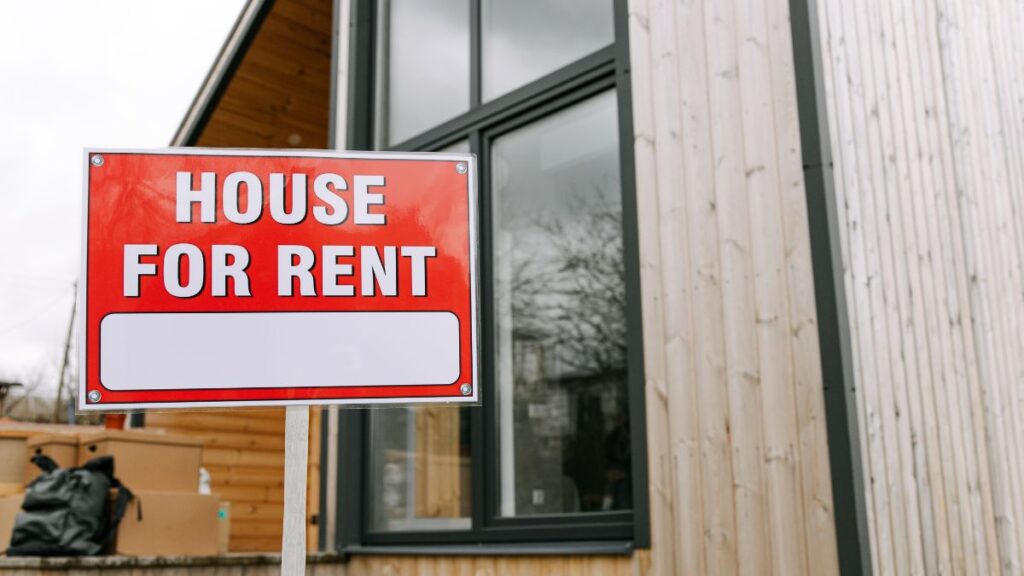
During the discussion, another possibility emerged: keeping the family home and renting it to tenants. This could allow the couple to try apartment living while preserving ownership of the property.
The strategy might appeal to the spouse who is not ready to sell. If the apartment experience disappoints them, they would still own the home, although returning would depend on tenant arrangements and the lease.
However, rental income is not the same as profit. Suppose the family home could bring in $5,000 per month, producing $60,000 annually before expenses.
After one vacant month, gross rental income would fall to $55,000. Paying $48,000 to rent their new apartment would leave only $7,000 before mortgage payments, property taxes, insurance, repairs, management fees, and income taxes.
Those expenses could easily change the financial outcome. Managing tenants and a large house could also create the very responsibilities the downsizing spouse hoped to escape.
There may be tax consequences, too. Renting out a former primary residence can affect future home sale exclusion eligibility, and depreciation related to rental use can create additional taxable gain when the property is eventually sold.
This option deserves consideration only after the couple calculates realistic net rental income. It should not be treated as a simple way to preserve the house while automatically funding another lifestyle.
The Real Argument Is About the Next Five Years

One of the most valuable insights from the conversation was that the couple needed to discuss their future before trying to complete a real estate transaction. Their disagreement was not simply about a house that had become too large.
They were entering a new period of marriage after raising their children. For approximately three decades, much of their home life had been organized around family responsibilities, and they now had an opportunity to choose different daily routines.
That raises questions bigger than property values. Do they want to walk to restaurants several evenings a week, travel more frequently, entertain family members, or spend quiet mornings in familiar surroundings?
They might discover that they agree about many of these priorities. Both may want less work, more time together, easy access to family, and enough financial flexibility to enjoy retirement.
The next step is to describe what their ideal life looks like five years from now. Once that picture becomes clearer, the housing decision can support it instead of controlling it.
Five Questions Every Couple Should Answer Before Selling
Before calling an agent or visiting apartments, both spouses should answer a small set of questions separately. Comparing the answers can reveal where their priorities overlap and which concerns require compromise.
1. What do we enjoy about our current home?
Each spouse should identify the features they genuinely value. One might mention privacy and the garden, while the other might appreciate the neighborhood and room for visiting grandchildren.
2. What has become difficult or unnecessary?
An oversized house may require more cleaning, yard work, and maintenance than the couple wants. However, some people still enjoy those responsibilities and do not view them as burdens.
3. What do we want to do more often?
A move should create practical benefits, not simply reduce square footage. Better access to restaurants, friends, healthcare, cultural activities, and transportation may matter more than the home’s size.
4. What would make a move financially worthwhile?
Both spouses should agree on an acceptable housing budget. They also need to decide how much cash they want to retain and what unexpected costs they could comfortably absorb.
5. What would we regret losing?
This question gives emotional concerns the same attention as financial ones. The answers may include a neighborhood, family gathering space, privacy, or a sense of familiarity.
After answering, each spouse can rank the five most important priorities. They can then identify the goals they share and determine which lower priorities they are willing to compromise on.
Common Downsizing Beliefs That Can Lead to Poor Decisions
Some couples remain stuck because they treat familiar assumptions as facts. Others move too quickly because a smaller home appears to solve every financial and lifestyle concern.
The following distinctions can help them evaluate their options more carefully.
| Common Belief | What Is Actually True | Better Approach |
|---|---|---|
| Renting always wastes money | Renting can provide useful flexibility | Compare the full cost and benefits |
| Smaller homes always cost less | Location, fees, and repairs matter | Compare total annual expenses |
| Home prices must soon fall | Future prices are uncertain | Avoid relying on market timing |
| Staying is always the safest option | Large homes can carry growing costs | Review future upkeep and accessibility |
| Selling means losing memories | Memories and possessions can be preserved | Plan the emotional transition |
The biggest lesson is that no single housing strategy works for every retired couple. Good decisions reflect both personal priorities and realistic financial assumptions.
The goal is not to prove that one spouse understands money better. It is to reduce the chance of making a decision that creates long-term regret.
A Smaller Home Should Also Work at Age 80

Many couples think about downsizing shortly after their children move out. However, the property they choose may need to serve them for another 15, 20, or 25 years.
That makes accessibility an important consideration even when both spouses are currently healthy and active. The location of bedrooms, stairs, parking, bathrooms, and everyday services can affect how convenient a home remains as people age.
A walkable apartment might offer easier access to restaurants and entertainment, but a high floor, distant parking, or difficult building entrance could create problems. A smaller single-story home might provide privacy and easier movement but require more yard work.
The surrounding neighborhood matters as well. Convenient healthcare, grocery stores, transportation, and nearby friends can support independence in ways that extra square footage cannot.
Couples should evaluate how the home works today and how it might function if one spouse becomes less mobile. That does not require predicting health problems, only recognizing that housing needs can change.
How to Compromise Without Either Spouse Feeling Defeated
A housing disagreement can become personal when each spouse begins defending a fixed position. One may insist they must move, while the other declares that selling is not an option.
A more useful approach is to consider several compromises rather than demanding an immediate yes or no. The following arrangements can provide different levels of flexibility.
Stay for Another Year With a Clear Review Date
The couple could agree to remain in their current home for another 12 months while evaluating alternatives. This gives the hesitant spouse time to adjust without leaving the decision unresolved indefinitely.
During that year, they could gather estimates, explore smaller properties, and identify which possessions would be difficult to move. A scheduled review keeps the agreement from becoming an endless delay.
Look for a Smaller Home in the Same Community
The spouse who wants to stay might be more willing to move if the couple can preserve familiar friendships and routines. Downsizing within the same neighborhood could reduce maintenance without requiring a complete lifestyle change.
The financial benefits would still need to justify the transaction costs. A smaller home nearby may be expensive, but emotional continuity could make the decision easier.
Try the New Neighborhood Before Selling
Instead of immediately listing their home, the couple could spend several days or weeks in a short-term rental near the development they enjoy. This would give both spouses a chance to experience everyday life there.
They could check traffic, noise, parking, grocery access, and the quality of their daily routines. A short trial involves some expense, but it may be considerably less disruptive than selling and moving twice.
Move Into a Smaller Home That Both Spouses Choose
A permanent move can sometimes be easier to accept than a temporary apartment followed by another uncertain move. Both spouses would have a chance to choose the layout, location, and features of their next home.
This is closer to the approach recommended in Ephraim’s conversation. Rather than renting solely to wait for housing prices to fall, the couple could consider buying a smaller property that already meets their shared goals.
A 90 Day Plan for Couples Who Cannot Agree
The most productive next step is often preparation rather than an immediate transaction. A structured process gives both spouses time to be heard while turning a vague disagreement into specific choices.
The following 90-day plan is a suggested approach, not a requirement to sell within three months.
| Timeline | What to Do | Desired Result |
|---|---|---|
| Days 1 to 15 | Discuss five-year priorities separately and together | Identify shared goals |
| Days 16 to 30 | Calculate current housing costs and realistic sale proceeds | Understand the finances |
| Days 31 to 60 | Tour smaller homes and test preferred neighborhoods | Compare daily lifestyles |
| Days 61 to 75 | Review taxes, moving costs, and housing options | Identify affordable choices |
| Days 76 to 90 | Agree on the next decision or a review date | Create a shared plan |
The process should give both people meaningful input. If one spouse feels pressured to accept a predetermined outcome, the disagreement may continue even after they move.
If conversations repeatedly become arguments, a neutral financial planner or couples counselor may help. The objective is to make the decision clearer, not to recruit someone to take sides.
What Happens If One Spouse Still Refuses to Move?

Sometimes the couple completes the calculations, visits properties, and discusses their future but still cannot agree. One spouse may remain deeply attached to the family home even when downsizing appears financially reasonable.
In that situation, forcing a sale is unlikely to produce a satisfying outcome. A major housing move affects both people every day, and resentment can outweigh the benefits of additional space or lower expenses.
However, the spouse who wants to move should not have to abandon every concern. They can discuss practical changes such as hiring help with maintenance, closing off unused rooms, or making the existing home easier to manage.
It may also help to identify conditions that would change the decision. For example, the couple might agree to reconsider moving after retirement, when major repairs become necessary, or when a suitable property becomes available.
The decision to stay should be deliberate rather than automatic. Remaining in a large house can be a perfectly reasonable choice when the couple understands its costs and agrees that the benefits are worthwhile.