
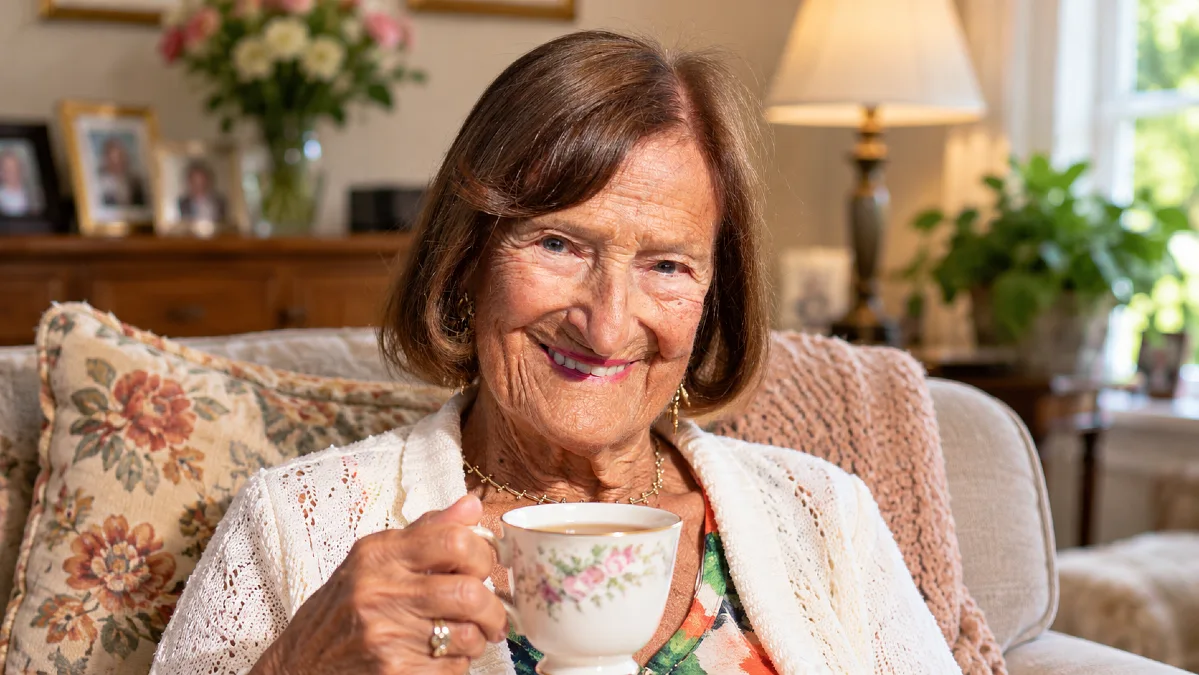
At 101, Evelyn Carter had learned to live with many things. She had buried her husband, watched old friends disappear, and adjusted to a body that no longer moved as easily as it once did.
But nothing prepared her for the quiet disappointment of realizing that the people she loved most were becoming visitors in her life instead of regular companions.
Her children had their own families. Her grandchildren were busy with careers, marriages, and children of their own. The Sunday dinners that once filled her home with laughter became occasional afternoon visits, and eventually even those became difficult to arrange.
The Hardest Part Wasn’t Being Alone. It Was Waiting.

Evelyn used to keep Sunday afternoons free because that was when her family traditionally visited. She would straighten the living room, put fresh flowers on the table, and prepare something small in case someone arrived hungry.
Sometimes her daughter called to explain that the grandchildren had activities. Other times, a visit was postponed because of work, bad weather, or another family commitment. Evelyn understood every explanation, but understanding didn’t make the empty afternoons easier.
She began noticing how much of her happiness depended on events she couldn’t control. A phone call could brighten an entire week, while a canceled visit could leave her feeling forgotten for days.
The turning point came when she realized that waiting had quietly become her main daily activity. She wasn’t simply missing her family anymore. She was allowing their availability to determine whether her own days felt worthwhile.
That realization didn’t make her love them less. It helped her recognize that affection and dependence were not the same thing, and that she needed more sources of happiness than occasional visits from relatives.
She Stopped Measuring Love by How Often the Doorbell Rang

One of Evelyn’s earliest changes was learning not to interpret every missed visit as proof that she mattered less. Her children could love her deeply and still struggle to make time for her, although that didn’t mean she had to pretend their absence never hurt.
She started communicating more openly about what she needed. Rather than hoping someone would guess that she was lonely, she suggested short weekly phone calls and explained that a dependable conversation meant more to her than vague promises about visiting soon.
When a family member couldn’t come, Evelyn allowed herself to feel disappointed without turning that disappointment into a judgment about her worth. She also stopped refusing invitations from neighbors simply because a relative might decide to visit.
This was an important distinction. She wasn’t giving up on her family or excusing every broken promise. She was making room for a life that continued whether or not someone knocked on her door.
The lesson was simple: love can remain important without becoming the only thing that gives your life meaning.
She Built a Small Circle of People Who Actually Showed Up

At 101, Evelyn wasn’t interested in becoming popular. She didn’t need dozens of friends, a crowded social calendar, or constant conversation. What she needed was a few dependable people who genuinely enjoyed her company.
She began with a neighbor who regularly stopped to talk while collecting the mail. Instead of ending their conversations at the doorstep, Evelyn invited her inside for tea one afternoon. That small invitation eventually became a weekly tradition.
Through a local senior community program, she also met people who understood the peculiar experience of growing older while the world around them seemed to move faster. Some were widowed, some lived far from their children, and others simply wanted companionship outside their families.
These friendships were different from the relationships Evelyn had known for decades, but they were no less meaningful. They gave her people to laugh with, share concerns with, and look forward to seeing.
She also learned that friendship required participation. Sometimes she had to make the phone call, invite someone over, or accept an invitation when staying home felt easier.
One person who consistently cares can make a greater difference than ten relatives who rarely make contact. Evelyn discovered that the quality of her connections mattered far more than the number of people listed in her address book.
She Gave Every Week Something Worth Waking Up For

For years, Evelyn’s calendar had revolved around family occasions, medical appointments, and household responsibilities. Once the family gatherings became less frequent, her days began blending together without much distinction.
She decided that every week needed a few activities she could anticipate. Nothing had to be expensive, physically demanding, or especially impressive. The important thing was having a reason to participate in the world.
Monday became her day for calling a friend. Wednesday brought a community activity when transportation was available, while Friday was reserved for writing letters, tending her plants, or enjoying a favorite book.
She kept her schedule flexible because some mornings her energy was better than others. At 101, rest was essential, and there were days when even small outings required assistance or a change of plans.
But having a routine changed the emotional rhythm of her week. Instead of waking up wondering whether anyone would remember her, she had activities and relationships that gave ordinary days a sense of direction.
The routine didn’t eliminate loneliness completely. It simply prevented loneliness from occupying every empty hour.
She Found Purpose in Being Useful, Not Just Being Looked After

One of the most painful changes Evelyn experienced with age was feeling that people increasingly saw her as someone who needed things rather than someone who could still contribute.
Her family asked whether she had enough groceries, whether she remembered her medication, and whether she needed help around the house. These were loving questions, but Evelyn missed being asked what she thought, what she was interested in, and what she wanted to do.
She began sharing family recipes, writing down memories, and helping a younger neighbor learn a few practical skills she had developed over a lifetime. She enjoyed offering encouragement to people who were experiencing difficulties she remembered from earlier years.
None of these activities required physical strength or perfect health. They allowed her to use something age had given her in abundance: experience.
Purpose in later life doesn’t have to involve volunteering every week or taking on new responsibilities. It can mean tending a small garden, caring for a pet, sharing knowledge, maintaining a friendship, or creating something that brings another person enjoyment.
For Evelyn, the important change was moving from asking, “Who needs to take care of me?” to asking, “What can I still offer the world?”
That question helped her feel like an active participant in life rather than someone merely watching it continue around her.
She Protected Her Independence by Accepting the Right Help
Evelyn understood that living a full life at 101 didn’t mean pretending she was 65. Her balance had changed, her stamina was limited, and there were tasks she could no longer safely manage without assistance.
Instead of treating those changes as personal failures, she focused on what would allow her to keep making decisions. A safer bathroom, accessible storage, dependable transportation, and practical support helped her maintain daily routines.
She gradually stopped believing that accepting help meant surrendering independence. Sometimes asking a neighbor to carry something heavy or arranging a ride to a community event made it possible to continue doing the things she enjoyed.
She also paid attention to safety. She kept important phone numbers accessible, arranged regular check-ins, and made sure someone trusted knew how to reach her in an emergency.
This was particularly important because living alone and being safely independent are not necessarily the same thing. Someone can have a fulfilling social life while still needing significant support with mobility, personal care, medication, or household tasks.
True independence isn’t doing everything without help. It’s having as much control as possible over the decisions that shape your life.
Evelyn wanted to choose how she spent her afternoons, whom she invited into her home, and which activities were worth her limited energy. Getting appropriate support made those choices easier to preserve.
She Learned That a Peaceful Home Could Still Be a Happy Home

There was a time when Evelyn associated a quiet house with abandonment. Every empty chair reminded her of someone who had moved away, passed on, or become too busy to visit regularly.
But she slowly changed the way she experienced her surroundings. She arranged her favorite photographs where she could enjoy them, kept comfortable seating near the window, and made sure the rooms she used most were pleasant and manageable.
She discovered that a home didn’t need to be large or impressive to support happiness. It needed to feel safe, familiar, affordable, and suited to her changing physical abilities.
She also learned to distinguish solitude from loneliness. Some afternoons, she genuinely enjoyed listening to music, watching the birds, or sitting with a cup of tea without any particular obligation.
On other days, the silence felt heavy, and she knew she needed human contact. Rather than insisting she should always be content alone, she reached out to someone or planned an activity.
That balance mattered. Being comfortable in your own company doesn’t mean you never need other people. It means quiet moments can become part of a satisfying life instead of always feeling like evidence that something is missing.
She Gave Herself Something to Look Forward to Every Month
At 101, Evelyn had become familiar with people treating her future as though it were almost finished. Conversations often focused on her past, her health, or the remarkable number of years she had already lived.
She appreciated her memories, but she didn’t want every conversation to sound like a farewell. She still cared about next week’s weather, a new book, a friend’s birthday, and whether the flowers would bloom in spring.
So she began making small plans. She looked forward to a neighborhood gathering, a favorite meal, a visit to a familiar park when she felt well enough, or a telephone conversation with someone she loved.
Some plans were canceled because of illness or fatigue. Others needed to be adapted, and occasionally she discovered that something simple brought more pleasure than a larger event.
What mattered was continuing to see the future as something she could participate in. Her age didn’t erase her ability to anticipate, enjoy, or become curious about what might happen next.
There is something powerful about having a reason to say, “I’m looking forward to that.” It reminds a person that life is still unfolding, even when the pace becomes slower.
She Stopped Waiting for Her Children to Give Her Permission to Be Happy

As Evelyn became more socially active, she noticed another change. Family visits were still special, but they no longer represented the only exciting events on her calendar.
When her daughter called, Evelyn had things to talk about beyond her health or the weather. She could describe someone she had met, a funny conversation, a new interest, or a small accomplishment.
The conversations began to feel less like welfare checks and more like exchanges between people who each had lives worth discussing. Evelyn still welcomed help and affection, but she wasn’t depending on every call to rescue her from an otherwise empty week.
This didn’t mean she never felt hurt when relatives were unavailable. She still missed the closeness of earlier years and occasionally wished her family understood how much regular attention meant.
But she no longer believed her happiness had to wait until everyone else found more time for her. Her children were an important part of her life, but they were not responsible for creating every meaningful moment in it.
That distinction gave her relationships more breathing room and made the time they spent together easier to enjoy.
What Older Adults Can Learn From Evelyn’s Choices
Evelyn’s experience illustrates that building a meaningful later life isn’t about denying loneliness or convincing yourself that family relationships don’t matter. It is about recognizing what remains within your control and gradually strengthening the parts of life that can still bring connection and satisfaction.
For someone whose visits have become infrequent, the first steps don’t have to be dramatic. A few small changes can begin rebuilding a sense of belonging and purpose.
- Create one dependable connection. Arrange a regular telephone call, coffee visit, or shared activity with someone who enjoys your company.
- Give the week structure. Put a few enjoyable activities on the calendar so every day doesn’t depend on whether someone visits.
- Find a way to contribute. Share a skill, mentor someone, help with a manageable task, or participate in an activity that makes you feel useful.
- Protect your freedom with practical support. Explore safer living arrangements, transportation options, mobility aids, and trusted assistance when needed.
- Keep something ahead of you. Plan an enjoyable meal, a small outing, a creative project, or another realistic event worth anticipating.
Not everyone has easy access to community programs, transportation, supportive neighbors, or enough money for social activities. Health problems and disability can create additional barriers, so the best approach will depend on individual circumstances.
For someone experiencing persistent sadness, withdrawal, or a loss of interest in previously enjoyable activities, it may also be important to speak with a healthcare professional. Loneliness deserves attention, and depression should not be dismissed as an unavoidable part of aging.
The goal isn’t to become completely self-sufficient or to replace loved ones. It’s to build enough connection, choice, and personal meaning that life can remain worthwhile even when family circumstances change.
What If You’re 75, 85, or 95 and Feel Forgotten Right Now?

One of the hardest feelings in later life is believing that everyone else has moved forward while your own world has become smaller. You may see families gathering, grandchildren growing up, and friends making plans while wondering when someone will think to include you.
Those feelings deserve to be acknowledged. Missing your family doesn’t make you demanding, and wanting companionship doesn’t mean you’re incapable of enjoying your own life.
But it may help to ask a different question. Instead of only wondering why people don’t visit more often, consider what might make the coming week feel more connected, interesting, or manageable.
Could you call an old friend rather than waiting for the phone to ring? Could you join an accessible local activity, reconnect with a neighbor, or ask someone to help you arrange dependable transportation?